
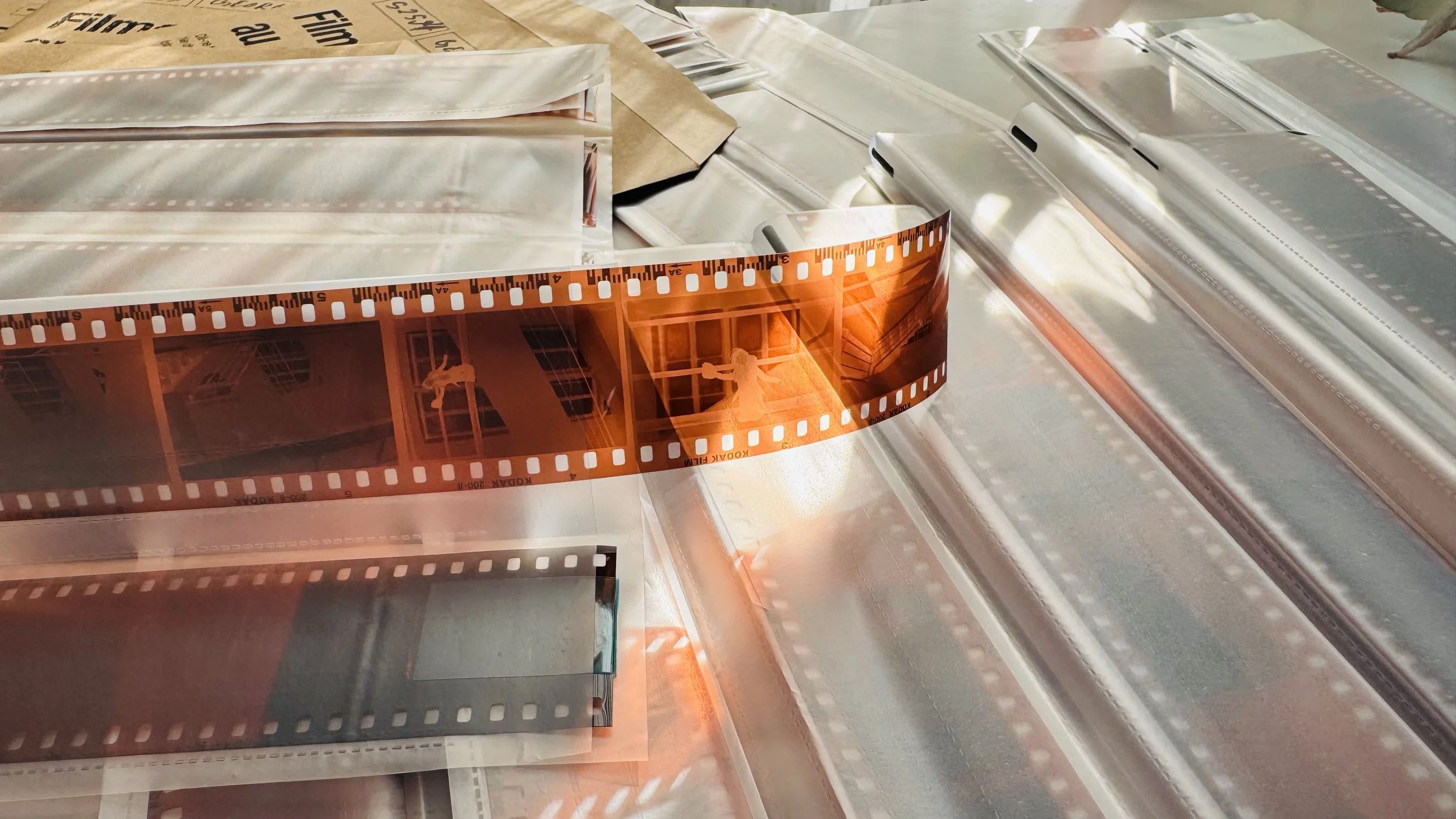
From 1,000 photographs to 97: our book is at the printer
How more than 1,000 photographs, shot on 28 rolls of film across France and Romania, became 97, and how those 97 became a book: 120 pages, three texts and three games to play in your own city.
Hello, Micul Haos community!
Finallyyy! Our book has gone to the printer.
In the last letter we promised to tell you how we chose the photographs. So here it is: how more than a thousand images became 97, and how those 97 became a book.
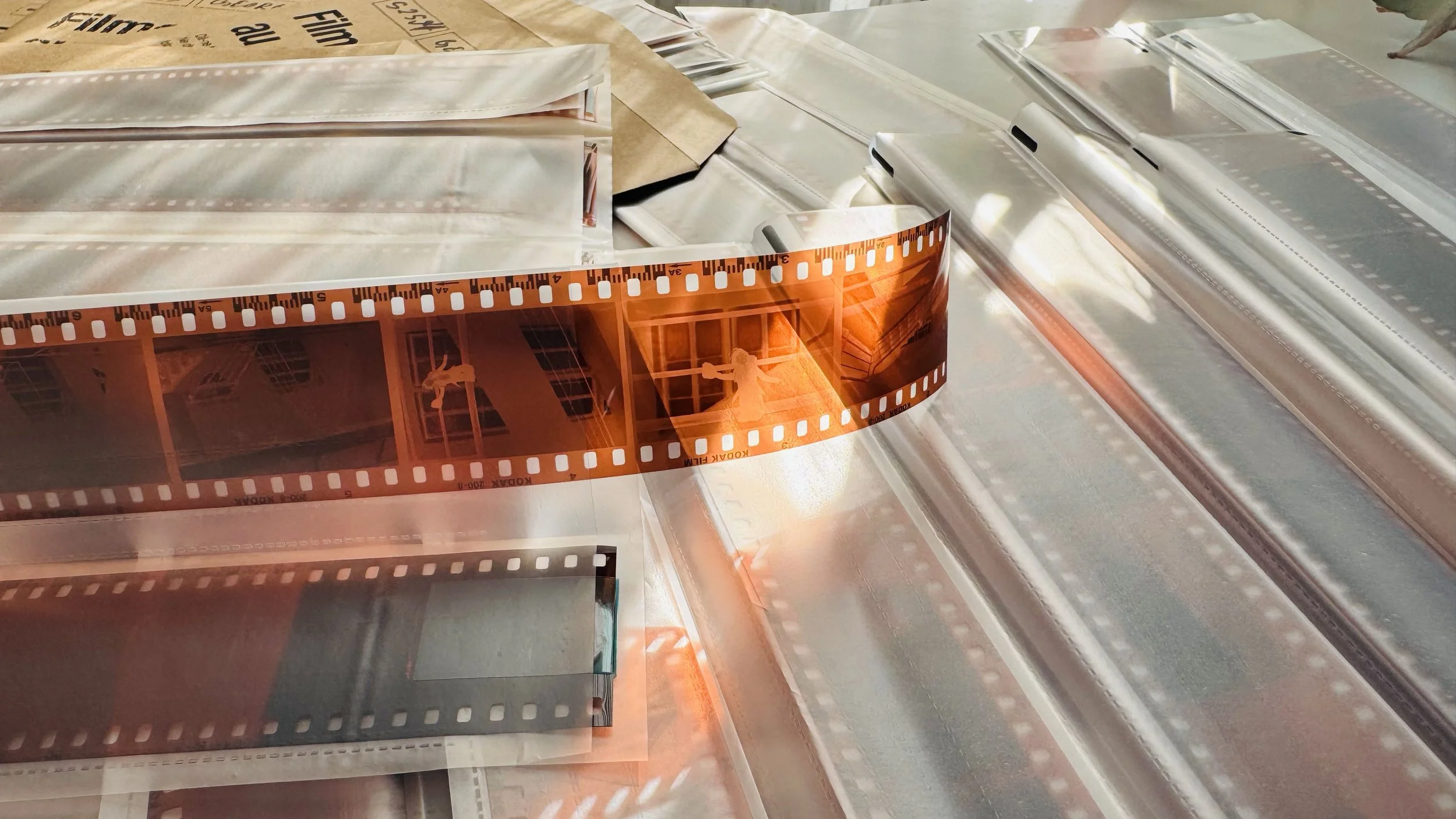
Some of our 28 rolls of film.
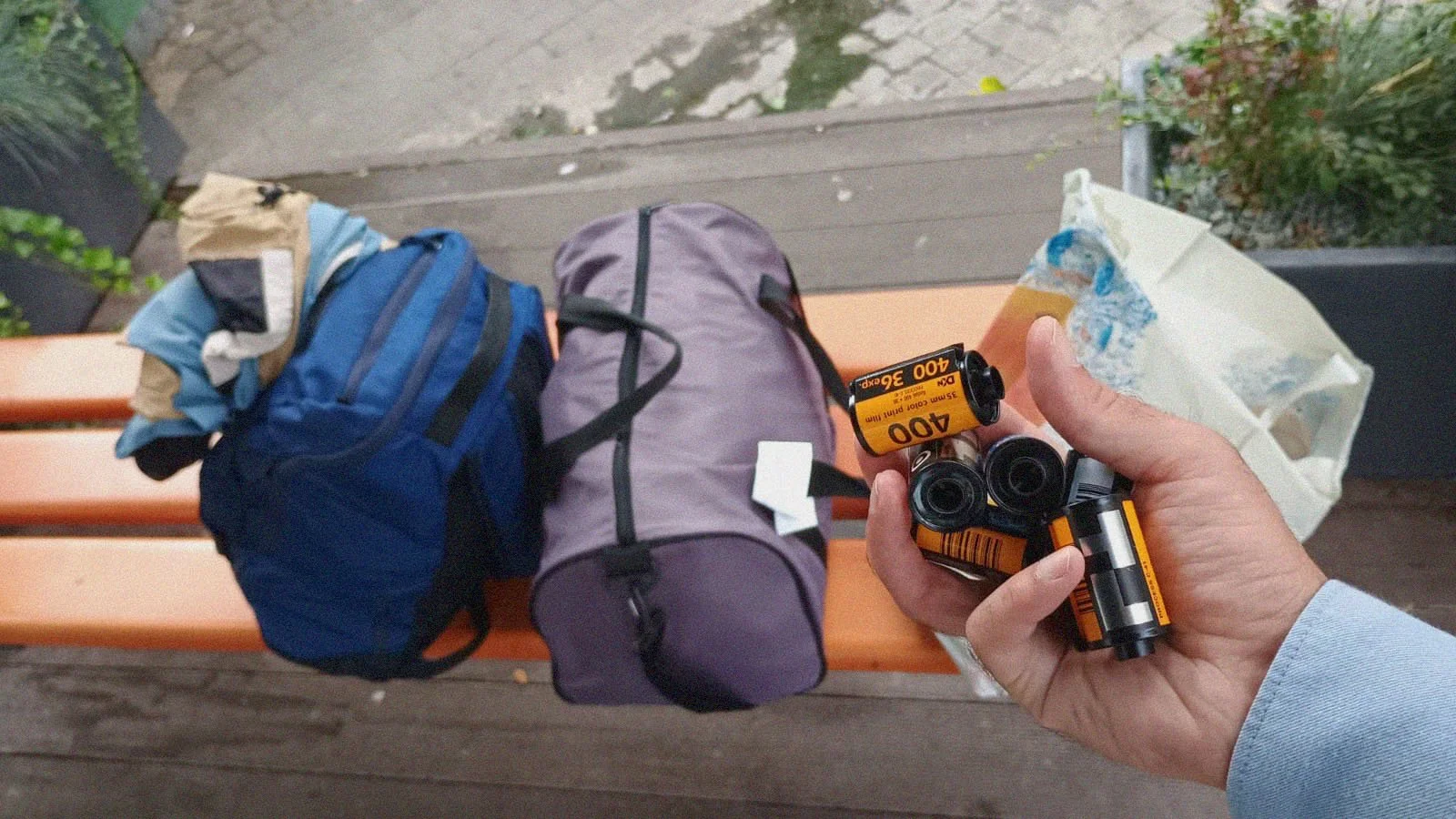
Luggage full
Click in Grenoble, see it in Bucharest
We came home with more than 1,000 photographs: 28 rolls of 35 mm film, and even more digital images. For every shot on film, we also took a digital double, just in case. We usually developed the films about a month later, so on the spot we never knew what we really had.
Most of the films were developed by our partners at Isopatrusute. After all the developing and scanning, we were thrilled: every one of the 28 rolls had come out. With film, that’s never a given.
The photographs came out beautifully in their large format. We can’t wait to see them in the exhibition, where we’ll print them big.
Three distances
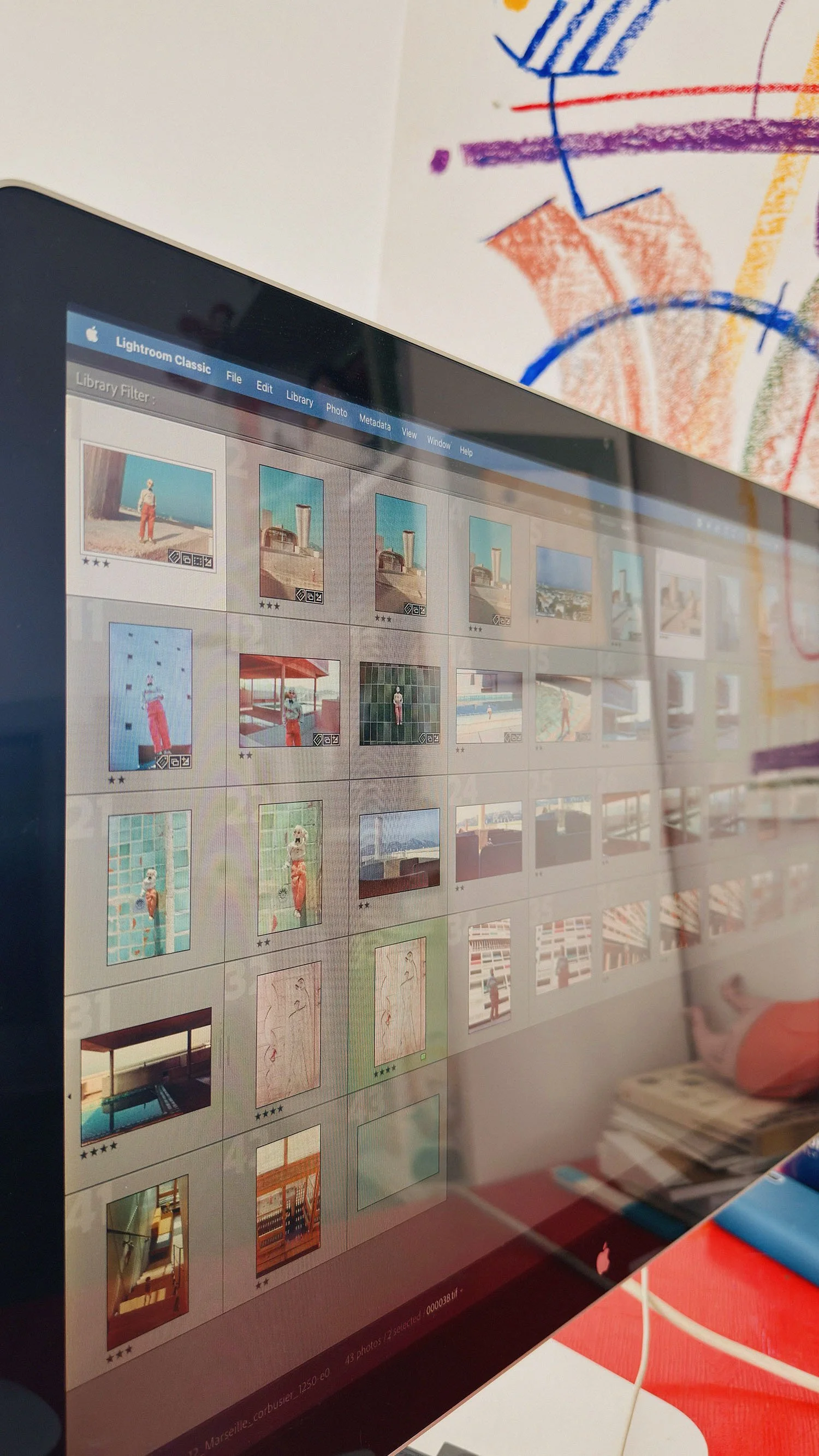
The long way from 1,000 to 97.
For each place, George tried to make at least three kinds of photographs. In one, the character is a tiny detail in the big composition of the building. In another, the character is the most important thing in the frame. And one sits somewhere in between.
Each one asks for something different. When the character is small, everything depends on where you place it. When it’s big, everything depends on its body: how it stands, leans, reaches. In between, the two have to talk to each other really well.
Light and colour mattered too. Some places we photographed at different times of day. To others we went back on a sunnier day.
From 1,000 to 227 to 97
Honestly, a lot of the selection happened on location, in our heads, while we were shooting. We wanted as many of the places we visited as possible, and every one of our 16 characters. Back home, we sat down together to decide. Alexandra Moț, the project's curator, joined us for the first rounds, and it helped a lot to have her eye on the photographs.
We got down to a shortlist of 227, then to 97. That last cut hurt. I would have kept many more from 7 rue Méchain in Paris, where Adrienne Gorska designed the interior of her sister Tamara de Lempicka’s studio. And more from Marcel Locar’s building in Bucharest, where several of our characters ended up together. Now we’re choosing photographs for the exhibition, and that selection will be even smaller.
An order that isn’t a story
The order in the book may look random. It isn’t, quite. Each photograph sits close to the spirit of the text or game around it. Not to illustrate it, but to think in the same direction.
The images flow from one into the next without adding up to a single story. Each one gets to tell its own.
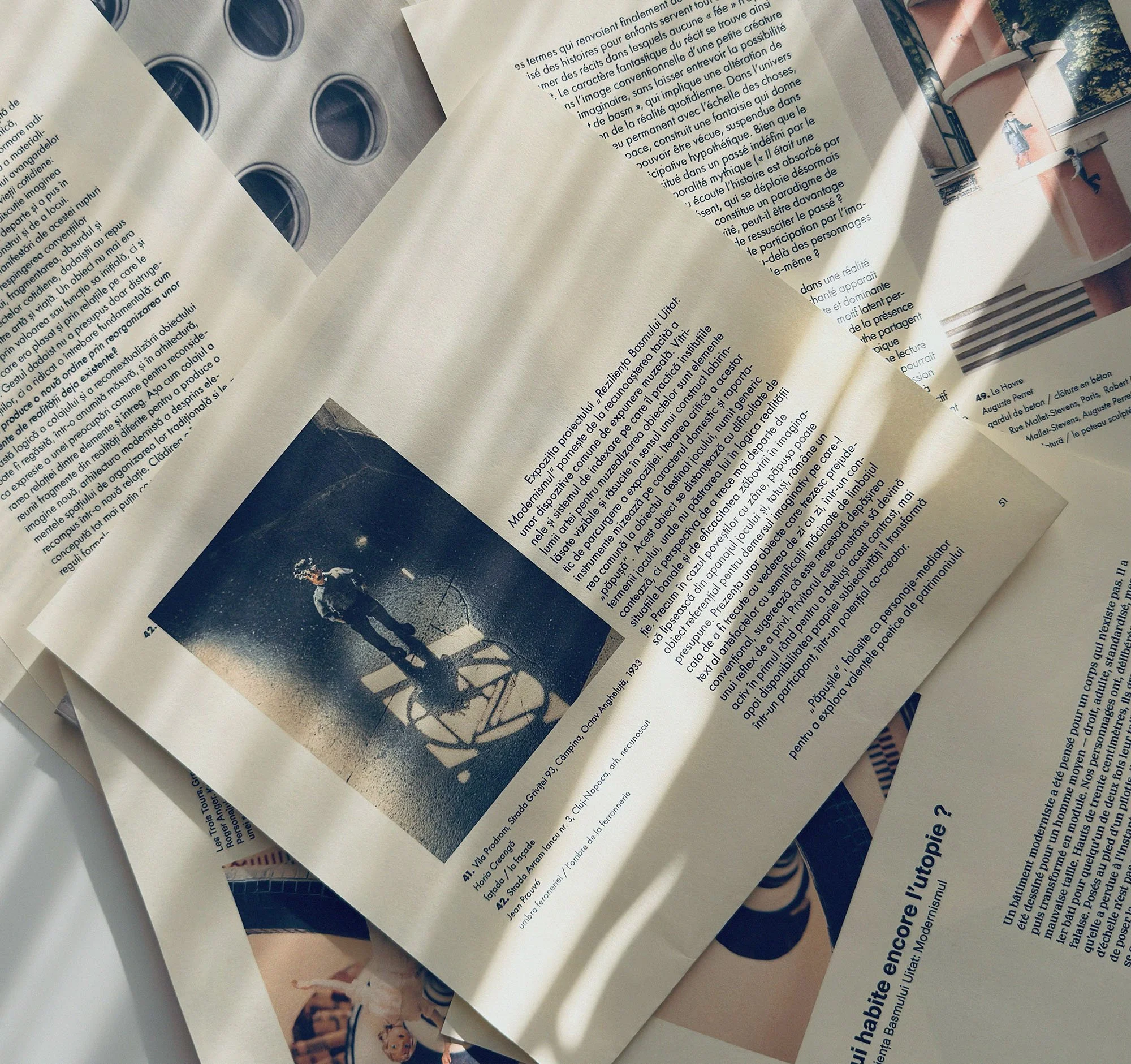
Test prints.
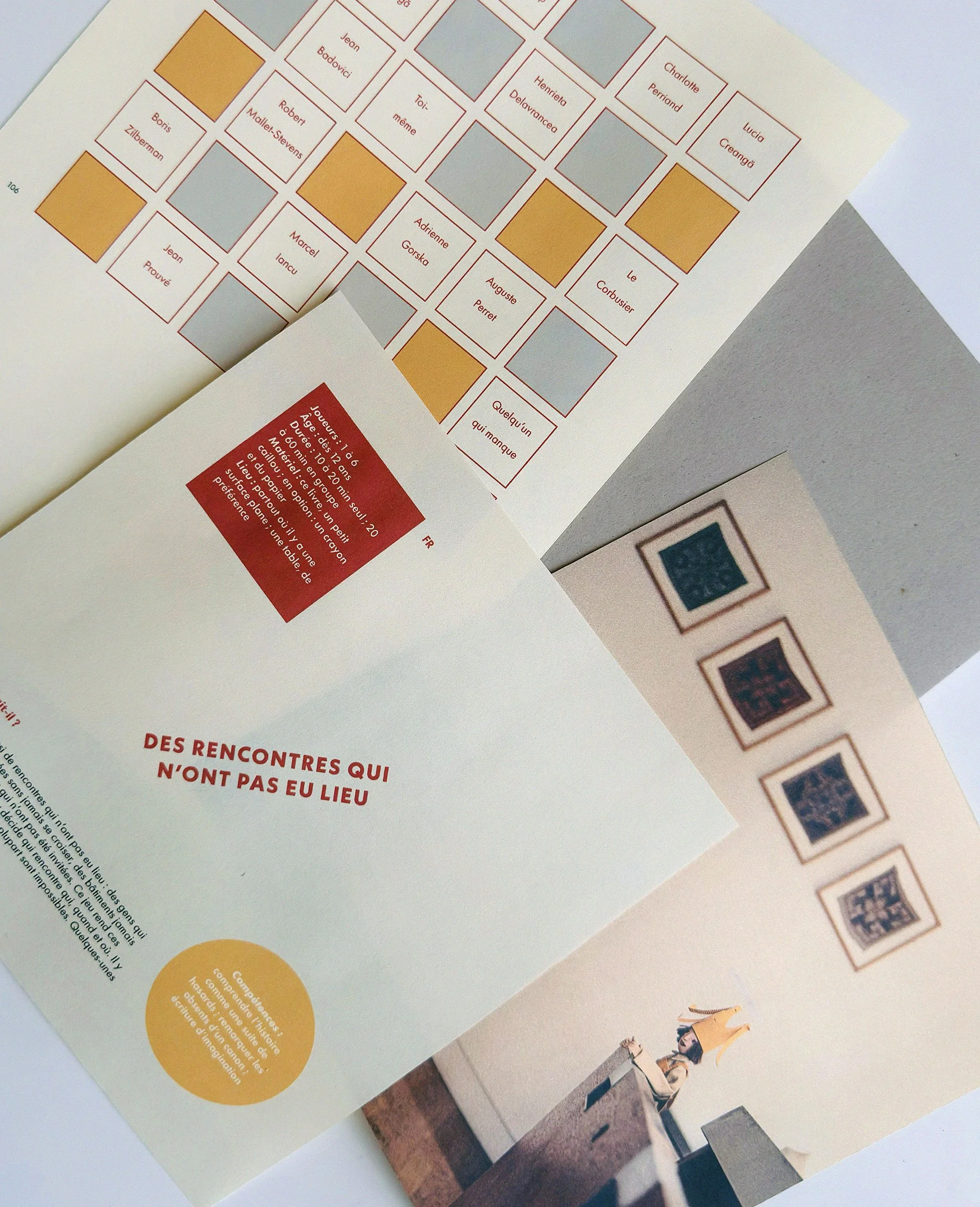
Test print for one of the games
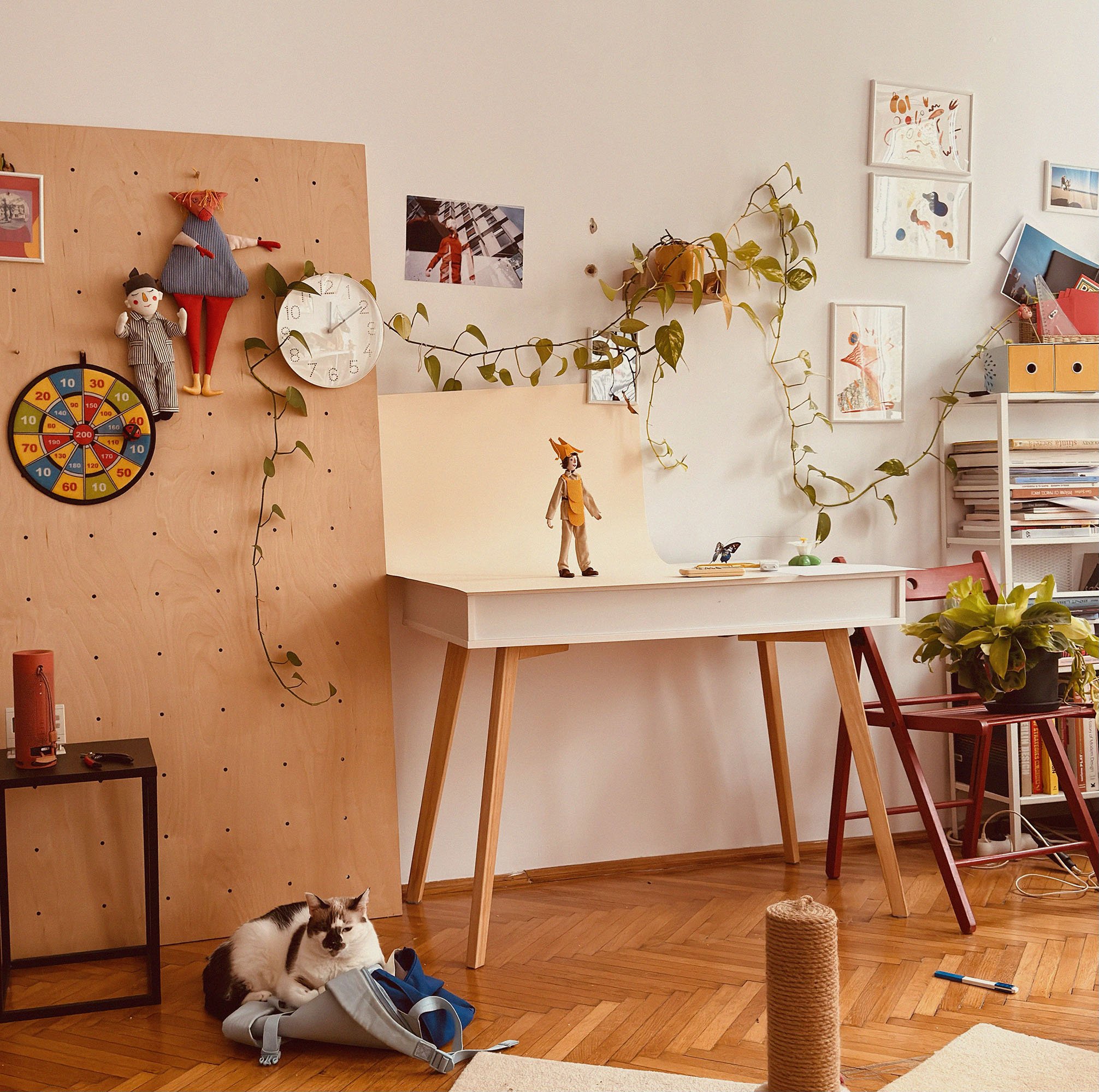
Photographing the characters on neutral background this time.
A book like a brick
The book is 200 × 200 mm, with 120 pages and a grey board cover. I wanted it to look like a concrete brick: a modular element, as if you could build something with it.
It’s bilingual, in Romanian and French (translated by Karin Ungureanu), and holds three texts. Ruxandra Antal writes about modernism as an open structure, from the avant-garde to the way we live. Alexandra Moț offers an orientation guide to a fairy tale about modernism, a key to the exhibition. And I wrote about play as a method. The texts ground the book and the photographs: they place us in context.
After each text comes a game:
Five Points. Stand in front of a building from 1920–1960 and look for Le Corbusier’s five points of a new architecture. Is each one present, absent or lost?
The Witness. Cut out or draw a 20–30 cm character, take it on missions around the city and photograph it from its own height.
Meetings That Never Happened. Toss a pebble on the page to bring together two figures of modernism, a moment and a place. Then imagine the meeting history never gave them.
A small detail for type lovers: the typefaces are Futura and Kabel, both designed in 1927. That’s the same year Le Corbusier and Pierre Jeanneret wrote down their five points.
Why I designed it myself
We wanted to work with a graphic designer. But the project started a bit late and everything shifted, so I took on that role too. In the end it helped: I could keep choosing photographs while the book was taking shape, and adjust the games to the pages. Finishing everything first and then handing it to someone else would have taken much, much longer.
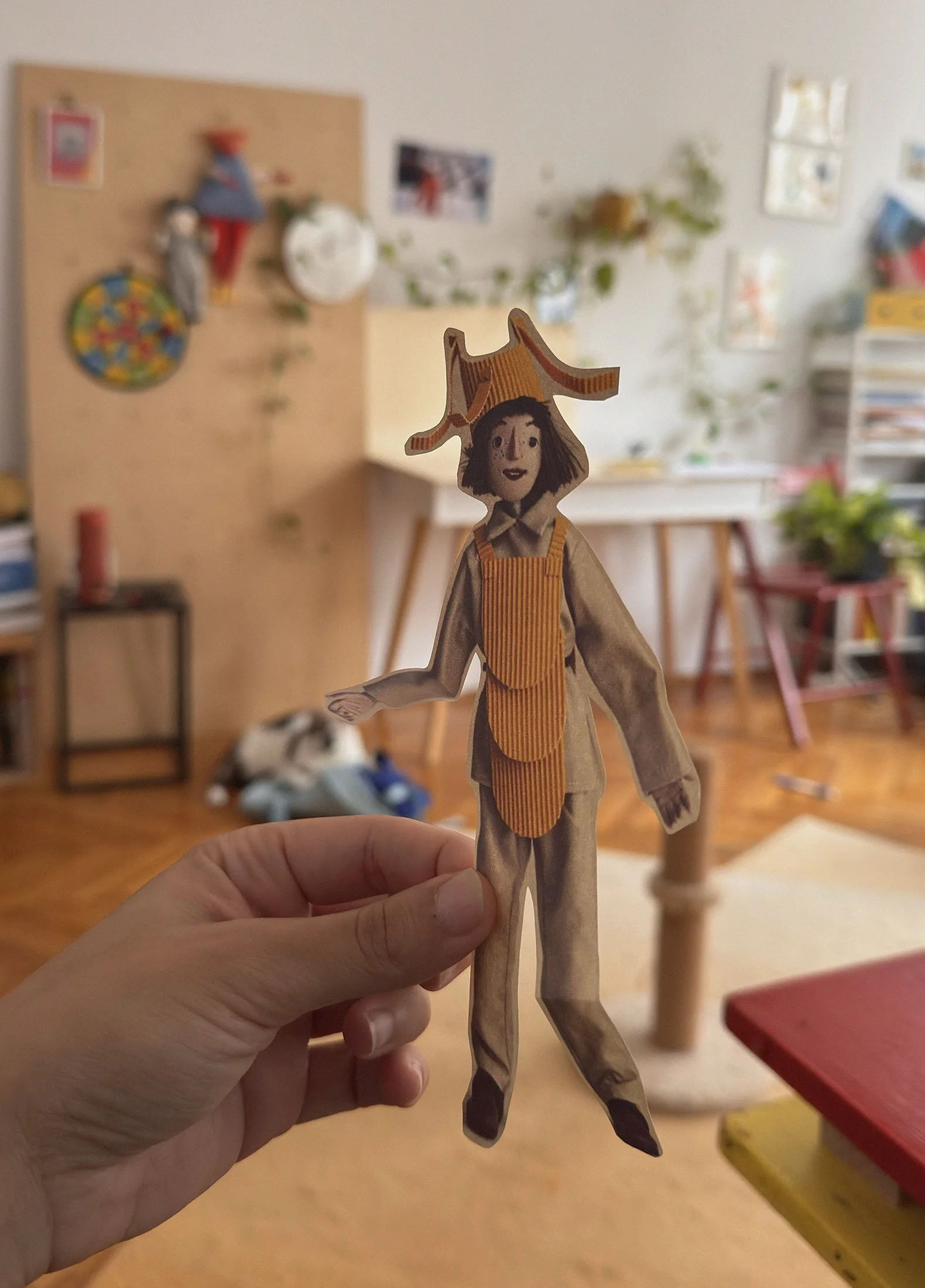
One of our characters, cut out of a test page.
Don’t just hold it. Use it.
The book is mainly for teenagers who want to figure out what’s going on with the architecture around them. (And for anyone curious, at any age.)
I don’t want people to just hold it. I want them to use it. Play the games. Read it in jumps. Look at the photographs, then go and find the buildings. Build your own character and take it outside. Or build something with the books themselves.
Want to try now? Here are three missions from The Witness. Find:
A step built for someone six times taller.
A window that frames something the architect never planned.
The place where the building touches the ground.
Place your character there and photograph it from its eye level, not yours. If you share it, use #miculhaos. We’d love to see where it went.
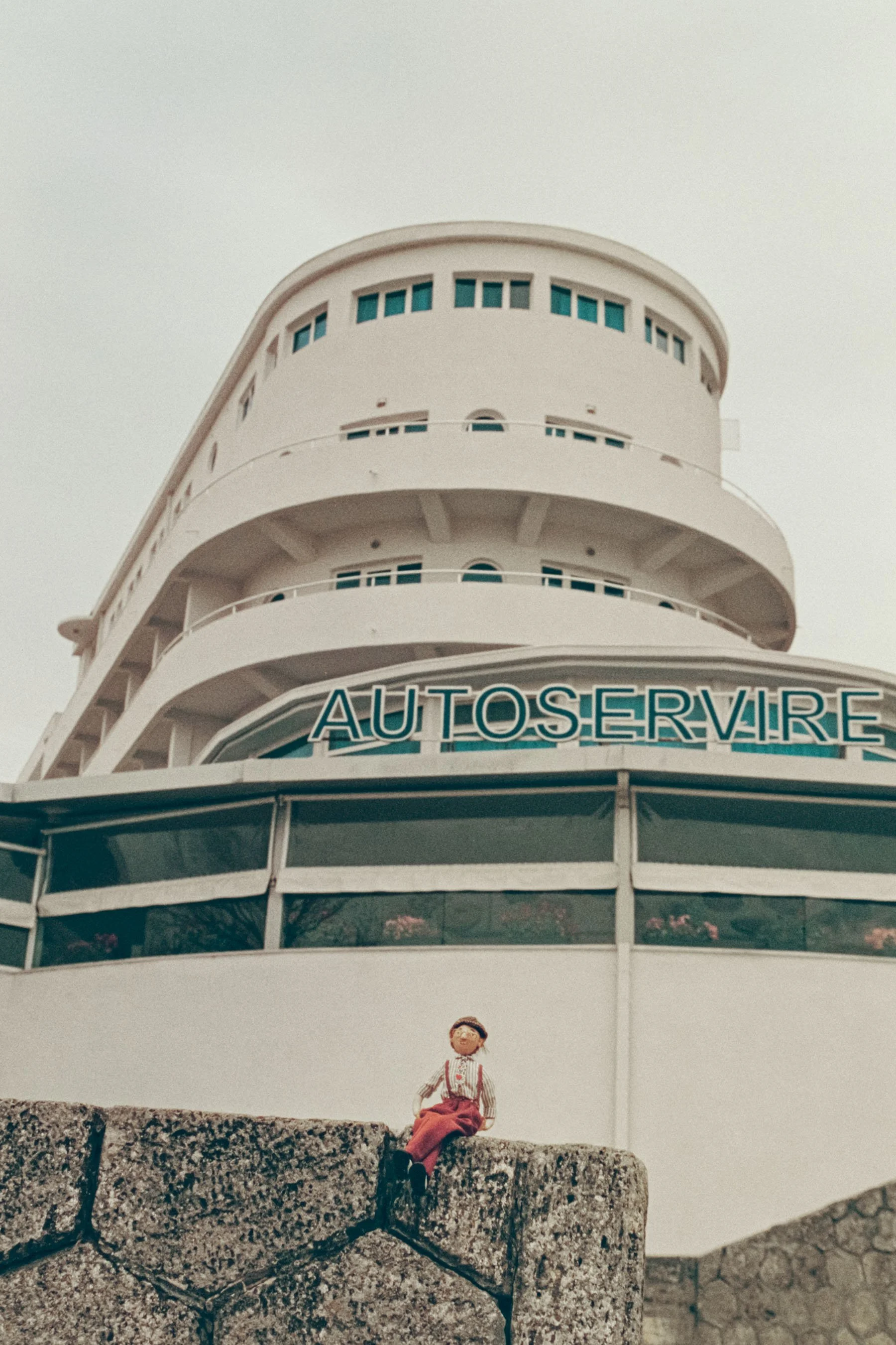
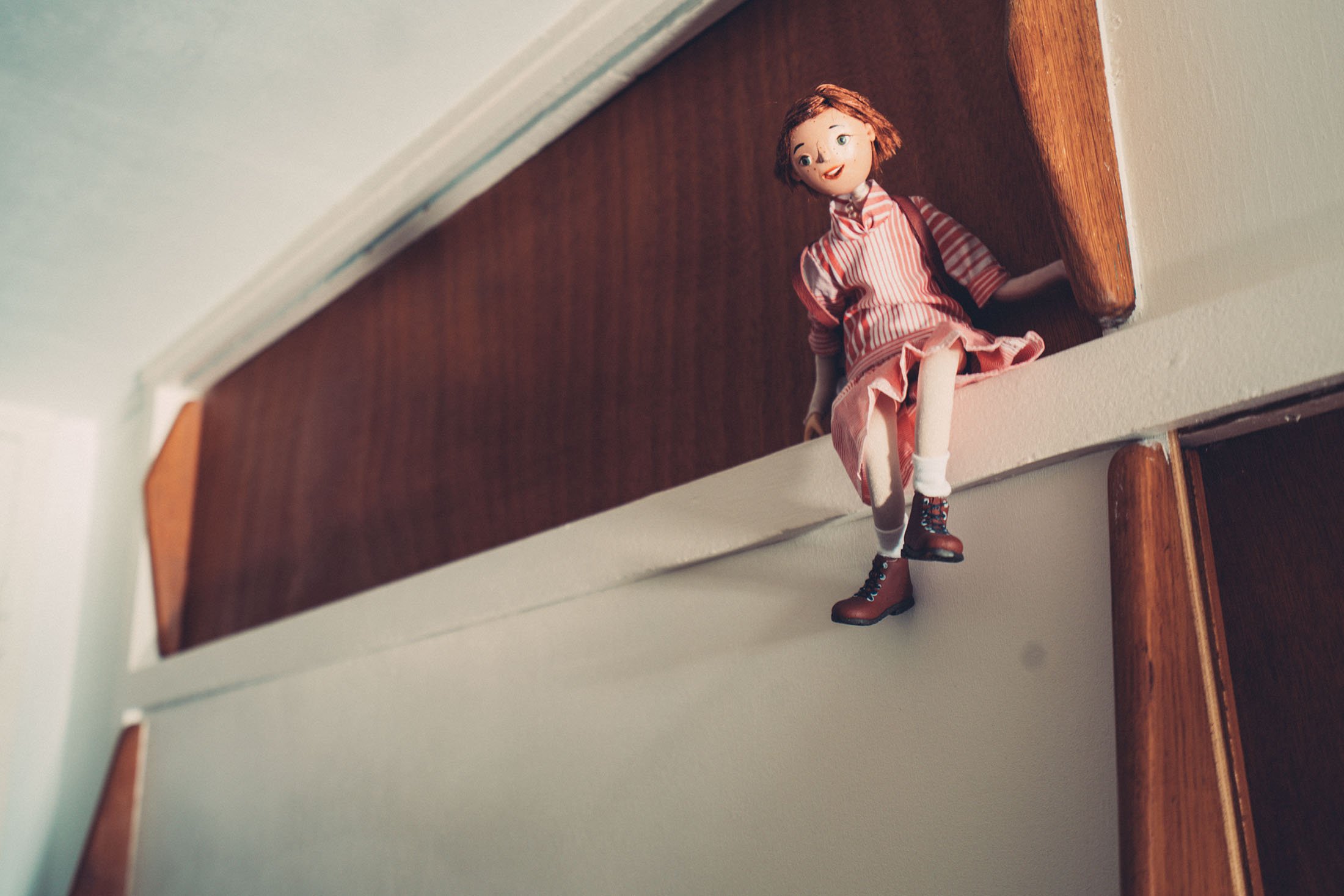
Some photos that didn’t make the cut
You’re the first to know
We’ve printed 100 copies. Each one is numbered, free and not for sale. And the covers will get a final touch from us, by hand, so every copy will be one of a kind. (That’s all the spoiler you get.)
Save the date: we’re launching the book on 13 November at the French Institute in Bucharest. We haven’t announced it anywhere else yet. Time and details are coming in the next letter.
The exhibition at MNAC Bucharest opens in early November, followed by workshops for teenagers with De-a Arhitectura. We’ll send you the dates as soon as they’re set.
With only 100 copies, we can’t promise one to everyone. But if you’d like one, reply to this email and tell us. Your replies also help us see whether a second edition would make sense.
Thanks for reading, and for following us all the way to the printer,
Keep playing,
Maria & the team
The cultural project “The Resilience of the Forgotten Fairy Tale: Modernism” is co-funded by the National Cultural Fund Administration. The project does not necessarily reflect the views of the National Cultural Fund Administration. The National Cultural Fund Administration is not responsible for the content of the project or for how the project’s results may be used. These are entirely the responsibility of the grant recipient.
We’ve been busy
We thought it would be easy. Instead, it was one of the hardest work experiences of our lives, including the day we lost our characters on a train. Our return after two months of traveling through modernist France and Romania.
Hello, Micul Haos community! I hope you've missed us these past two months. We've been traveling.
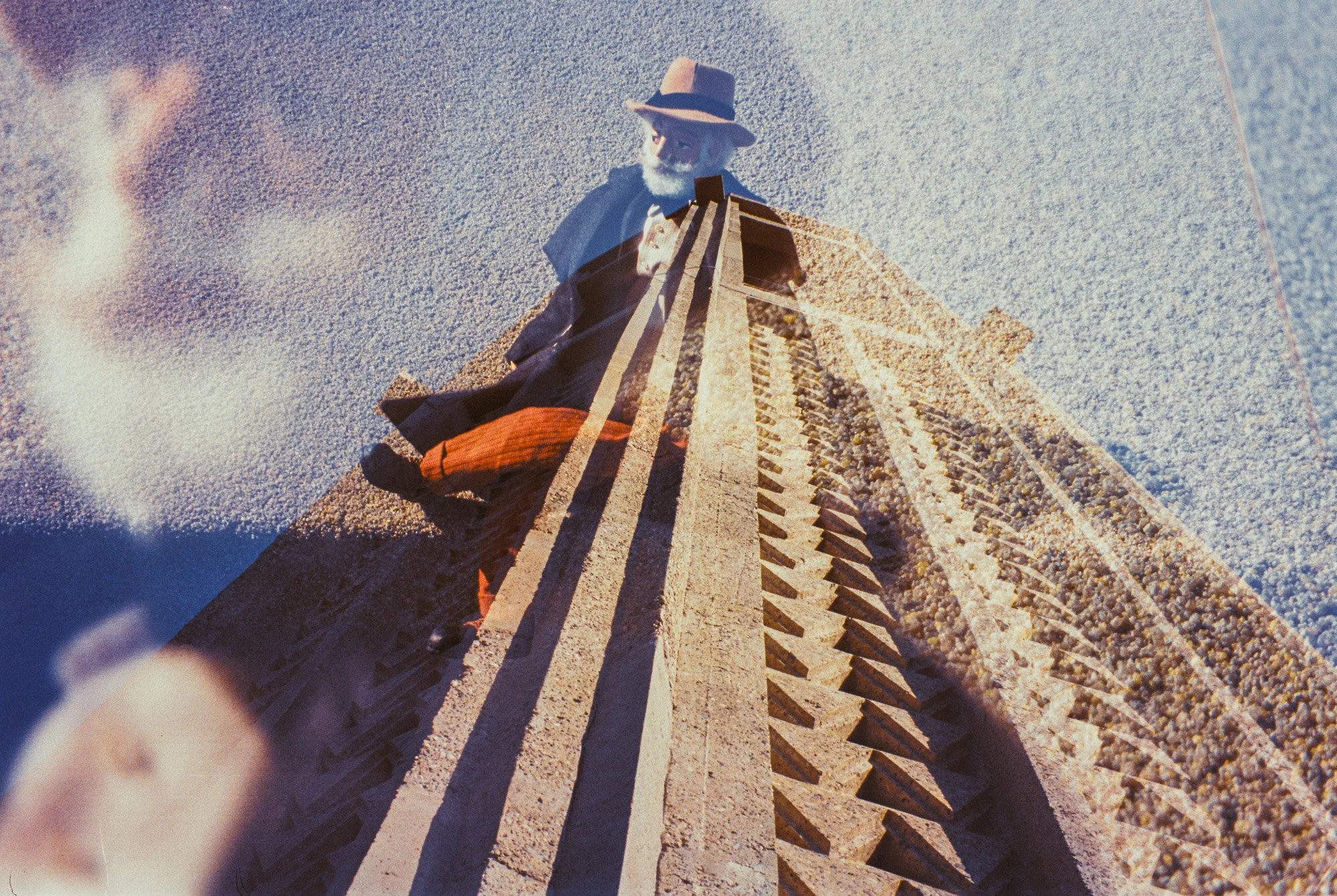
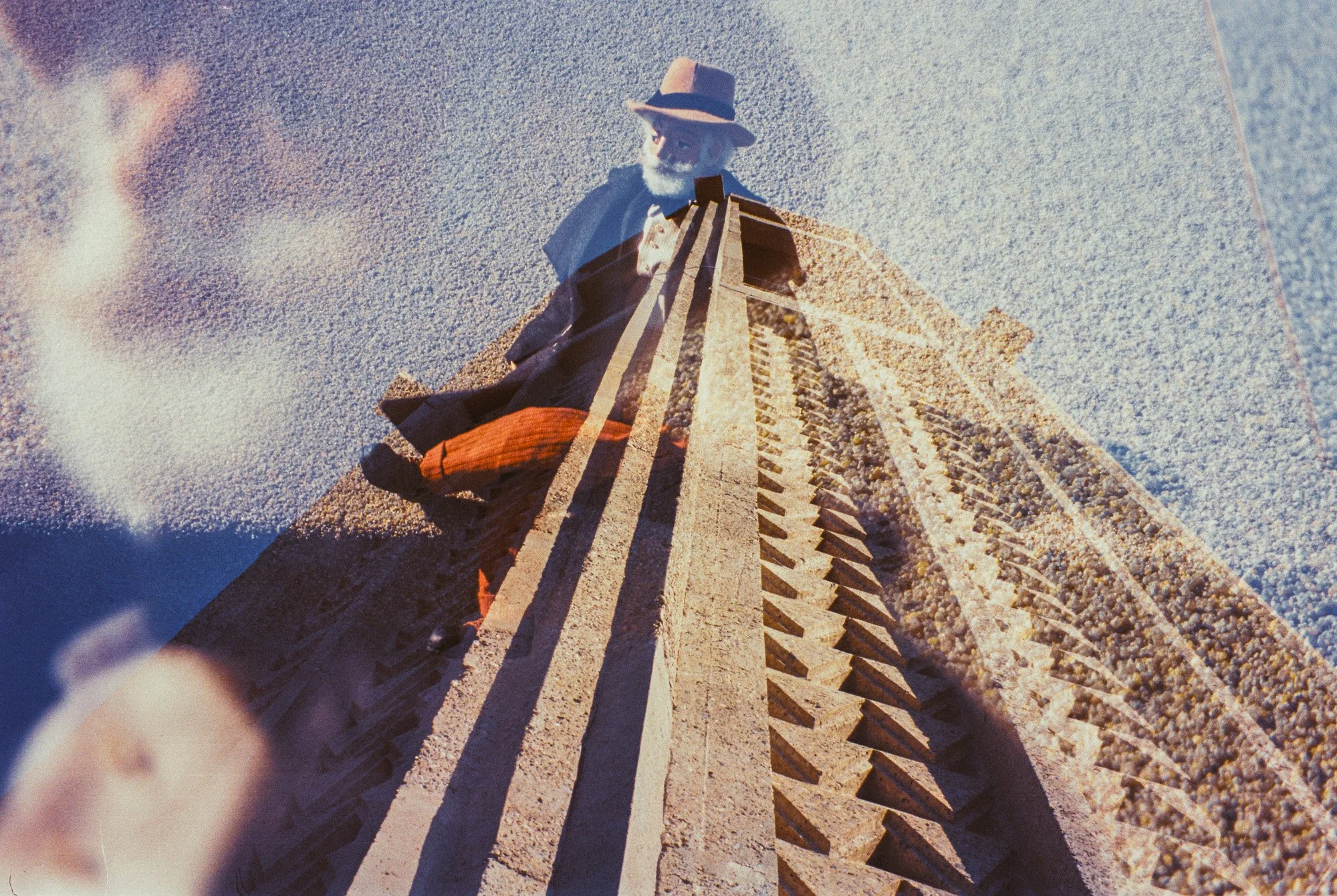
Tour Perret double exposure with Auguste Perret, Grenoble.
It was supposed to be a trip
We thought it would be easy. We planned for months in advance. We knew exactly where we were going: the train tickets were ready, the whole itinerary, the buildings and sights we wanted to see. Our characters were ready too.
It was supposed to be a trip. Honestly, we almost felt like we didn't deserve it: to create, travel, research and photograph. To spend our days doing what we love.
But it was also one of the hardest work experiences of our lives. Turns out loving what you do makes you work harder, not less.
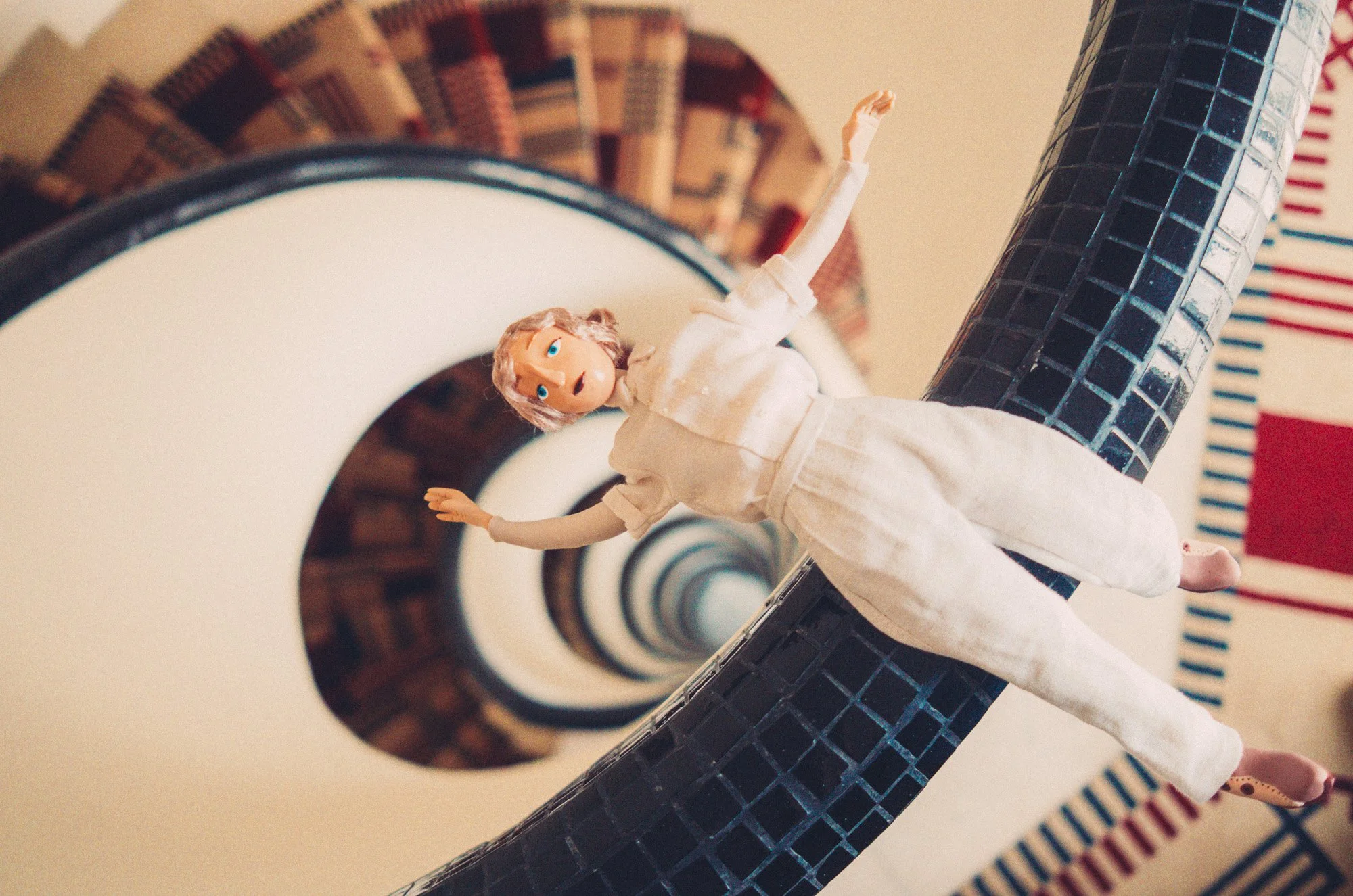
Our character inspired by Adrienne Gorska on the stairs at 7 Rue Méchain, Paris.
Lost and found
Long story short, we visited sooo many places, both in France and Romania. We had some very unpleasant moments, like losing some of our characters on the train from Bucharest to Paris. A few months of work, lost in a fraction of a second!
We got them back safely thanks to the people at the Bludenz train station in Austria, the ones who take care of the trains and the station. They keep train travel safe and clean, they all know each other, and they know who to call and how to help, even when it's not part of the job. It was a beautiful, real-life reminder of the human connection and empathy at the core of what we do at Micul Haos ❤️
There were also chance encounters with lovely people along the way. And a big thank you to our friends who exchanged apartments with us. Because of them, we were able to stay in Paris long enough to set up a base there and travel by train to each location. And another big thank you to the people at the French Institute in Bucharest who helped us with ideas and connections.

On Rue Mallet-Stevens
Our route
Here are the cities we visited: Paris, Clamart, Nancy, Firminy, Grenoble, Le Havre, Marseille, Roquebrune-Cap-Martin, Hyères, Strasbourg, Nice, Bucharest, Câmpina, Cluj-Napoca, Deva, Timișoara, Constanța. Plus some along the way!

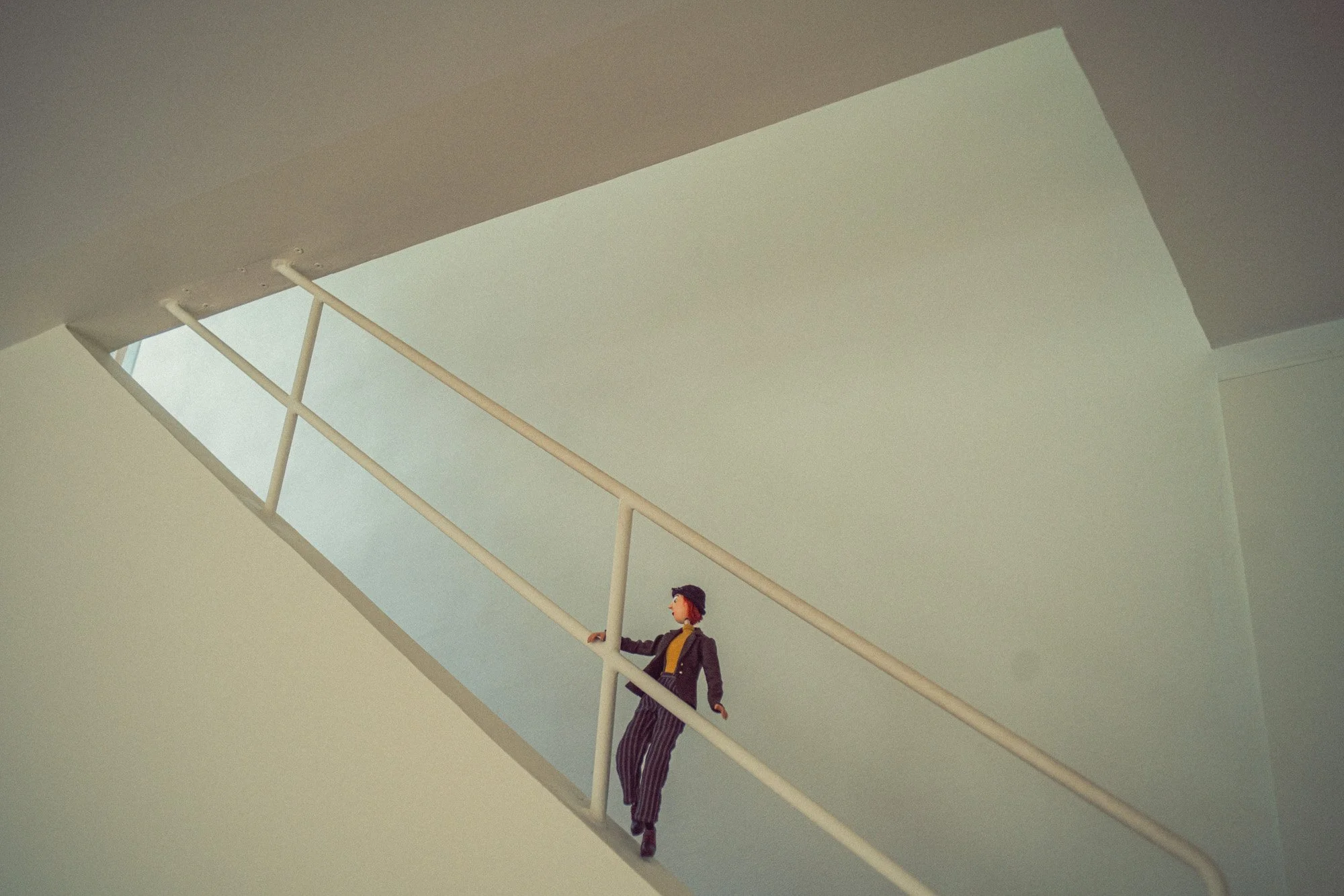
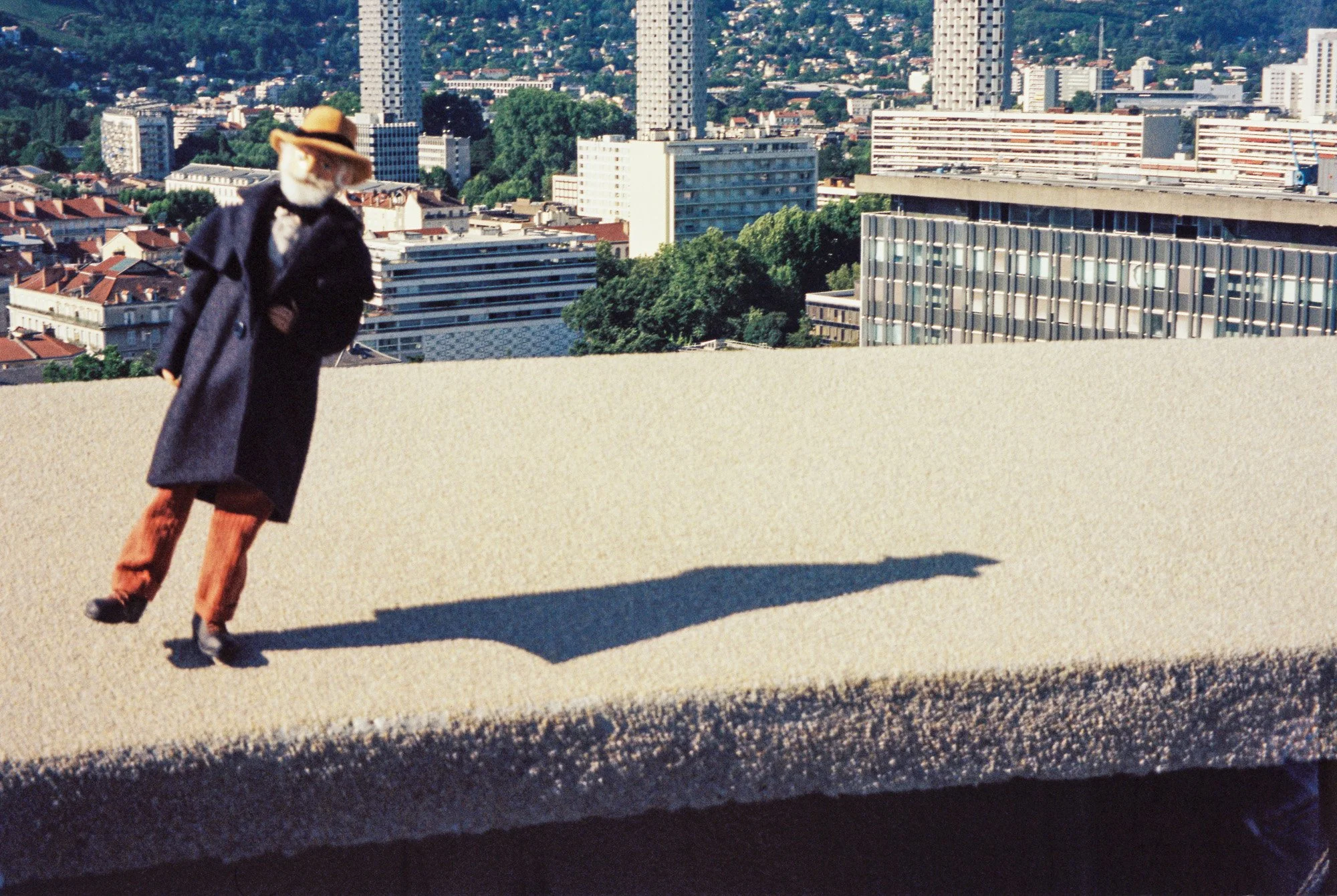
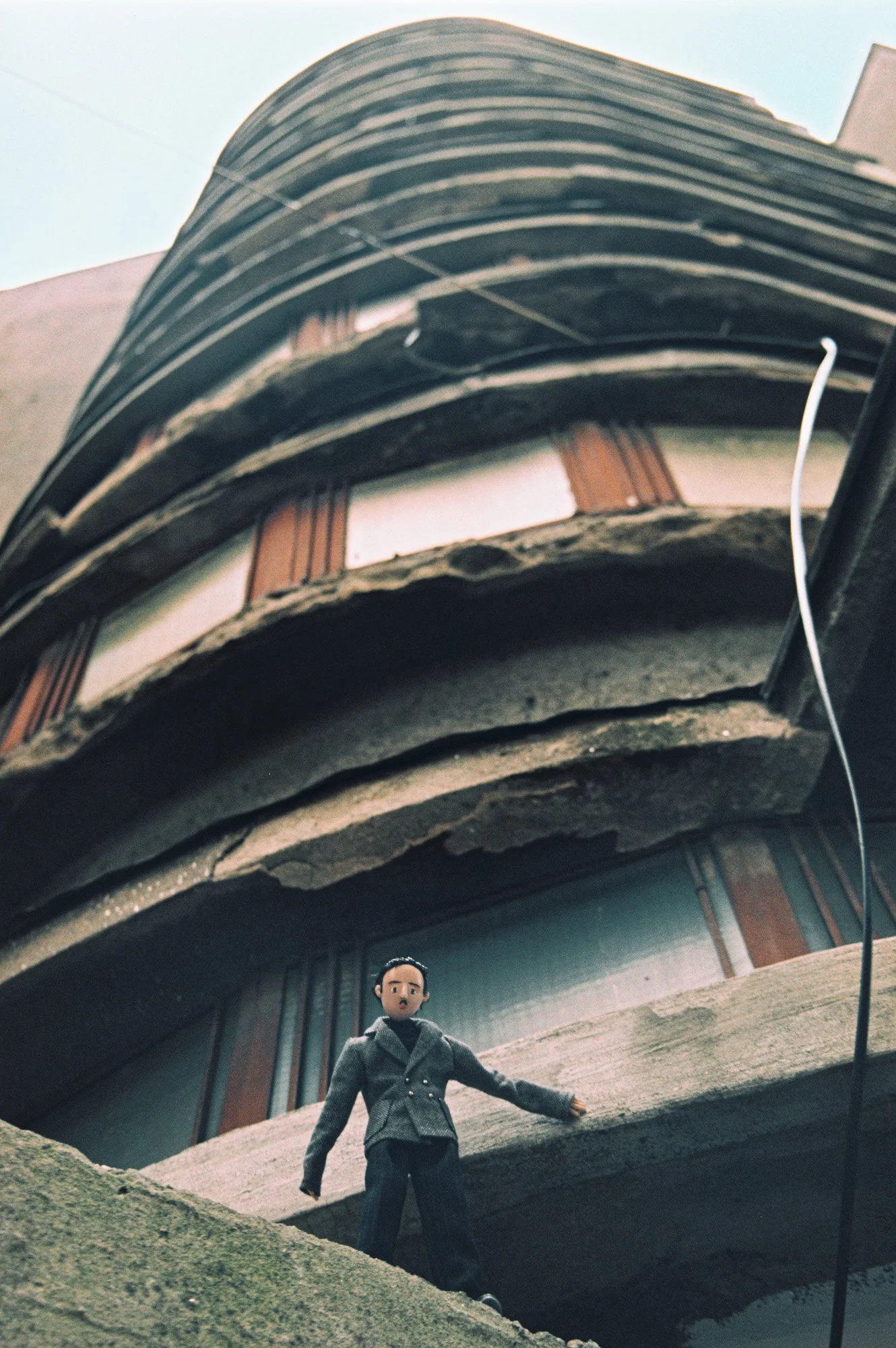
Zilberman on Stelea Spătarul 8, Bucharest.
A few impressions
Traveling by train is a lot easier in France. You can see it in our list: even though we had more time in Romania, we got to fewer cities. The distances are longer, especially when measured in hours, not kilometers.
There are so many wonderful buildings in Romania! The modernism here is a bit tamer and more decorated, sometimes almost Art Deco. Very charming. But many of these buildings are almost crumbling, or neglected, or renovated in a way that makes you feel no architect was involved. There are also buildings that are well kept, but far fewer than in France. Then again, we also heard stories of French buildings that were neglected for many years and have only recently been restored, like Villa E-1027. We'll tell you its story in another letter.

Maria arranging a character
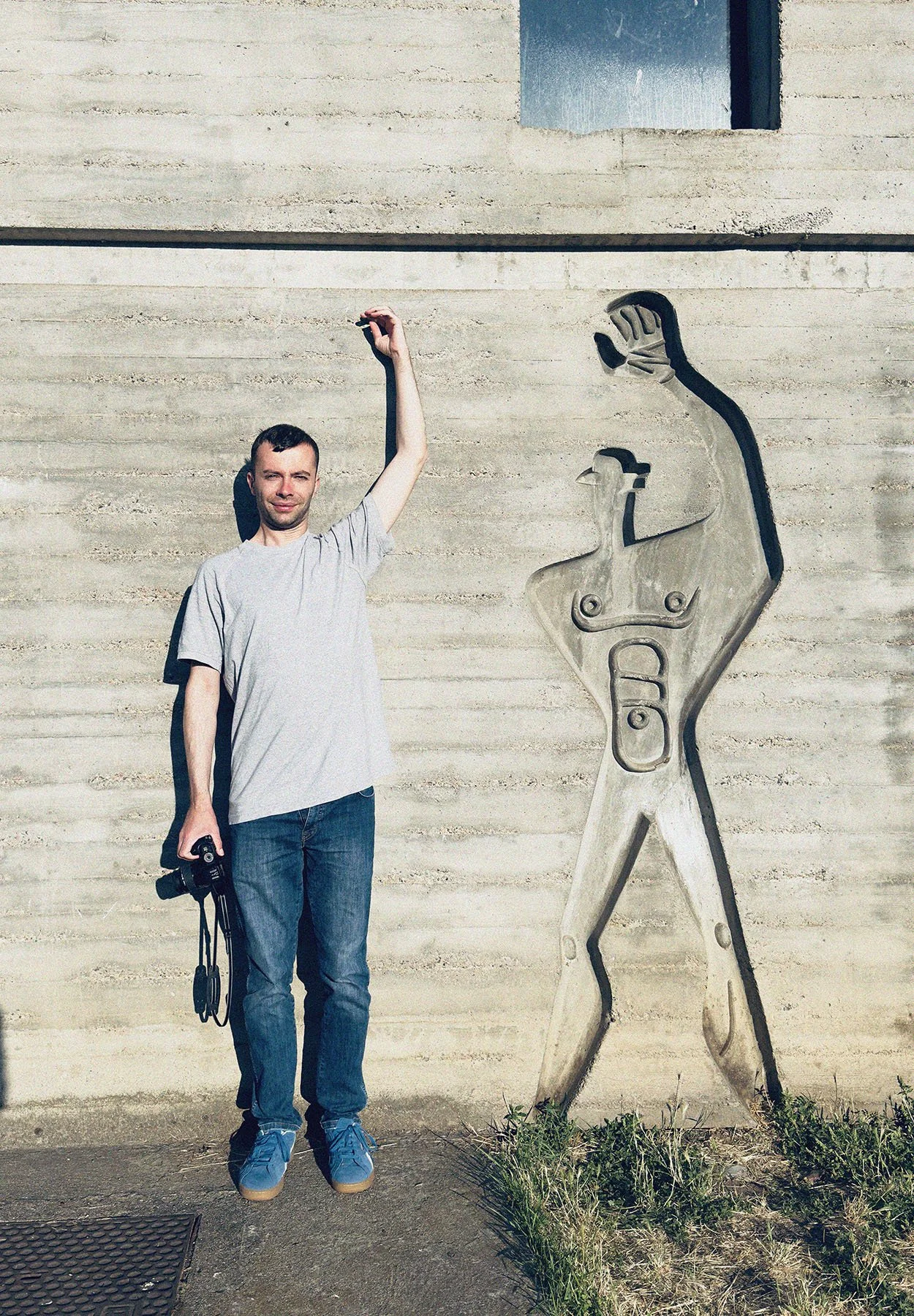
George on the scale of the Modulor
What comes next
Now the films are being developed and we're choosing the photographs for the album and the exhibition at MNAC. More about that in the next letter!
Until then: which of these cities above would you like us to tell you about first? Just reply to this email.
Thanks for reading and for waiting for us,
Keep playing,
Maria & the team
The cultural project "The Resilience of the Forgotten Fairy Tale: Modernism" is co-funded by the National Cultural Fund Administration. The project does not necessarily reflect the views of the National Cultural Fund Administration. The National Cultural Fund Administration is not responsible for the content of the project or for how the project's results may be used. These are entirely the responsibility of the grant recipient.
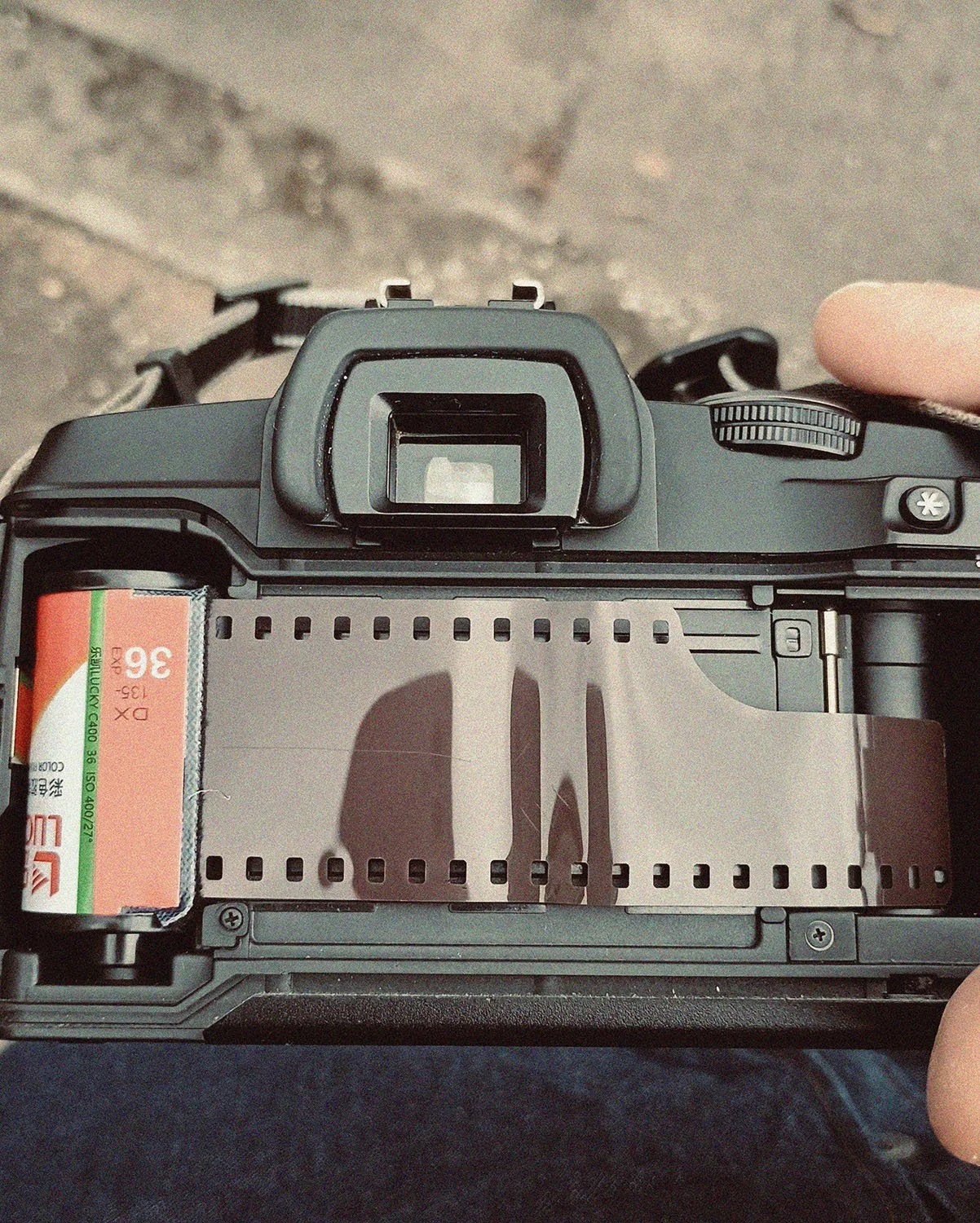
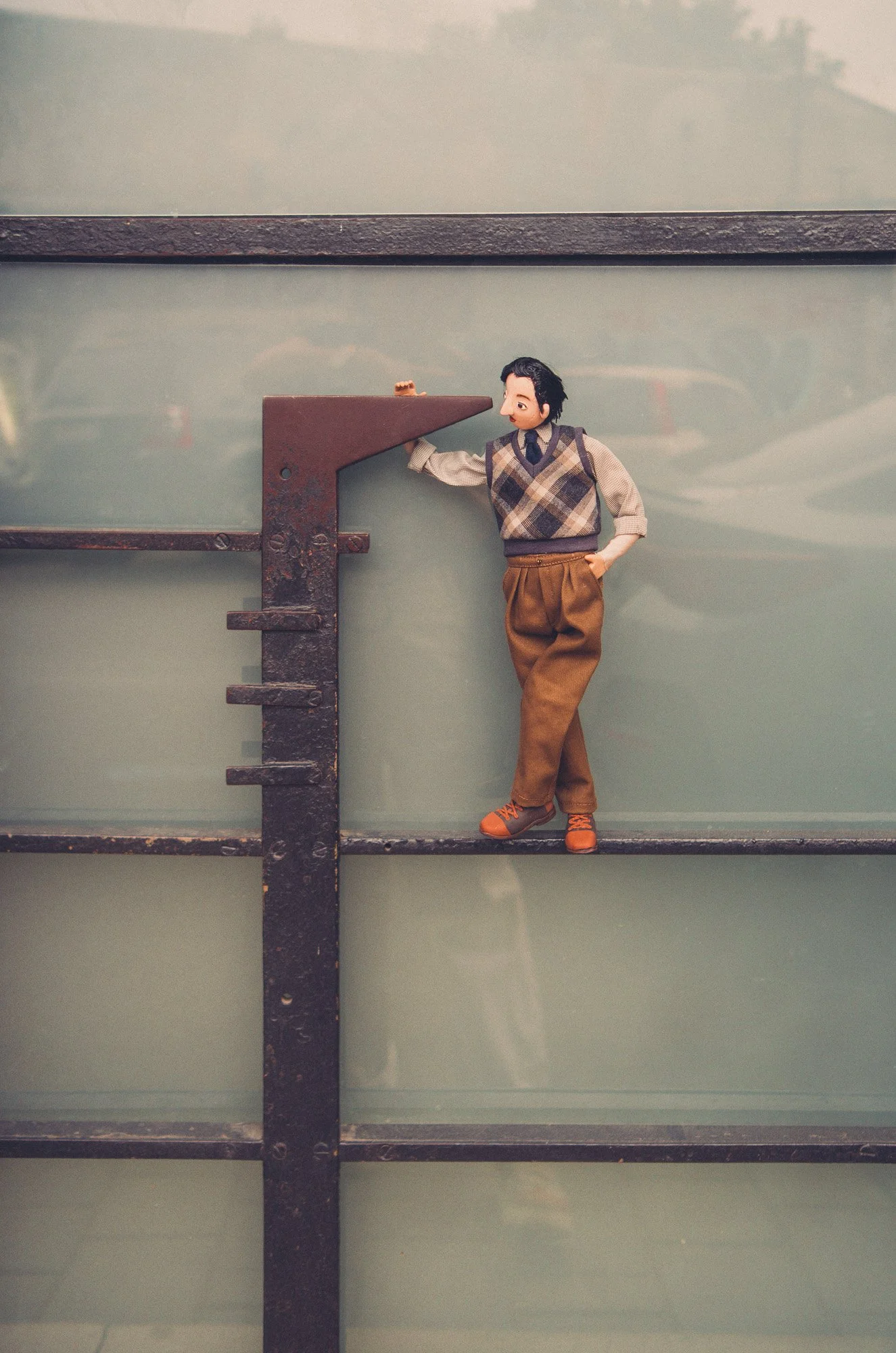
The City becomes our Playground
For the past few weeks, we have been exploring the urban space, documenting the meeting between our crafted toys and the modernist heritage around us through photography.
The photo sessions for our project have officially begun, and our characters have finally stepped out onto the streets! For the past few weeks, we have been exploring the urban space, documenting the meeting between our crafted toys and the modernist heritage around us through photography. Today I’ll share a bit of how we chose our routes, the surprises we experienced, and the surprising challenges of shooting on film.
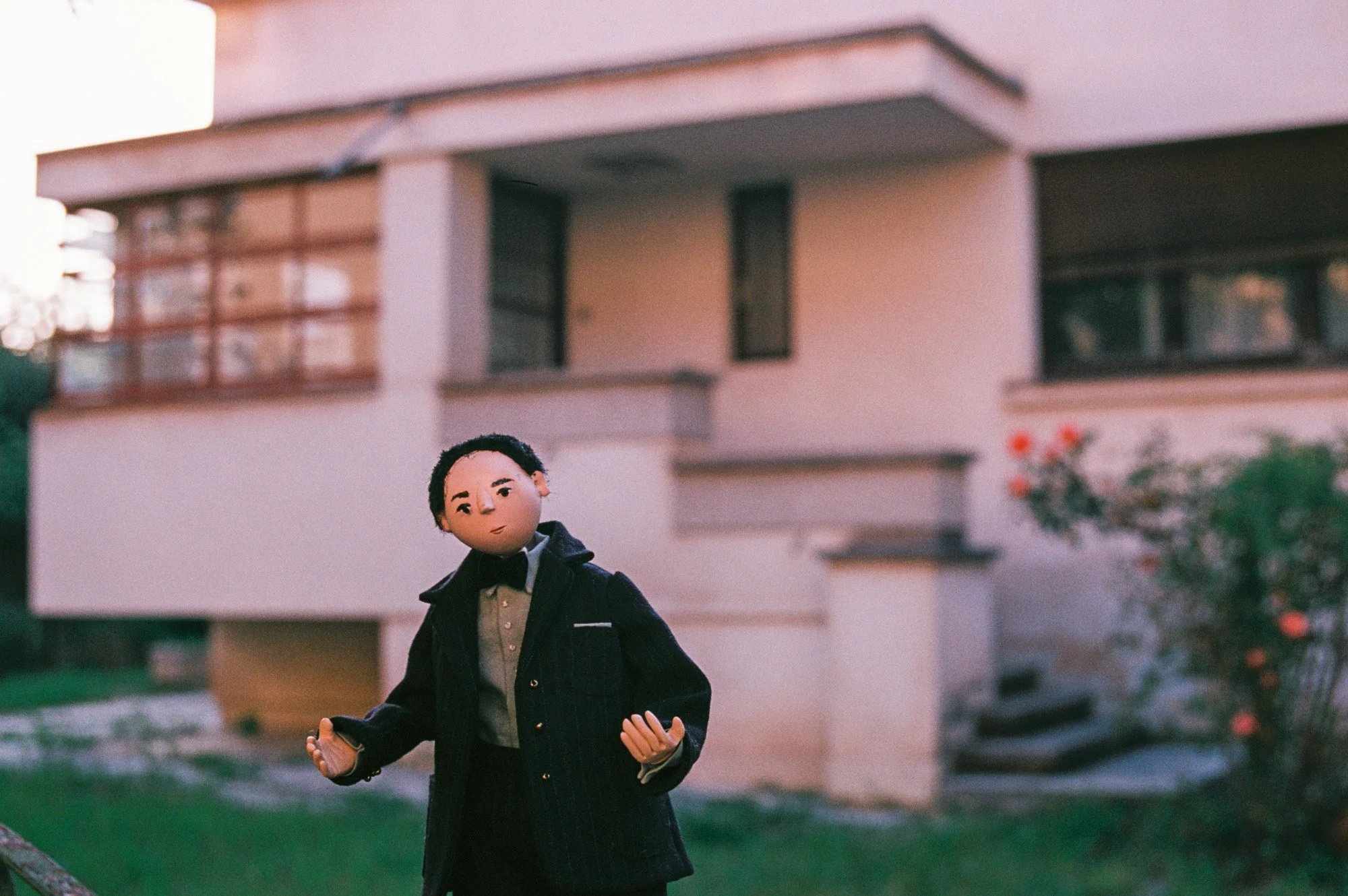
The Foundation: Books, Archives, and Hidden Modernism
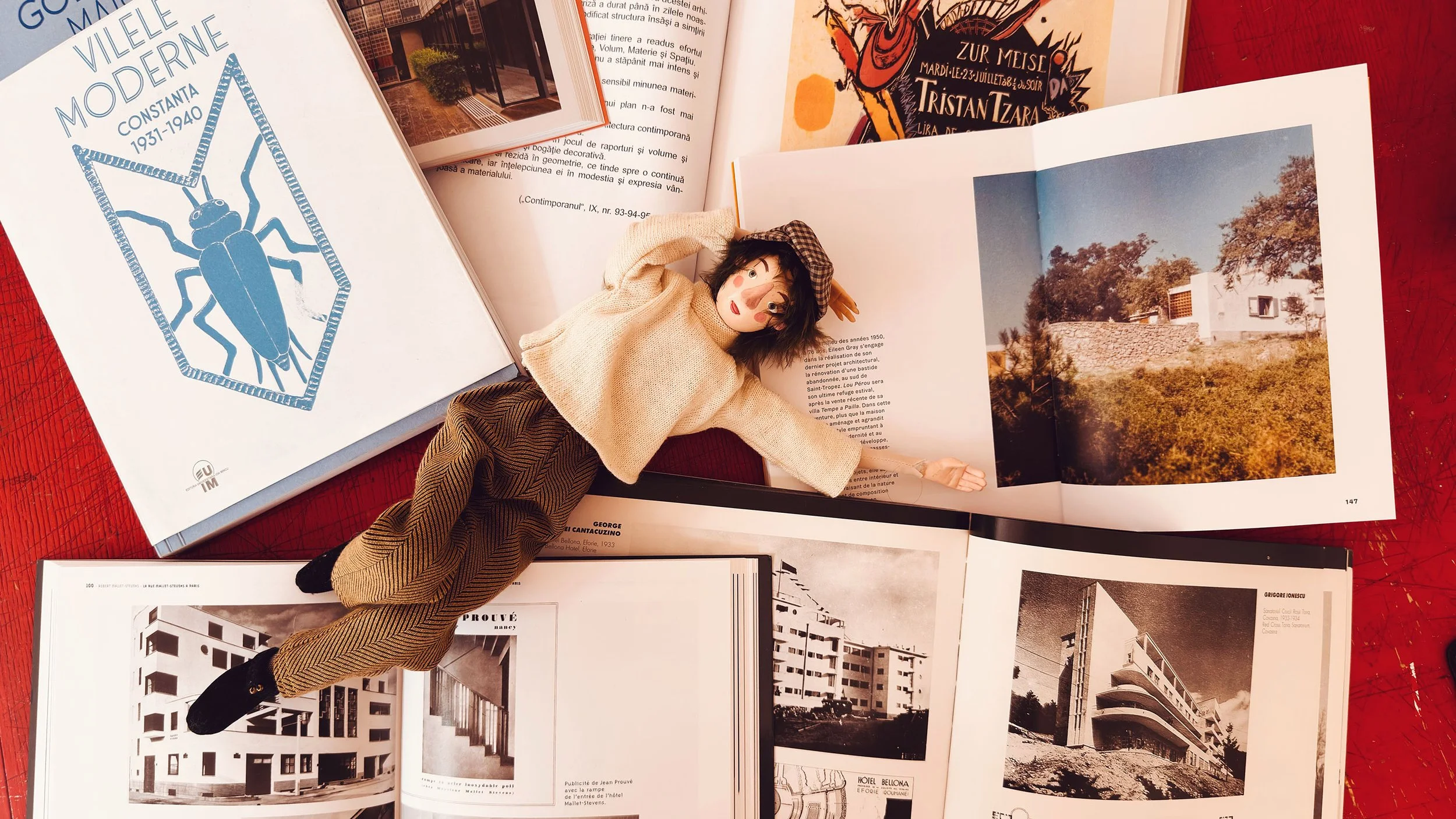
Before placing a single character in front of the lens, we immersed ourselves in research. We surrounded ourselves with books on the modernist and avant-garde movements in Romania and France, leafing through monographs dedicated to pioneers like Marcel Iancu, Robert Mallet-Stevens, Eileen Gray, Goldstein Maicu, Charlotte Perriand to name a few while studying visual archives of both Paris and Bucharest (and regional architecture as well!).
That is also how we ended up in Câmpina. It might seem like an unusual choice, but during our research, we discovered a brilliant initiative focused on mapping hidden modernist heritage in Câmpina as a pilot project. At Micul Haos, our approach to heritage is highly subjective and poetic. We create mediator-characters so we can look critically at modernist heritage, aiming to bring young spectators into a critical and poetic understanding of the space that surrounds us. However, this creative research is deeply reliant on the rigorous research conducted by historians and architects. Finding a project that brings the architectural gems of a smaller Romanian city to light was incredibly inspiring, and we sincerely hope to see similar initiatives expand to other cities.
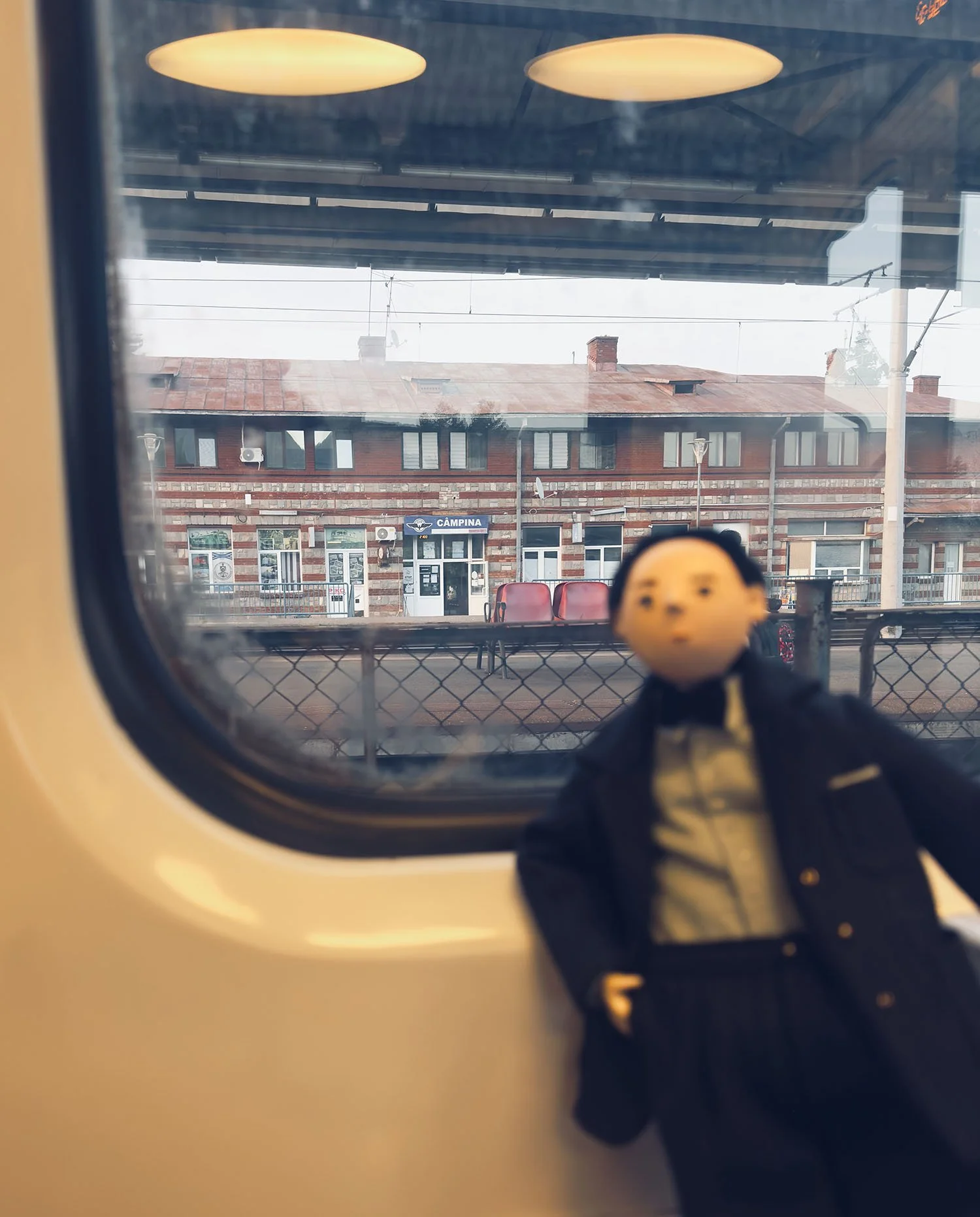
The train to Câmpina was our first ride and destination.
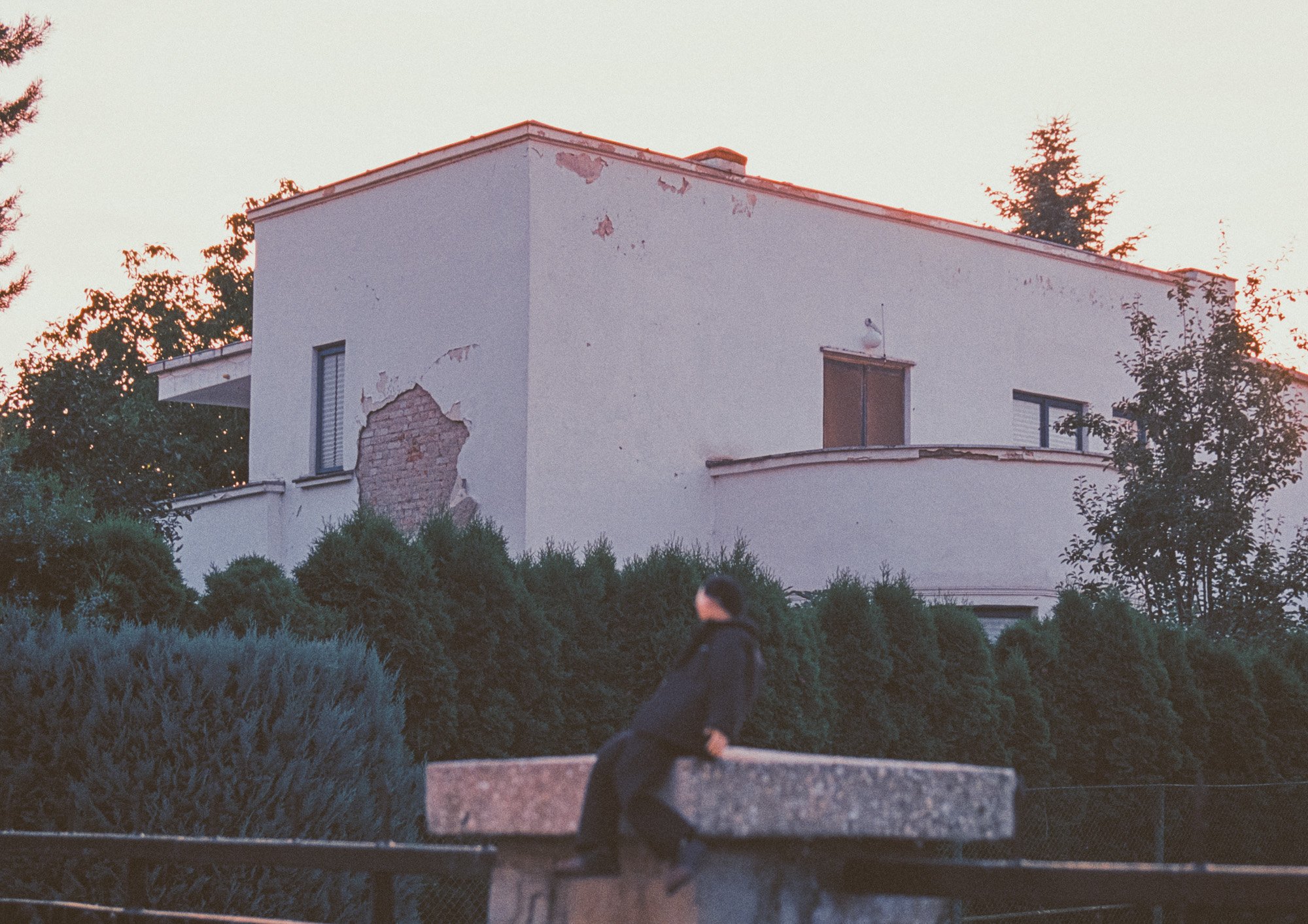
Some modernist villas in Câmpina could only be experienced from afar.
But our research wasn't confined to the pages of books or digital archives. We discovered a lot of inspiration simply by walking through the city and noticing the little details, the beautiful continuous lines, the bold geometric shapes, and the elegant, engraved names of the architects on the buildings themselves (some of these engravings have sadly been erased). It was exactly this kind of attentive wandering that led us to the deeply moving story of the architect Burah (Boris) Zilberman. But more about him in a future post.
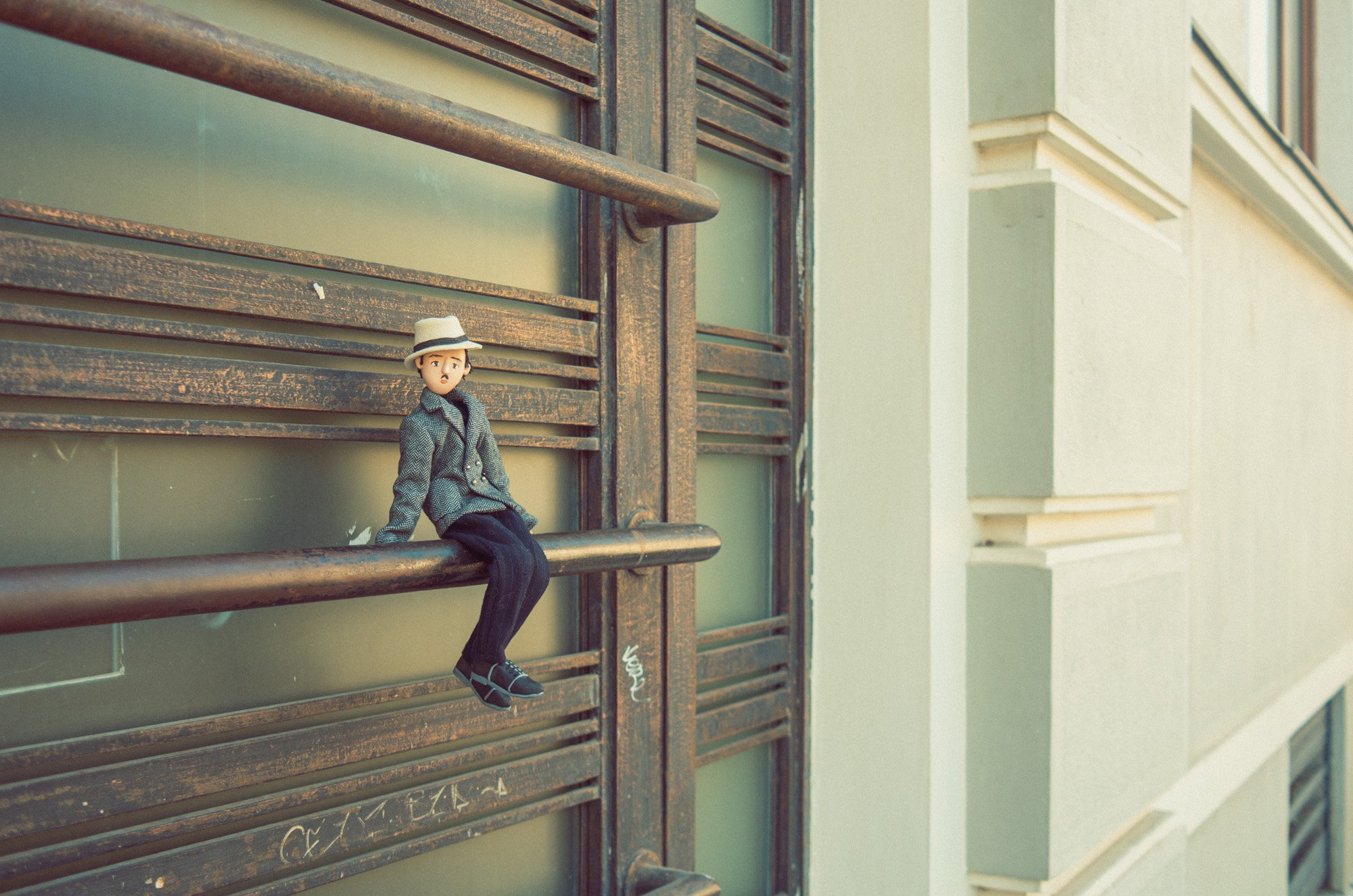
Entrance details on an Art Deco building in Sfântul Ștefan square in Bucharest.
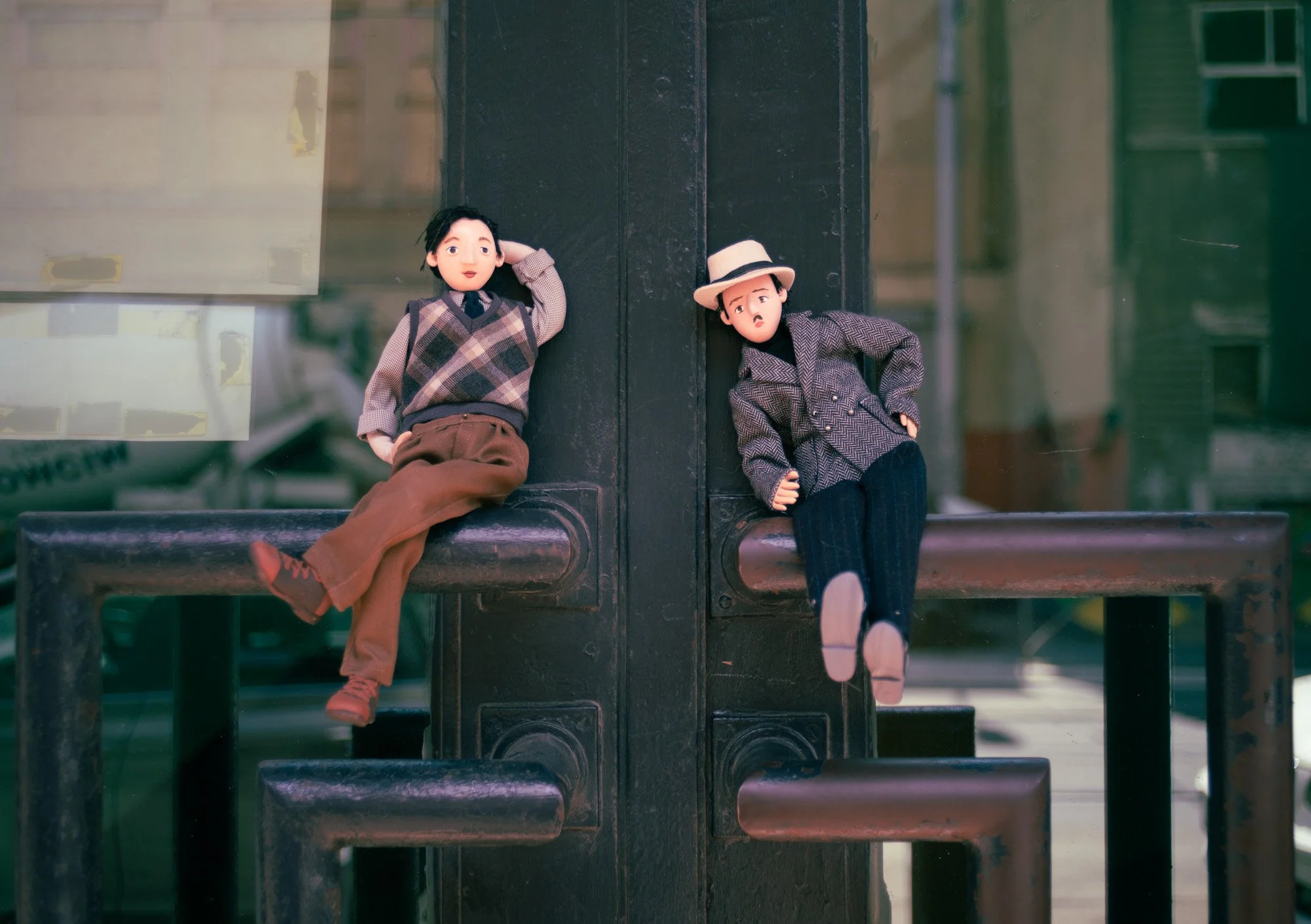
In the Footsteps of Marcel Iancu: From Dadaism to Lived Space
While in Câmpina we explored hidden gems, in Bucharest we first set out on the trail of Marcel Iancu. We won't be able to do this exhaustively with every architect, but here, we felt compelled to physically walk the streets and witness the current state of the buildings he left behind. The reality on the ground is quite diverse. We encountered quite a contrast in how these buildings exist today, ranging from properties sadly left to collapse under the weight of time, to structures that are beautifully maintained and some that were quite changed. Some of them have received monument status in the last 20 years or so, which is good.
Visiting all these buildings one after another allowed us to intimately understand how Iancu conceived space. We could feel the volumes and, most importantly, observe how his buildings negotiate the delicate boundary between private intimacy and the public square.
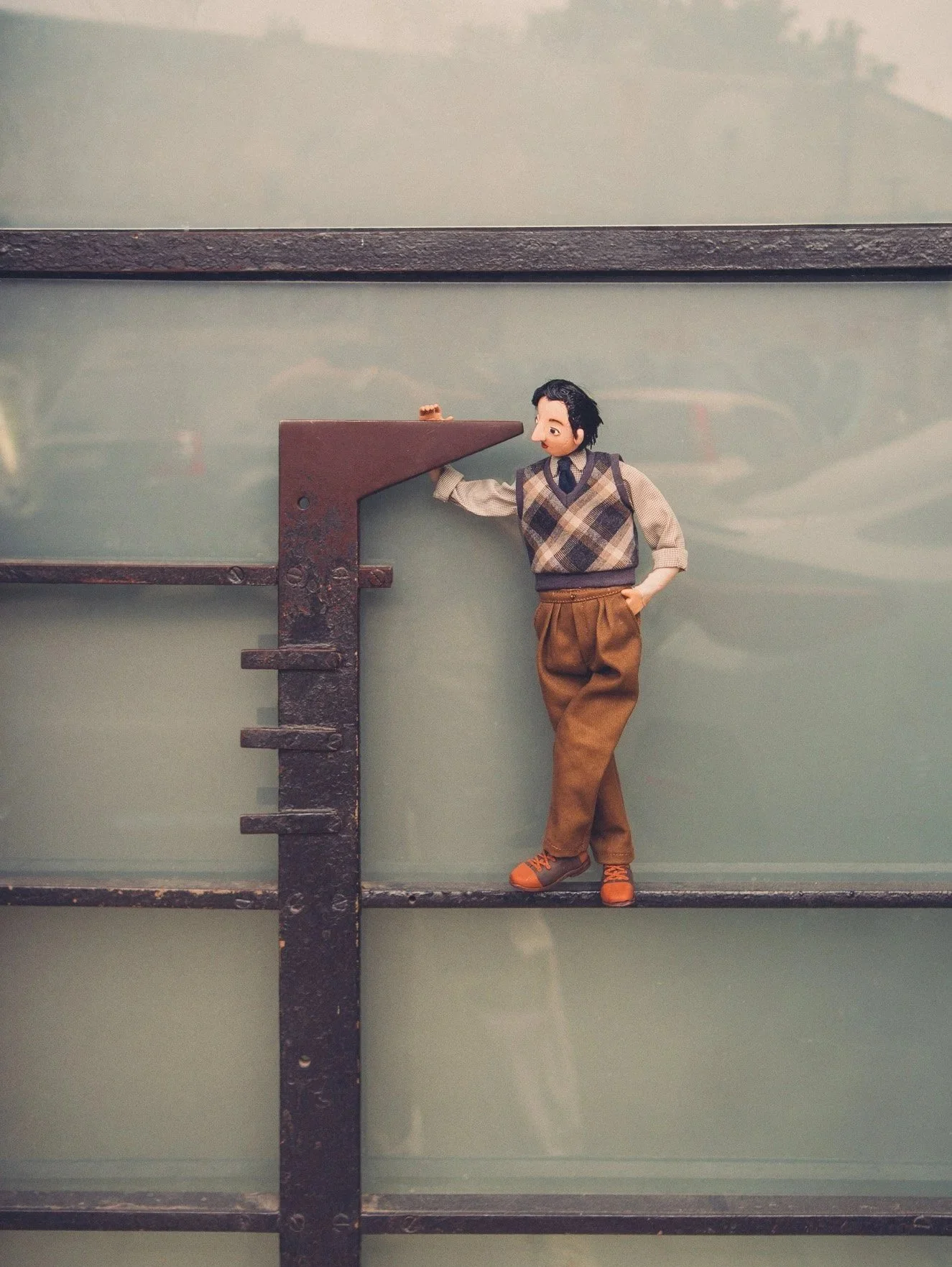
Detail at the entrance of the apartment block on Ștefan Luchian Street
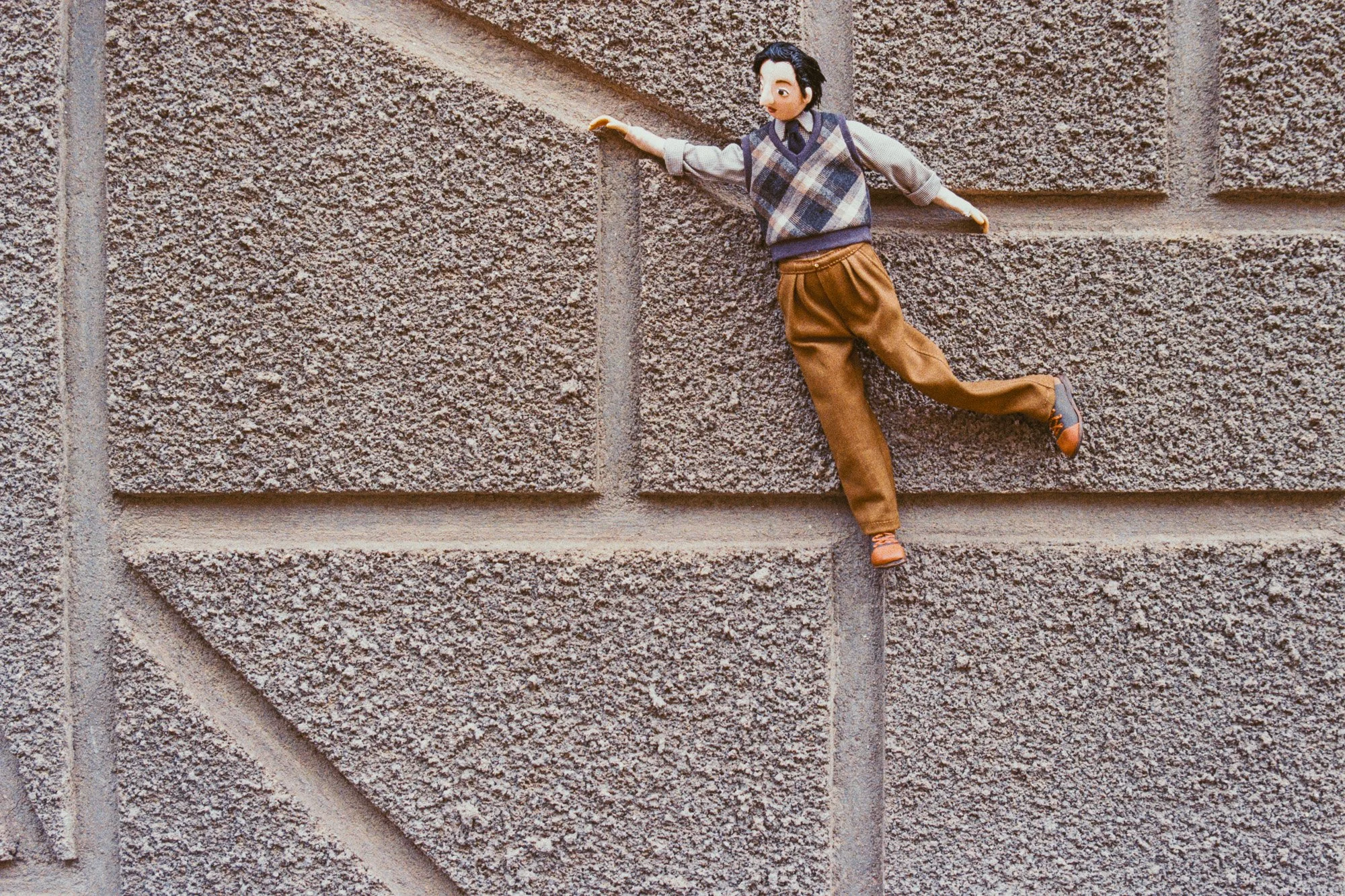
The playground in the details
Even if some of these buildings have been altered beyond recognition, there are still details as reminders of of their original concepts.
Iancu was a brilliant architect, a pioneer of the early 20th-century avant-garde and a founder of the Dada movement. His Bucharest buildings carry that revolutionary energy and his complex nature. He fled persecution in 1941 and founded the utopian artists' colony of Ein Hod in Israel (with its own complex history) and was not celebrated in Romania for many decades. This duality is central to how we approach our work at Micul Haos. Our mediator-characters do not look up to these architects as flawless, solitary heroes, nor do they treat these modernist buildings as pristine altars. Instead, they interact with an inherited reality. The toys step into these concrete frames trying to relate to a space that is heavily layered, bearing both visionary brilliance and uncomfortable historical truths. They are here to question, to touch, and to understand the environment we've been left with, acting as a bridge to a deeper, more critical comprehension of the spaces that surround us.
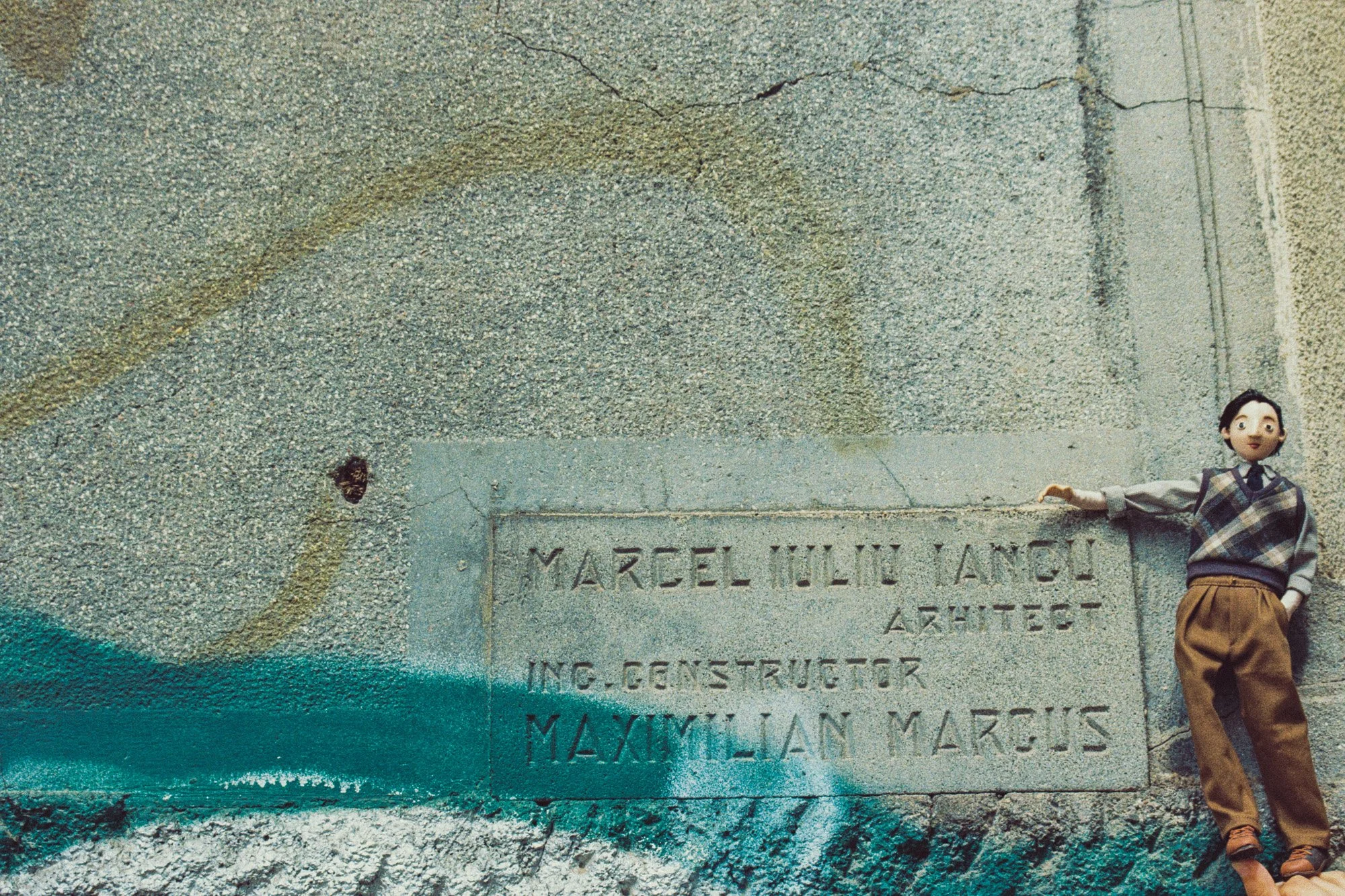
Name engraved on the Solly Gold Building on Hristo Botev Street
The Myth of the Solitary Genius and Collective Effort
As we walked and read the plaques on the facades, we had a realization. Many of them read "Marcel and Iuliu Iancu." Iuliu was his brother, also an architect, with whom he co-signed numerous works. Culturally, we have a deeply ingrained habit of attributing a masterpiece to a single author, a solitary genius. In reality, architecture is a team effort, a convergence of minds and shared labor. We relate to this deeply at Micul Haos, as the artworks produced in this project are achieved through the collaboration between the toy designer and the photographer, alongside a team that includes an architect, a curator, and a manager. This theme of creative partnership is fascinating, and we see it again with Horia Creangă, who worked for years also alongside his brother, as well as with architect Lucia Creangă, who was both his wife and professional partner.
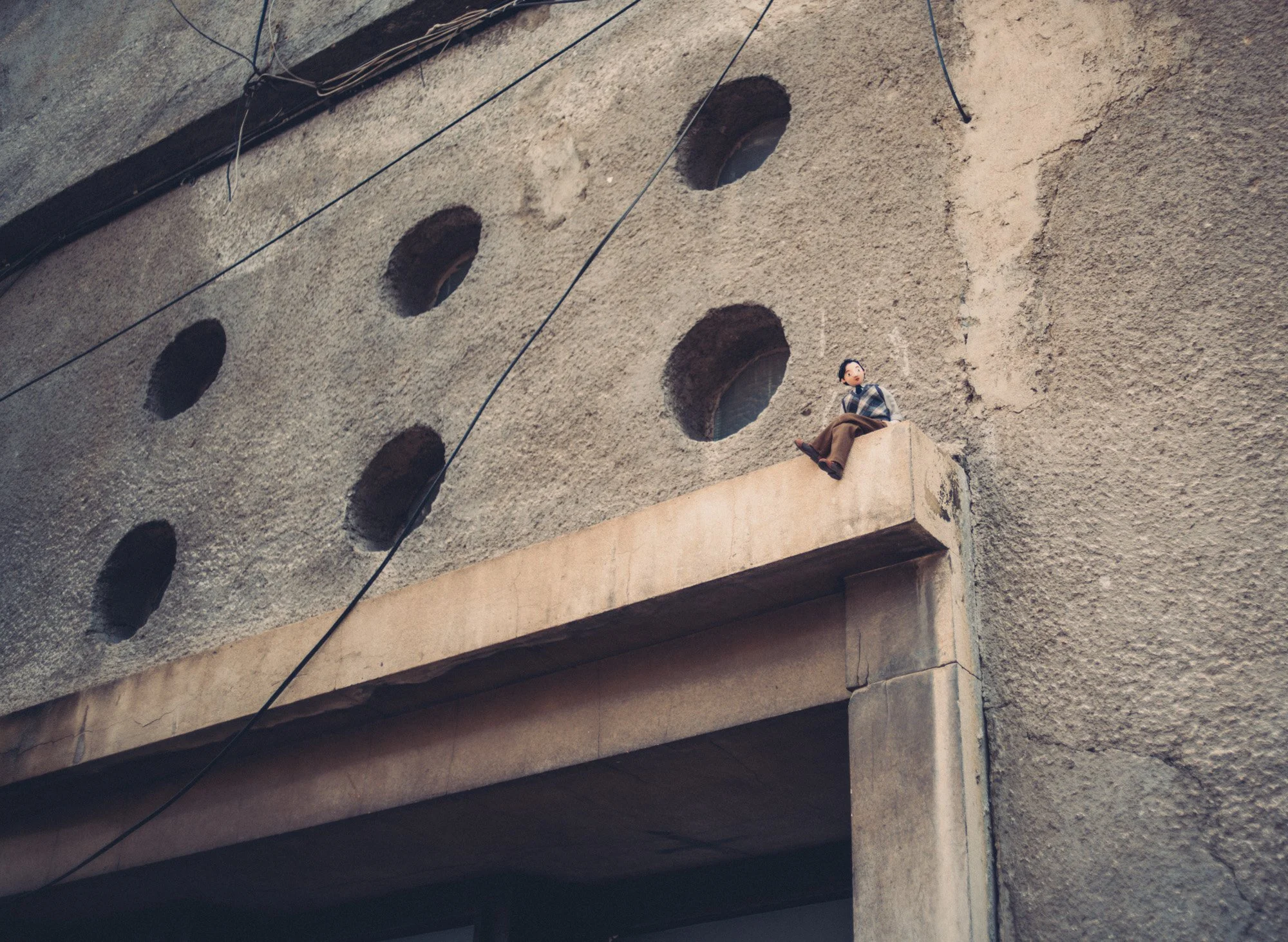
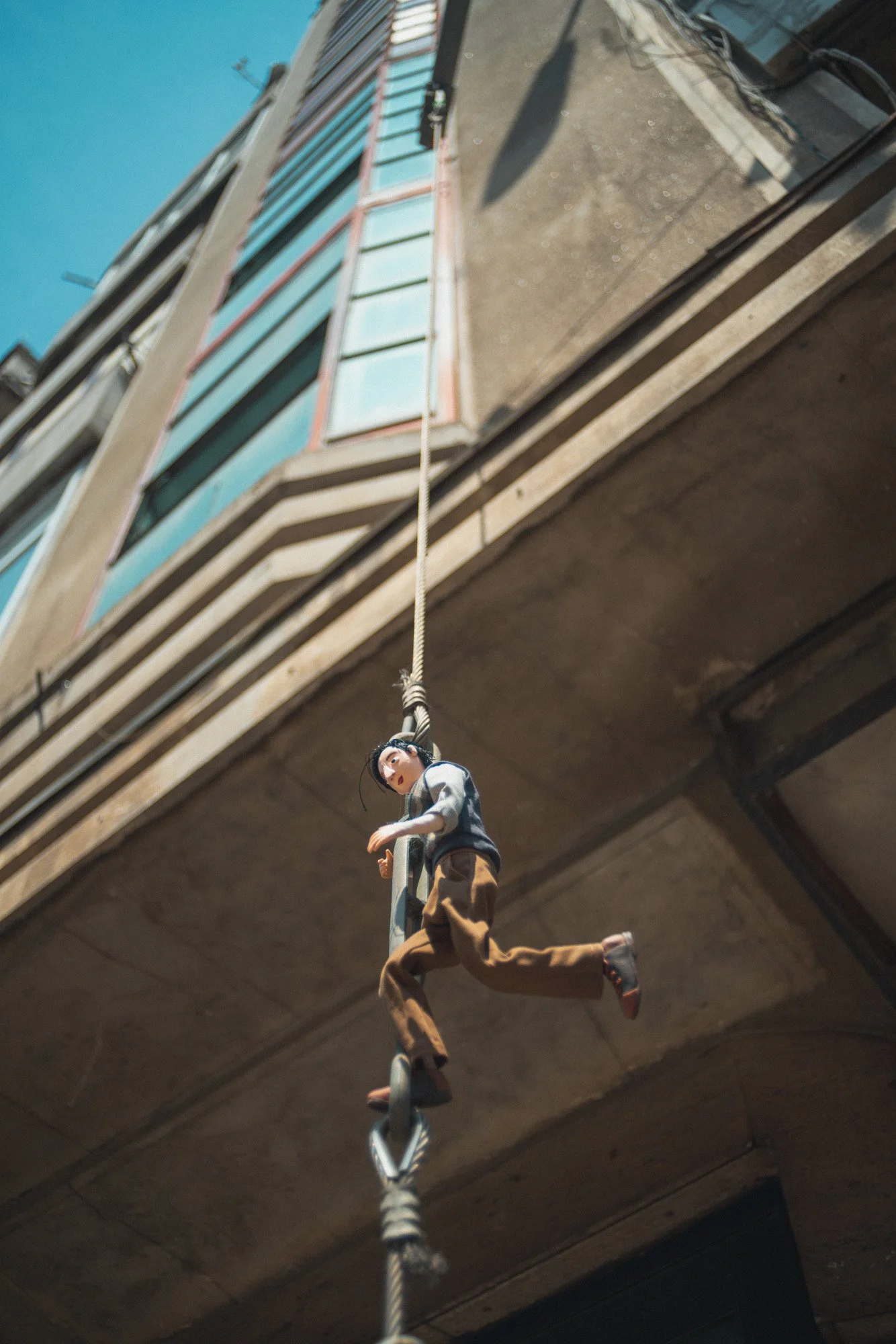
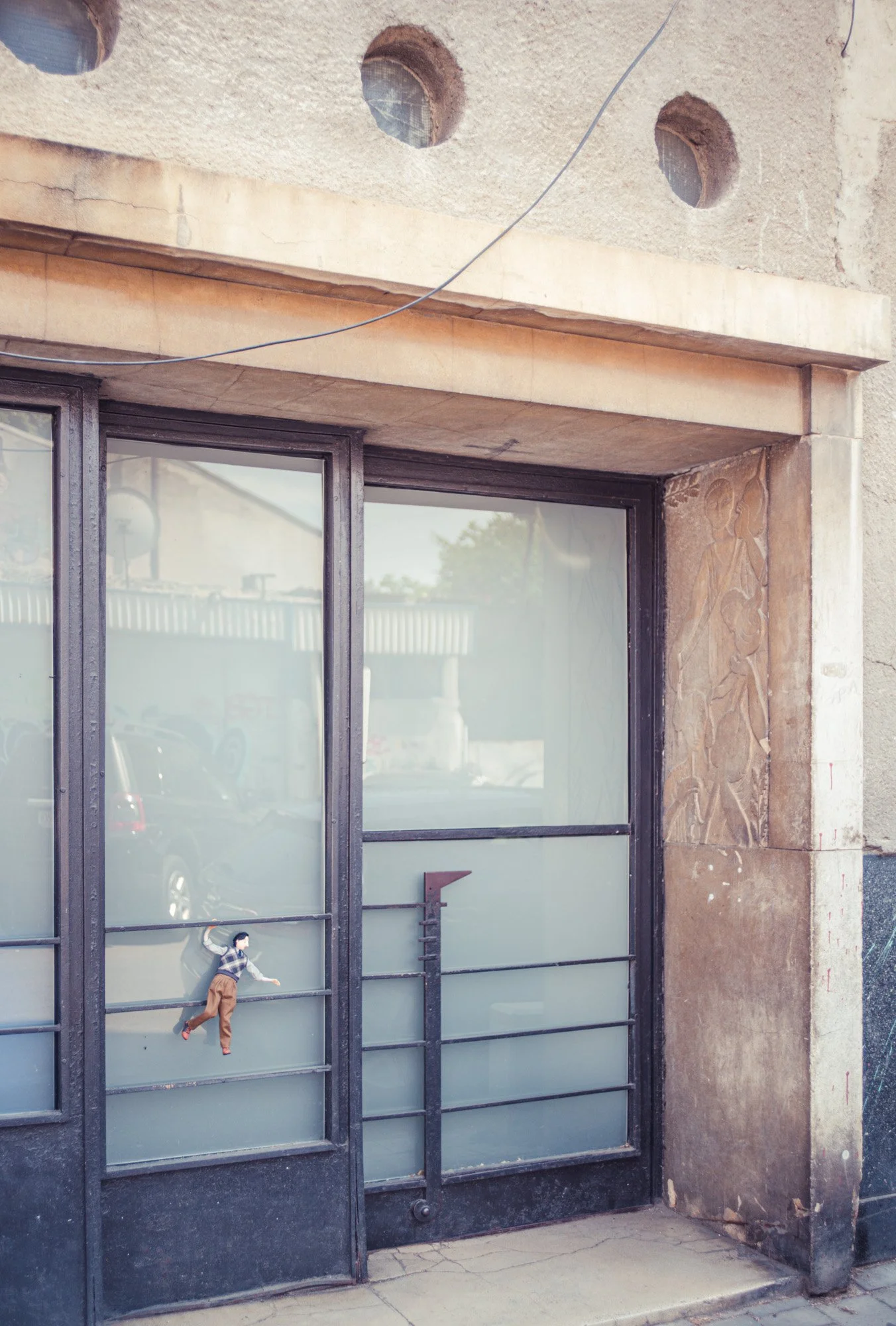
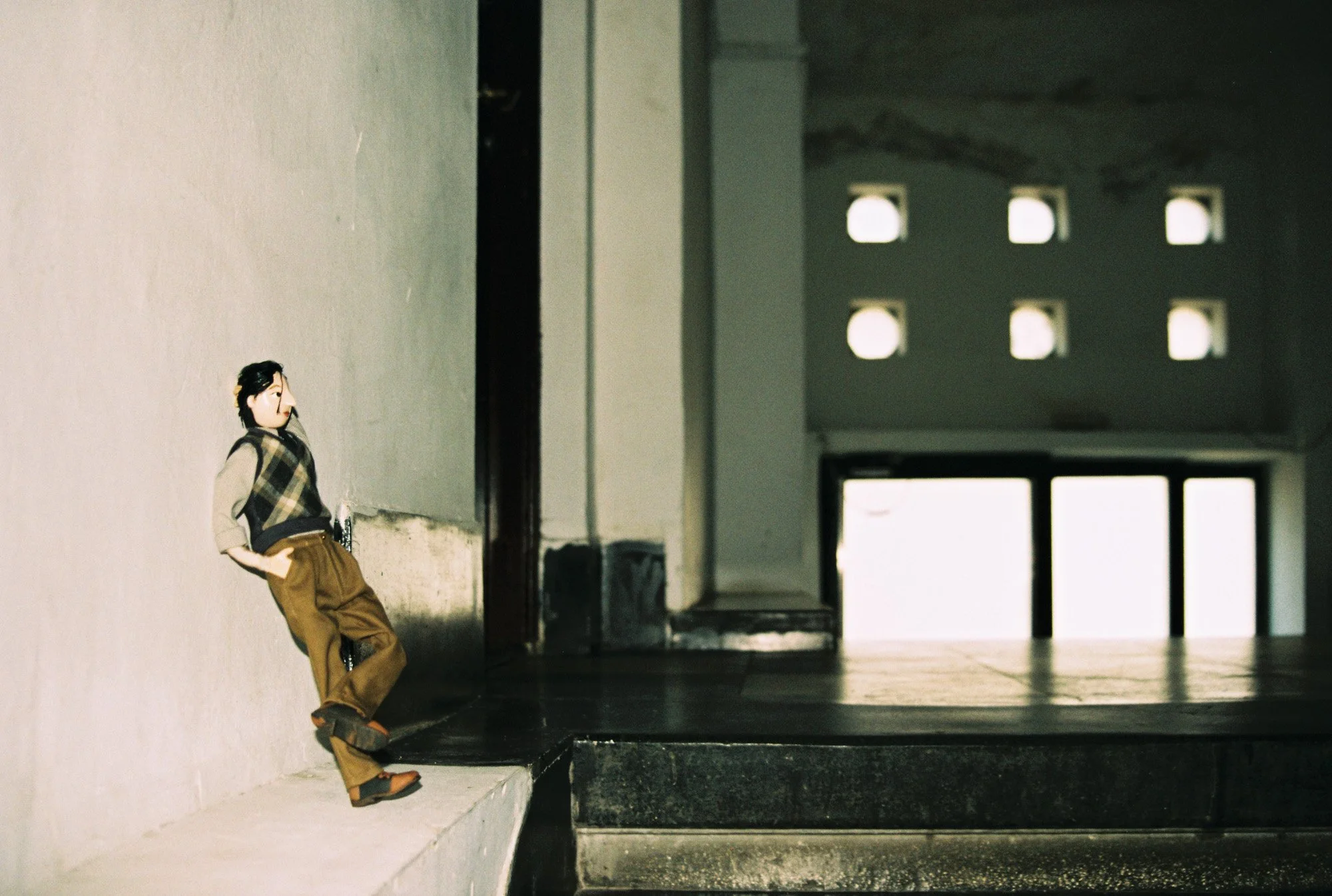
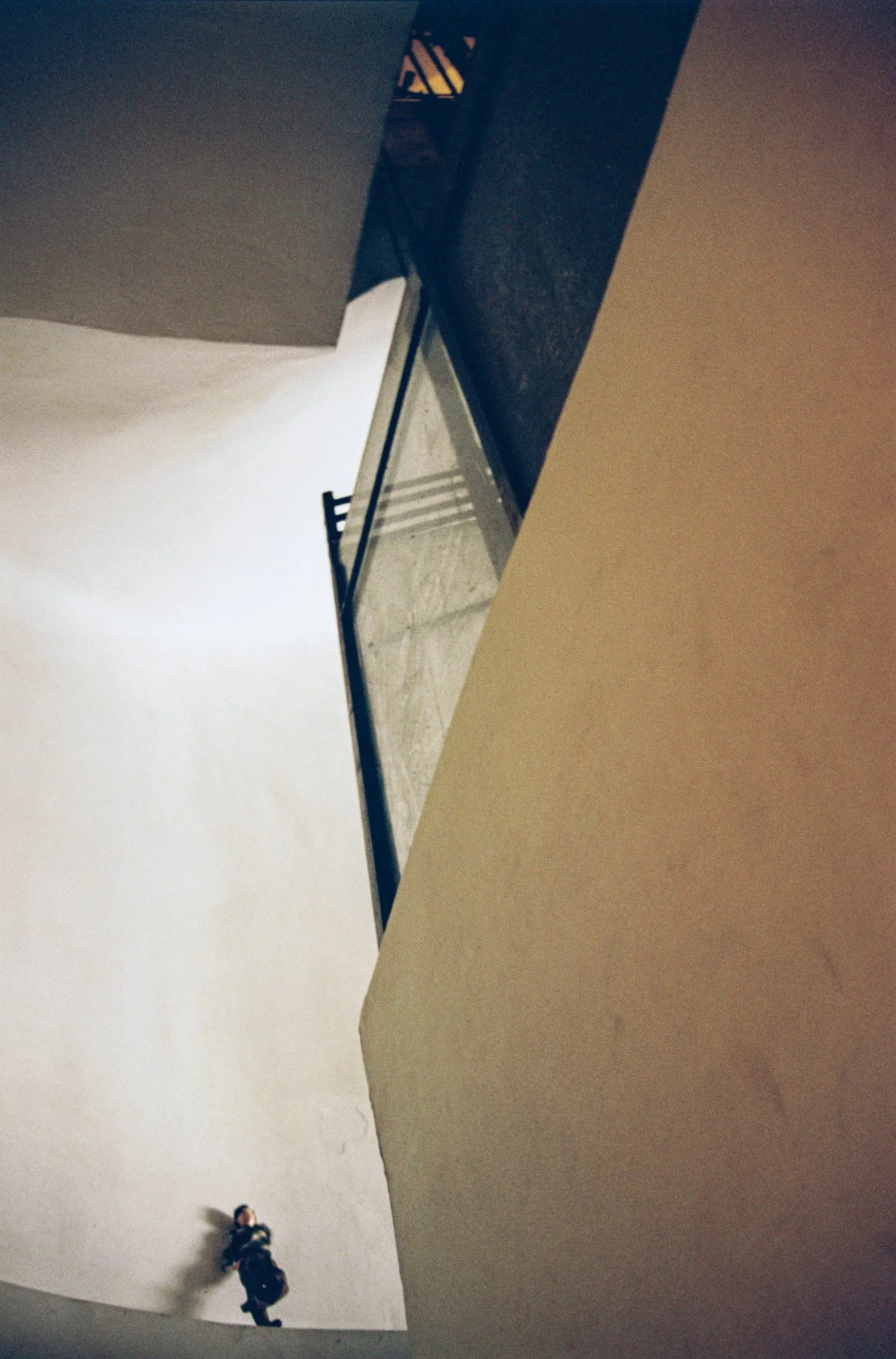
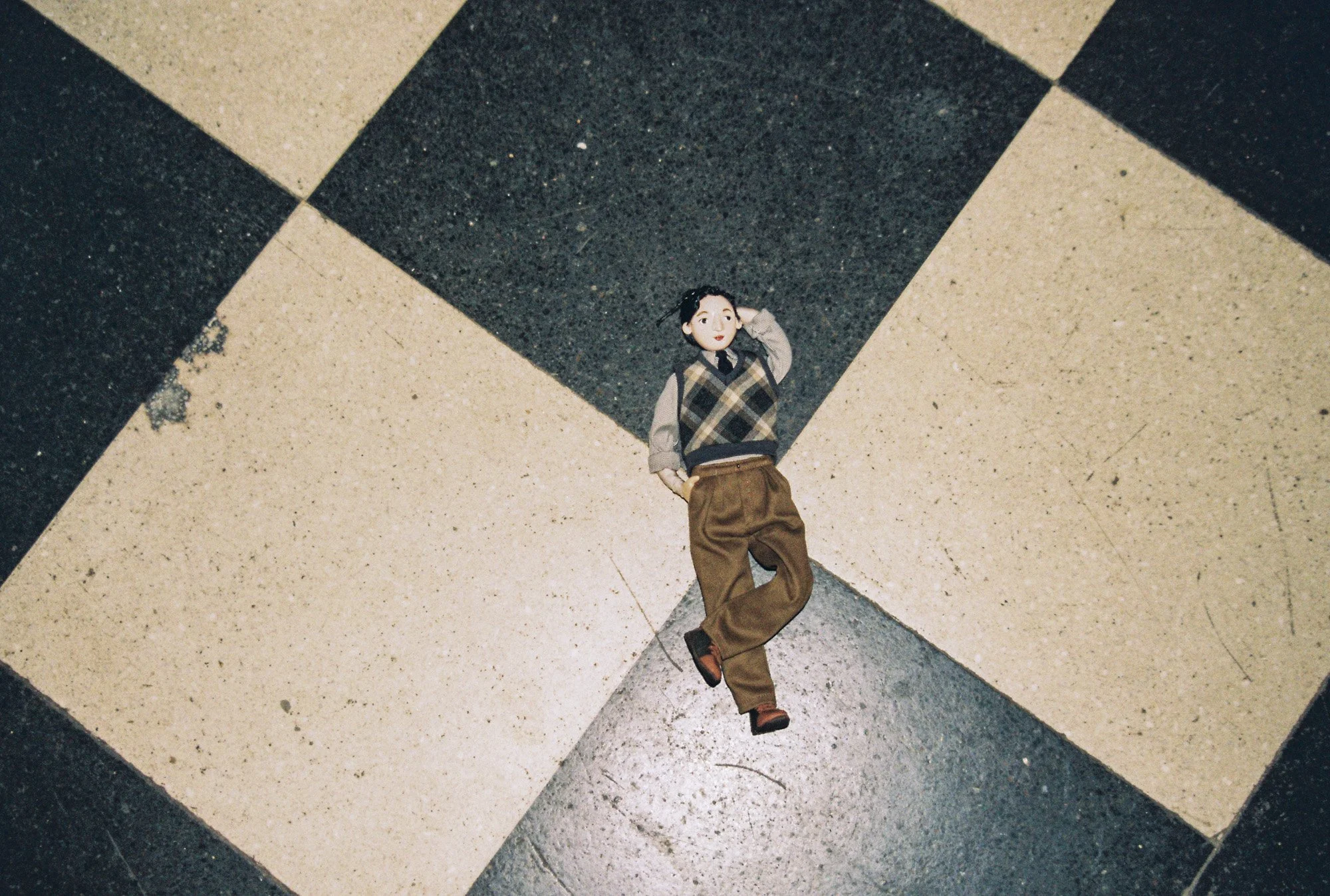
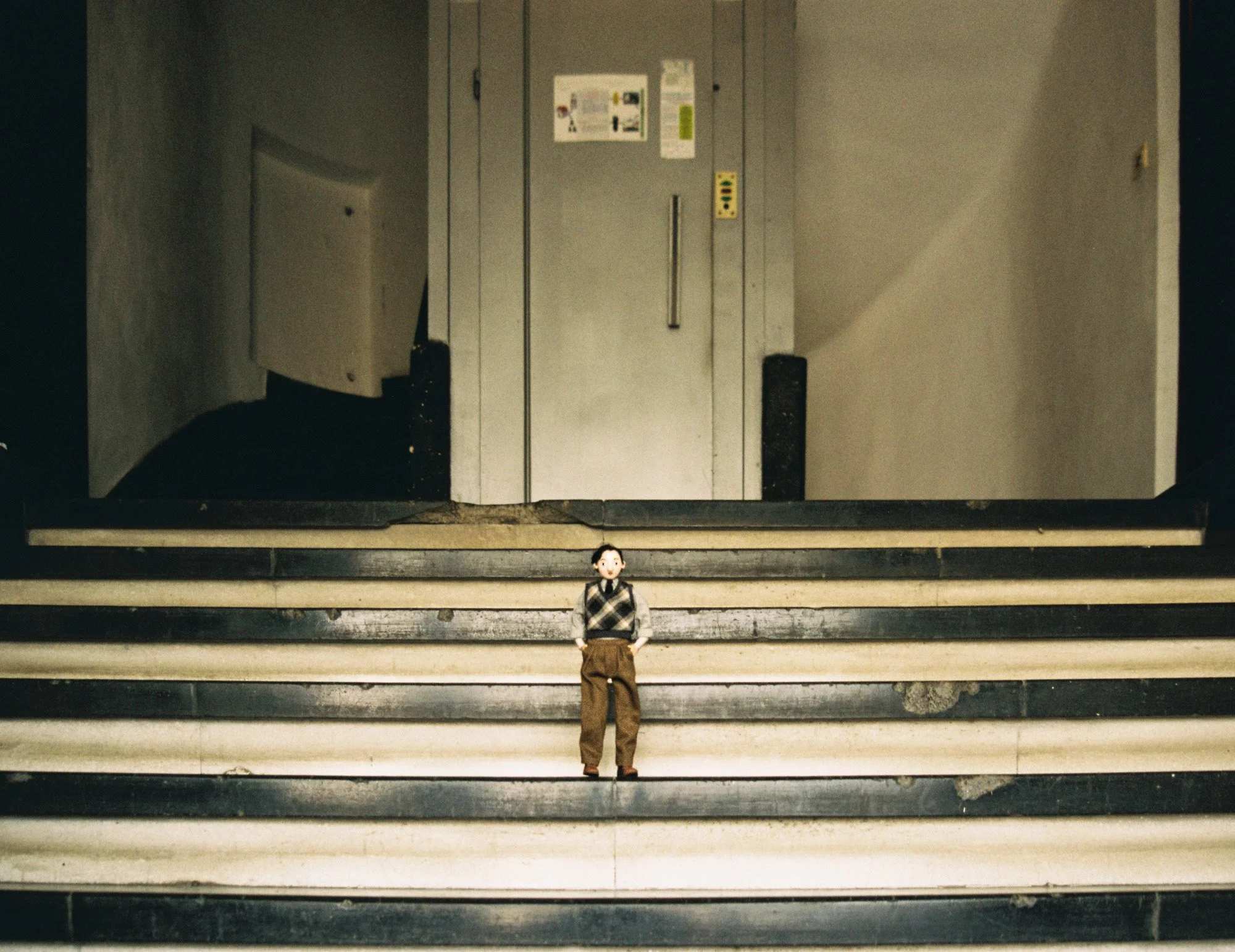
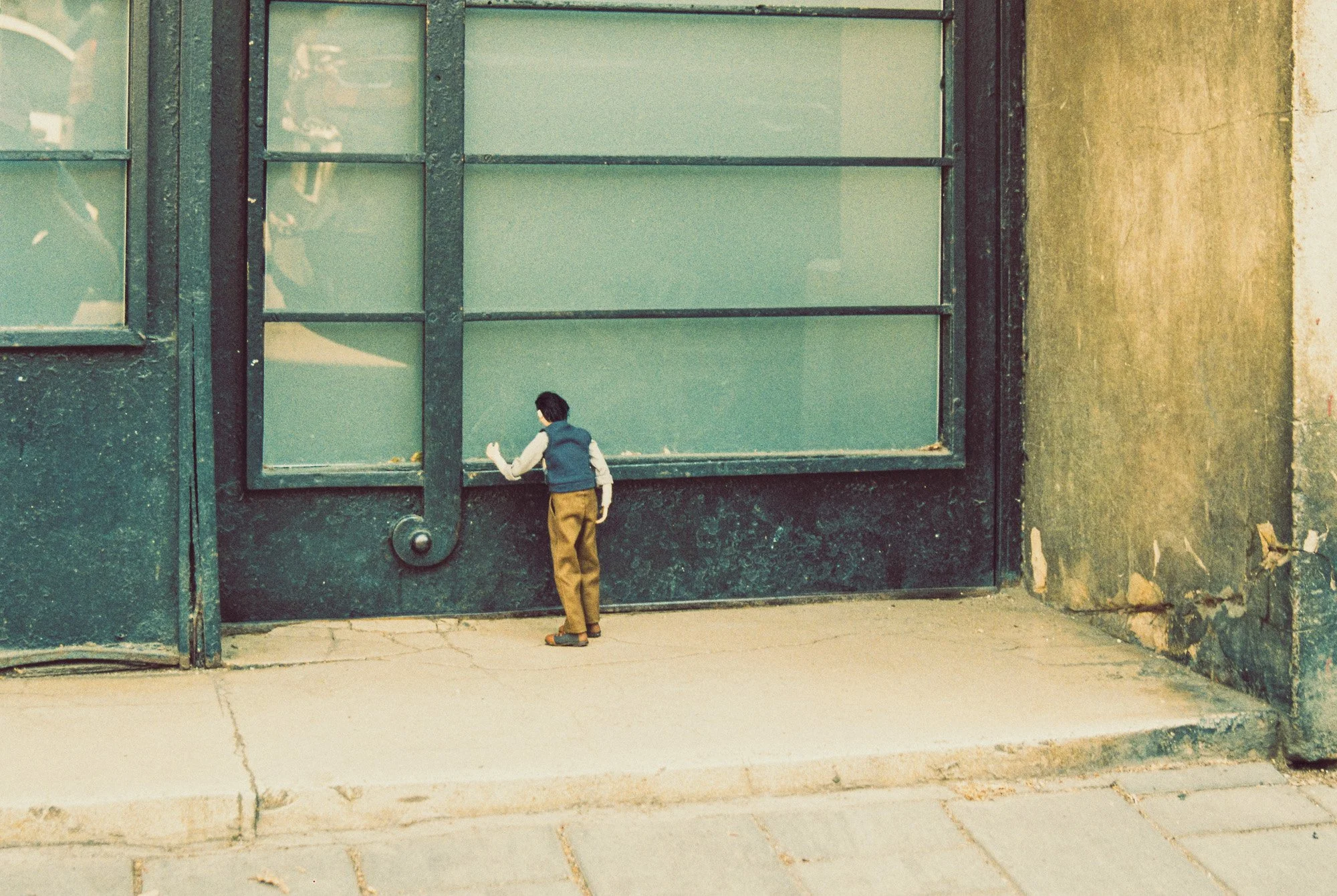
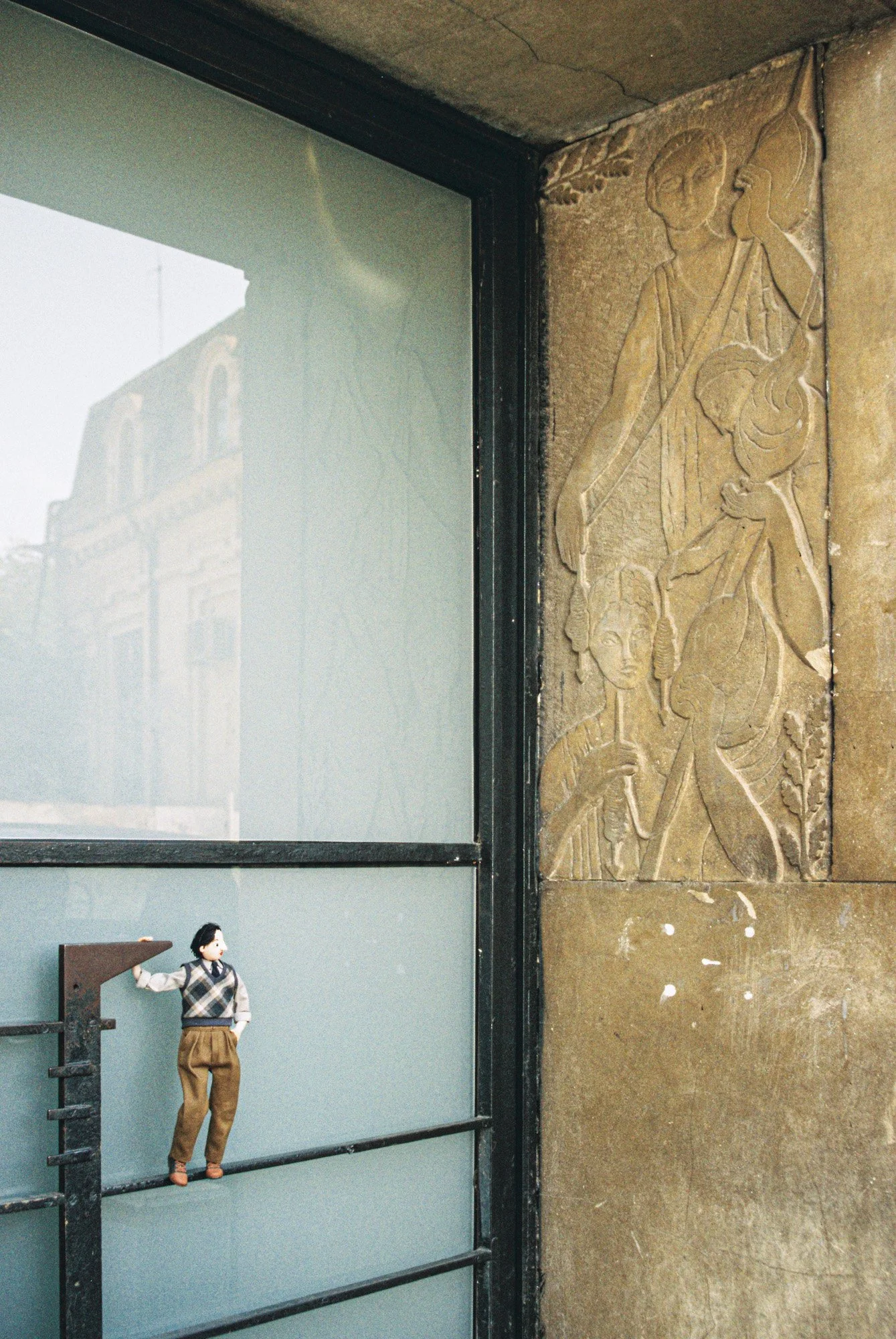
The Unpredictable Magic of Analog Photography
We are both photographing so we are working both analog and digital. Even though George has worked with analog film for over ten years, this medium still manages to be entirely surprising. Standard architectural photography is one thing, but the moment you try to capture the relationship between massive concrete frames and a small, delicate character, everything complicates: focus, grain, everything matters more. The perspective shifts drastically from what we see every day when we simply walk past these buildings.
We are constantly searching for ways to place the character in an active dialogue with the building and the surrounding space. There is a profound contrast between the soft, meticulously crafted texture of the character and the rigid, imposing texture of the concrete, and translating that tension into photography requires immense care. Shooting on film introduces a unique set of technical hurdles. We must balance exposure and clarity so that both the tiny character in the foreground and the monumental building in the background remain visible and sharp. We also have to embrace the texture and grain of the film, all while finding the right angle and the perfect spot to set up the shot without intruding on the daily lives of the people who actually reside in these spaces. It is a slow, deliberate dance between the toy, the architecture, the camera, and the city itself.
We are still exploring the streets of Bucharest these days, discovering new angles and hidden narratives, but we are also intensely preparing for our big upcoming trip through France.
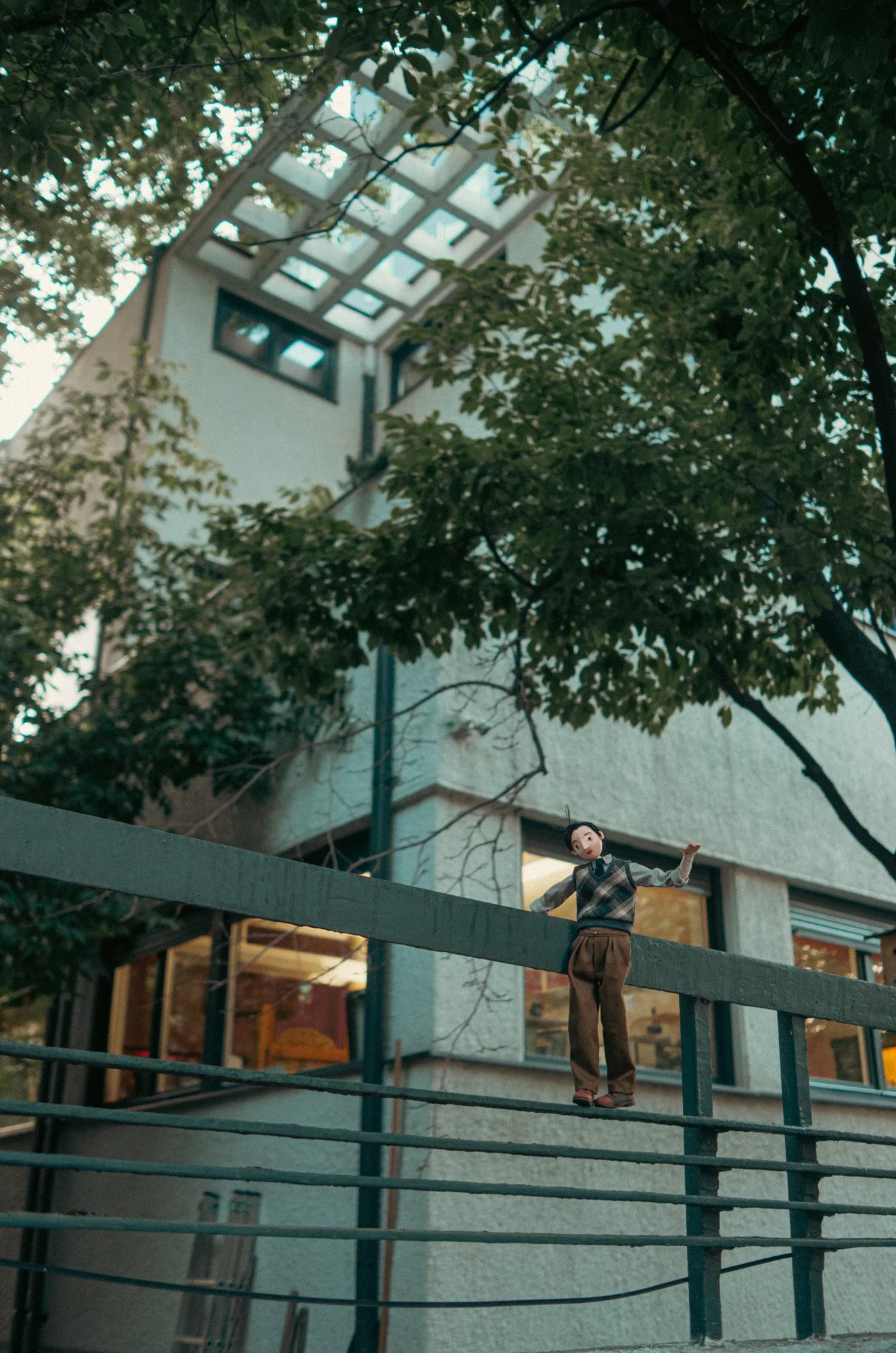
House on Dr. Grigore Mora Street
We are thrilled to continue this journey and share the results with you.
Keep playing,
Maria & the team
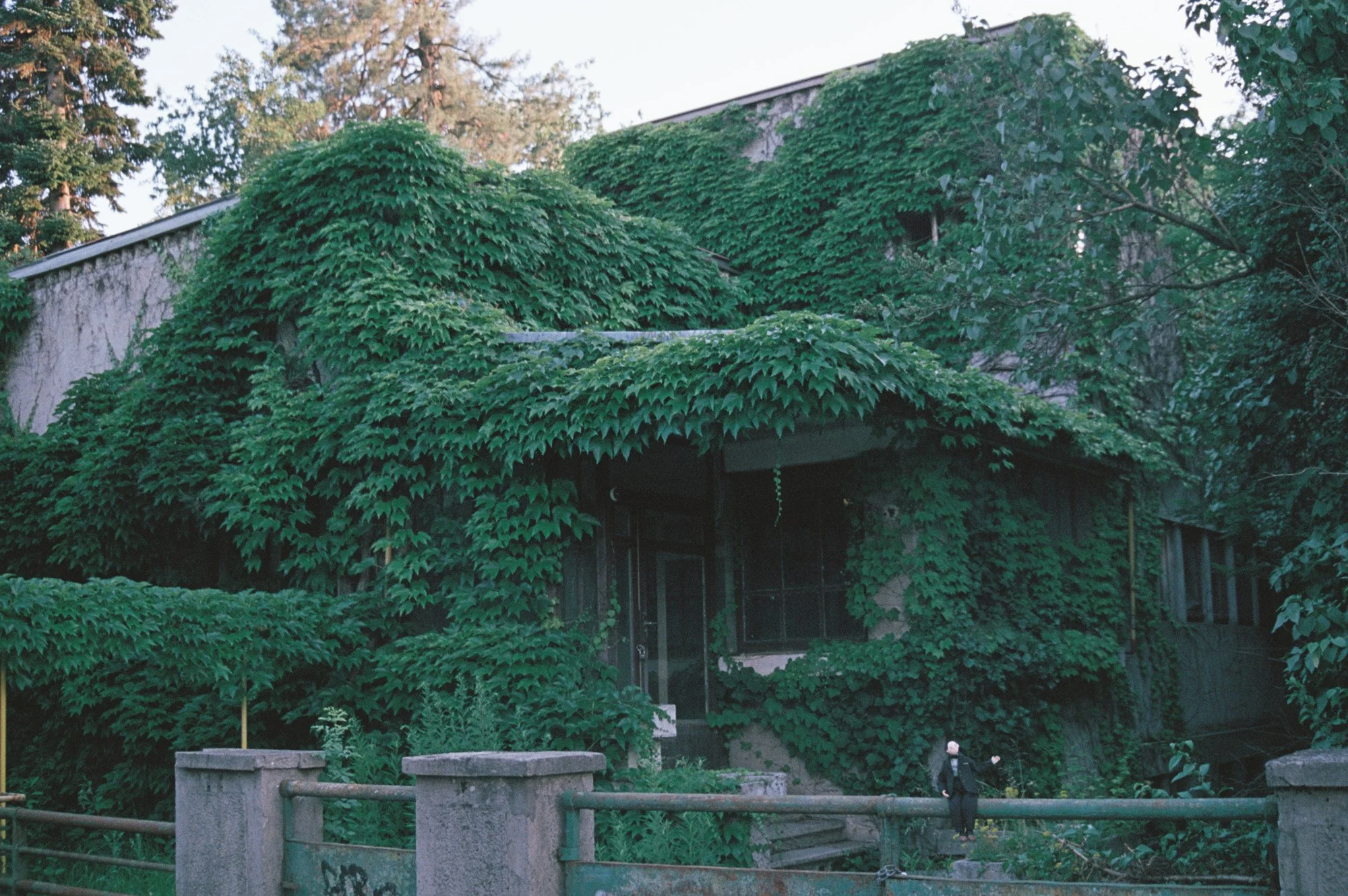
Architects in progress
Hello Micul Haos Community and sorry for the longer-than-usual break.
We are deep in the research and creation phase for our new project, "The Resilience of the Forgotten Fairy Tale: Modernism," and I actually can’t wait to share the journey with you but life got into the way.
As you know, we are building 15 new mediator-characters to accompany us across Romania and France. But before we could build them, we had to understand the world they belong to. We decided to anchor our exploration primarily in the architecture of the 1920s to the 1940s, a time of radical social utopias, profound aesthetic shifts, and immense human turmoil.
Three Lenses, One Vision
Choosing the buildings we will visit is a delicate, collaborative dance. And we are still searching!
Our core team approaches this from three distinct perspectives: Ruxi was searching for structures that embody true modernist ideals and structural honesty from the architect’s perspective. George was looking for captivating angles, the interplay of light and shadow, and the raw texture needed for analog film as a photographer. And I was searching for the creative characters. Who were the artists behind these blueprints? What were their visions? What is the context that they designed in? And maybe more importantly, what were their human vulnerabilities?
The Stories We Found on the Streets
While we poured over books and archives, the most profound discoveries happened simply by walking the streets of Bucharest.
During one of our walks, we stumbled upon a building bearing the engraved name of its architect: Burah Zilberman. This led us down a deeply moving historical path. Zilberman was a talented Jewish architect who studied in Milan before returning to build in Bucharest. Tragically, his story ends far from the buildings he designed. He was among the hundreds who perished on the Struma ship in 1942 while attempting to flee the fascist regime. Standing in front of his building, you realize that architecture is in a was a physical footprint of a life lived.
Because our project is highly subjective and artistic, we also wanted to shine a light on the often-overlooked female pioneers of the era. We are drawing inspiration from brilliant minds like Charlotte Perriand, Eileen Gray or Henrietta Delavrancea-Gibory.
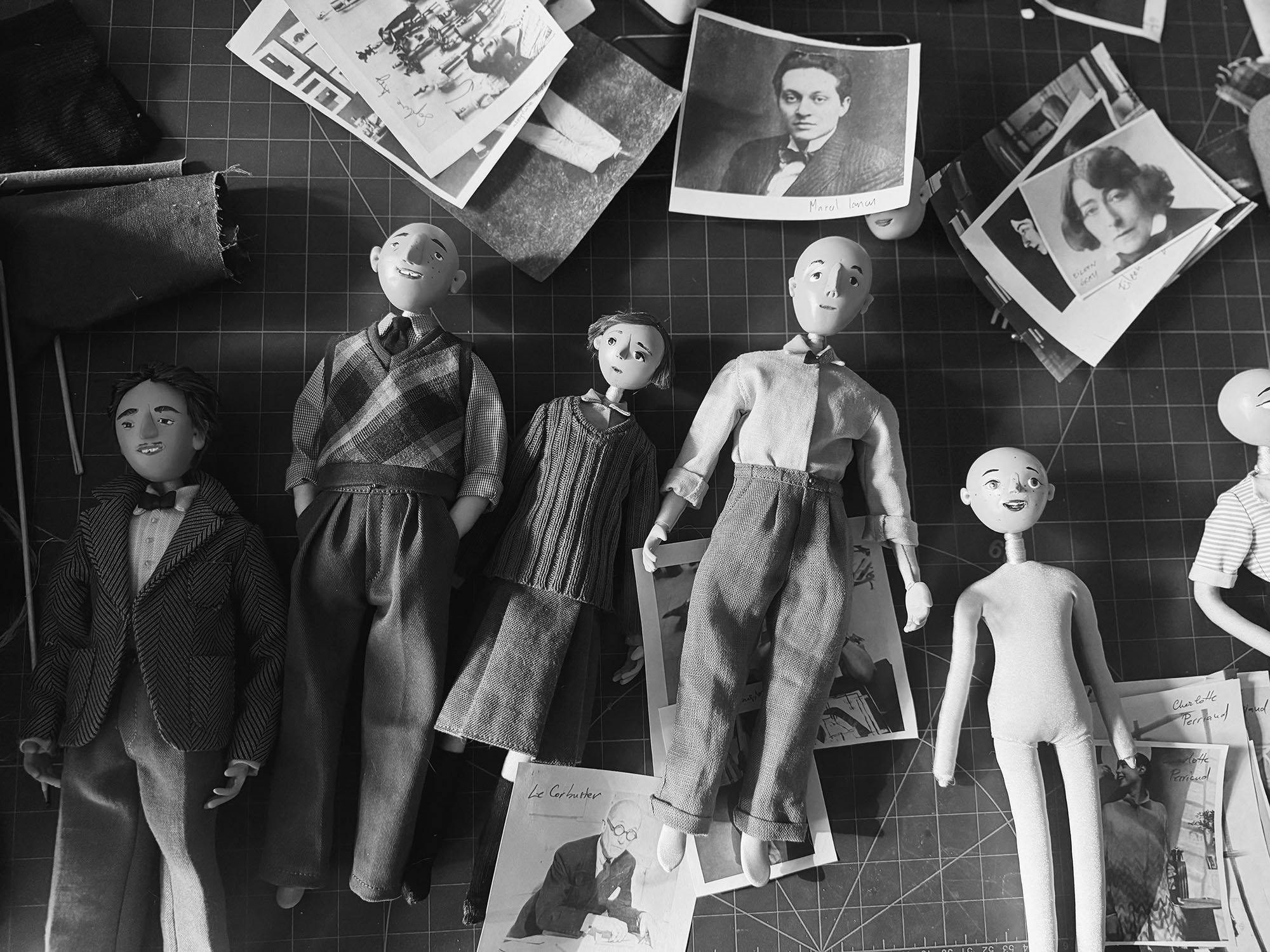
We are also exploring the hidden dynamics of architectural partnerships, for example, Lucia Creangă. While her husband, Horia Creangă, is celebrated as a giant of Romanian modernism, Lucia co-signed and collaborated on many of the projects he is famous for. Another one is Sophie Taeuber-Arp. Widely known as a brilliant avant-garde artist, she also designed the magnificent studio-house for herself and her husband, Jean Arp, in Clamart (initially, Theo van Doesburg was supposed to design it, but he ended up building his own remarkable house nearby!).
The Craft: Bringing the Characters to Life
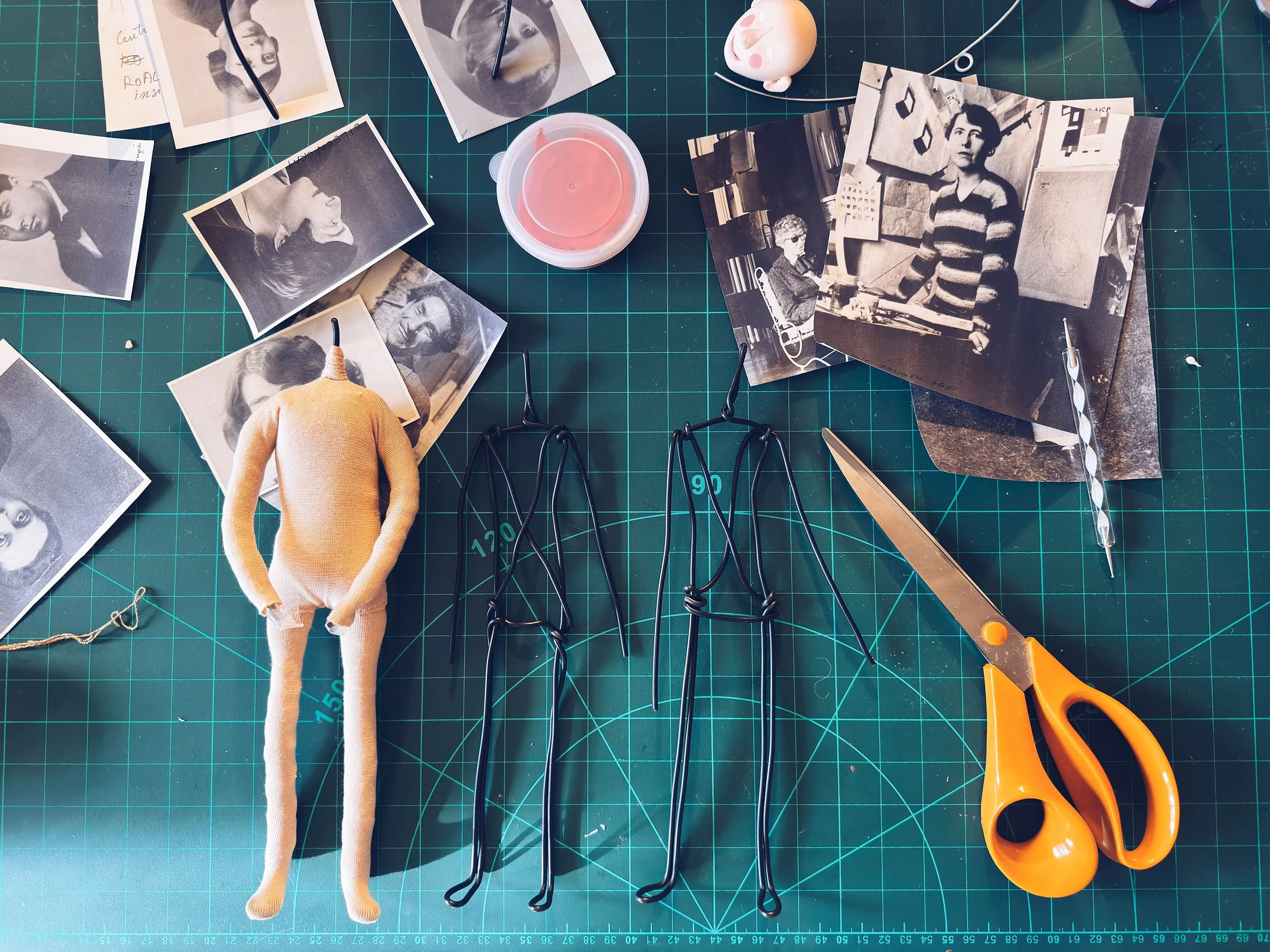
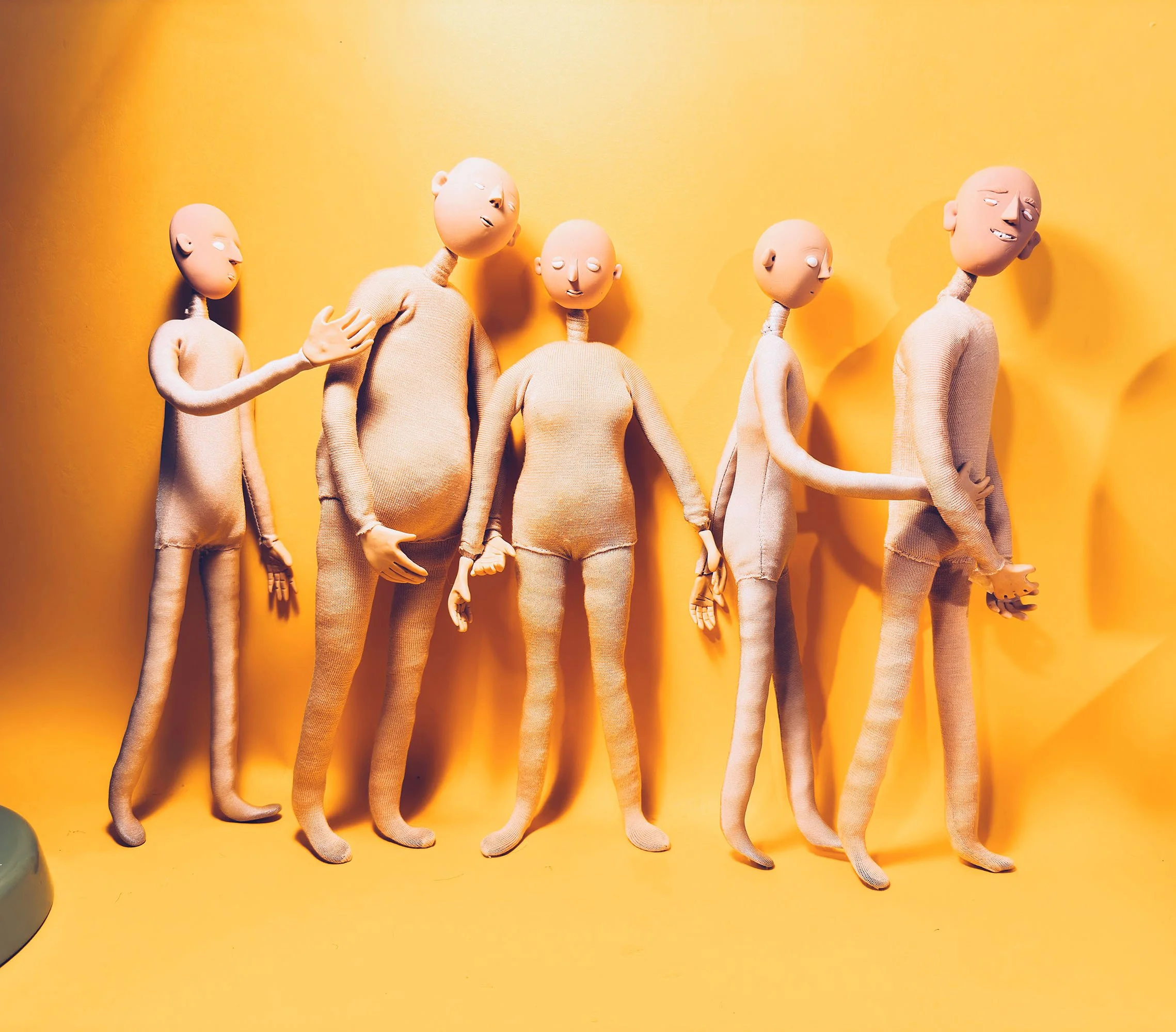
Our 15 characters are not direct, 1-to-1 historical portraits. Instead, they are amalgams, playful embodiments of the diverse, brilliant, and sometimes forgotten personalities of the modernist era.
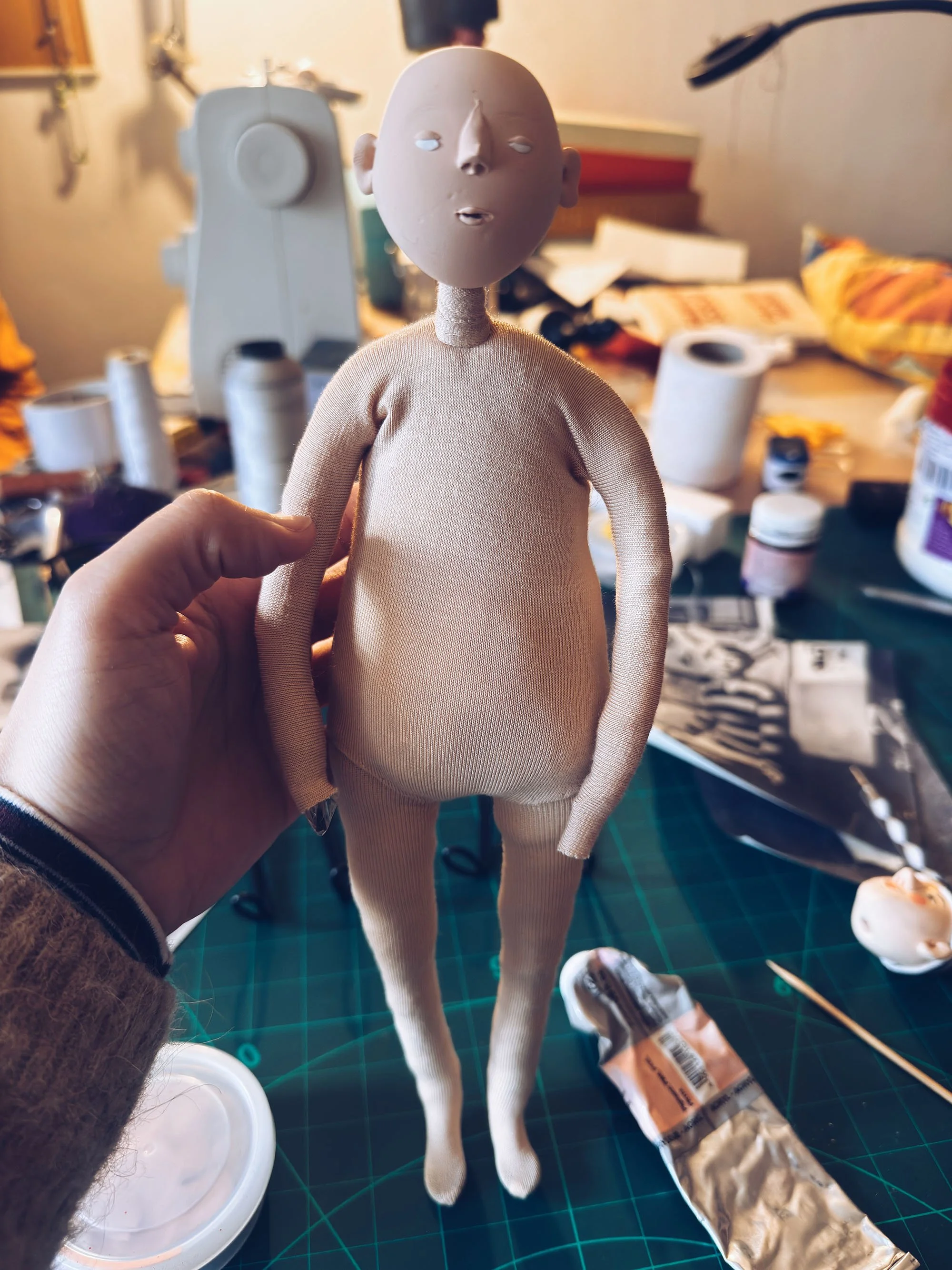
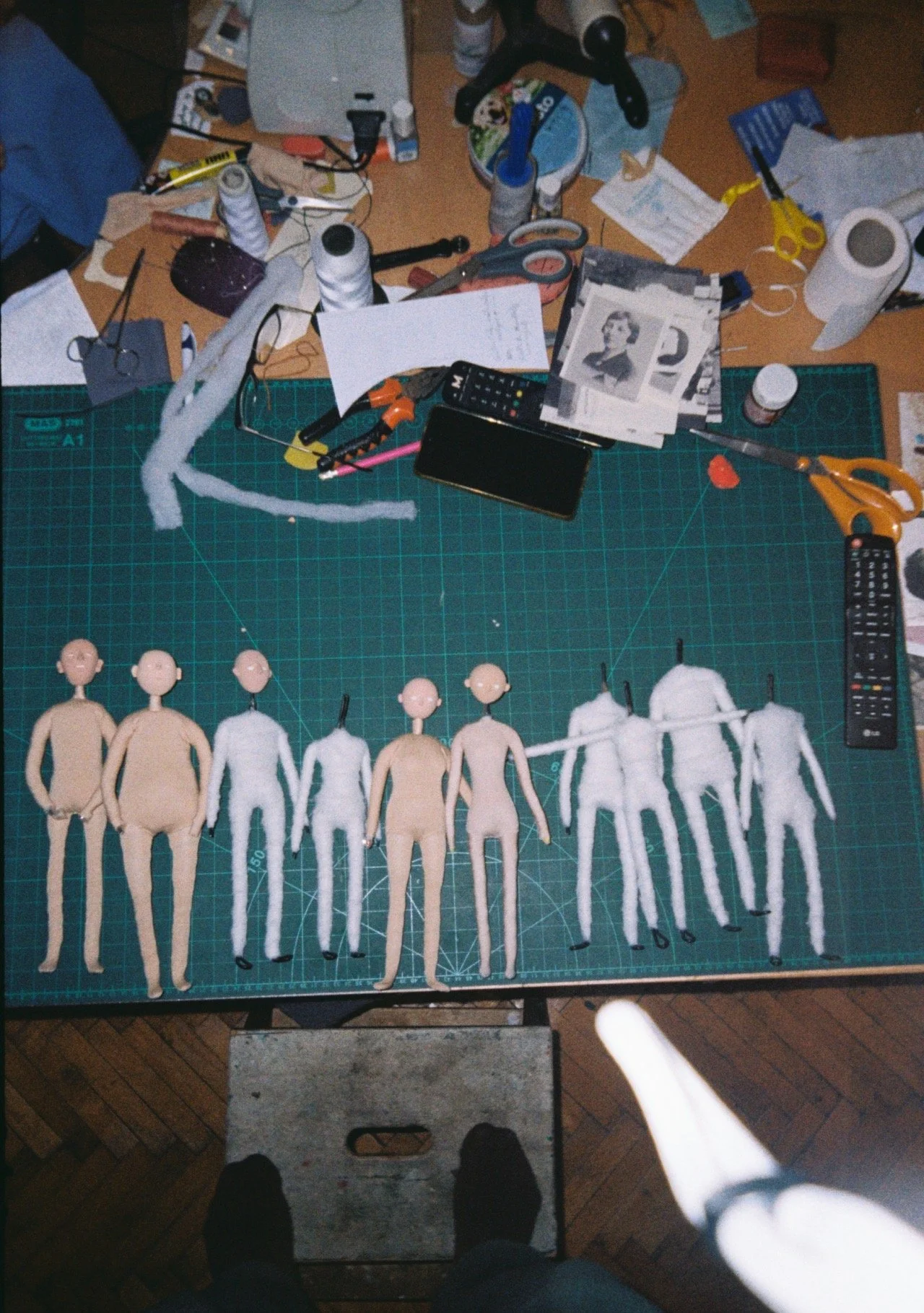
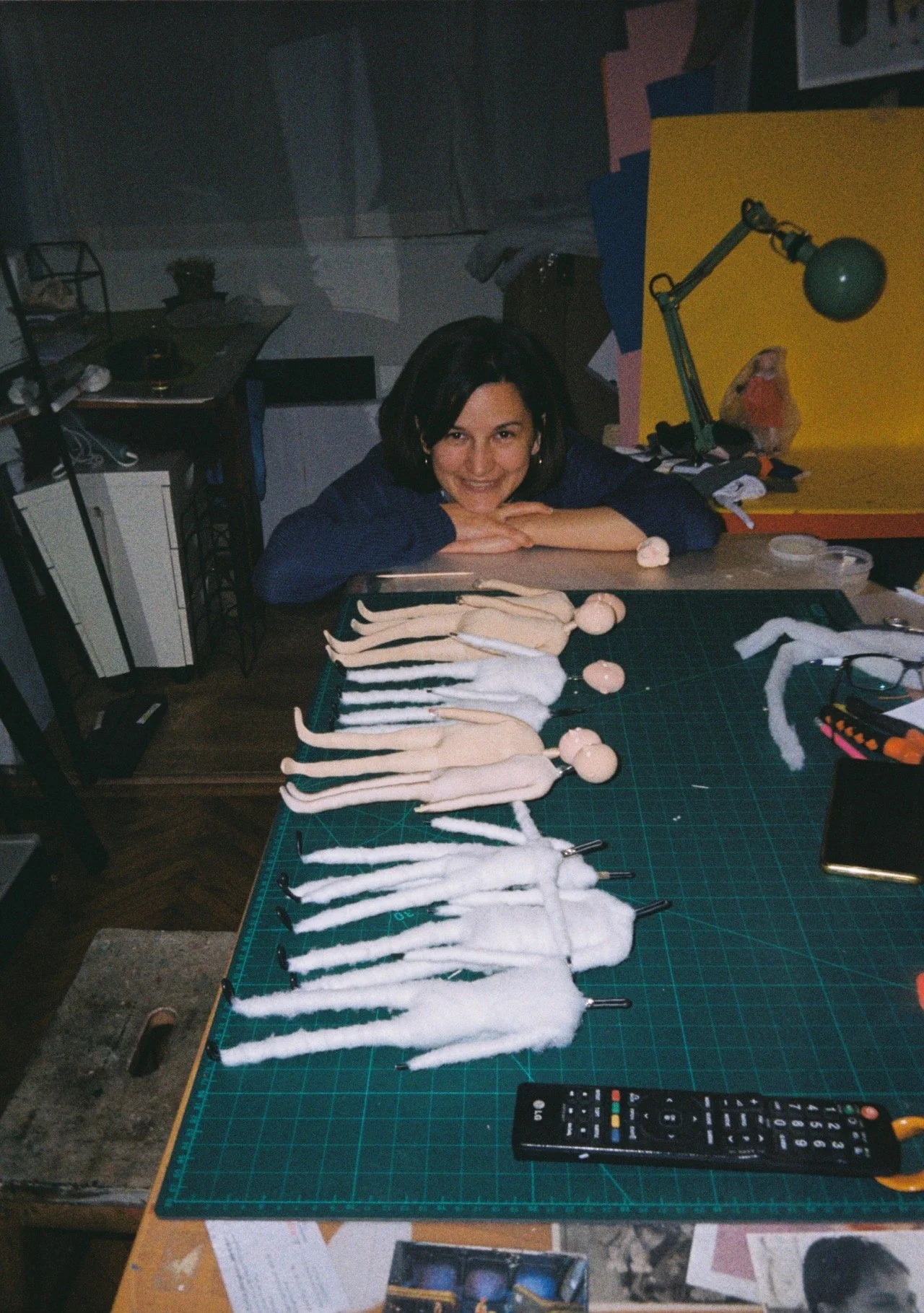
Building them is a meticulous process. They are constructed like stop-motion puppets, with fully articulated armatures so we can seamlessly pose them within the architectural environments we visit. It requires endless patience and a blend of different tactile materials. I also have to give a massive thank you to my mother, who is helping me craft the incredibly tiny, highly detailed, period-accurate clothing!
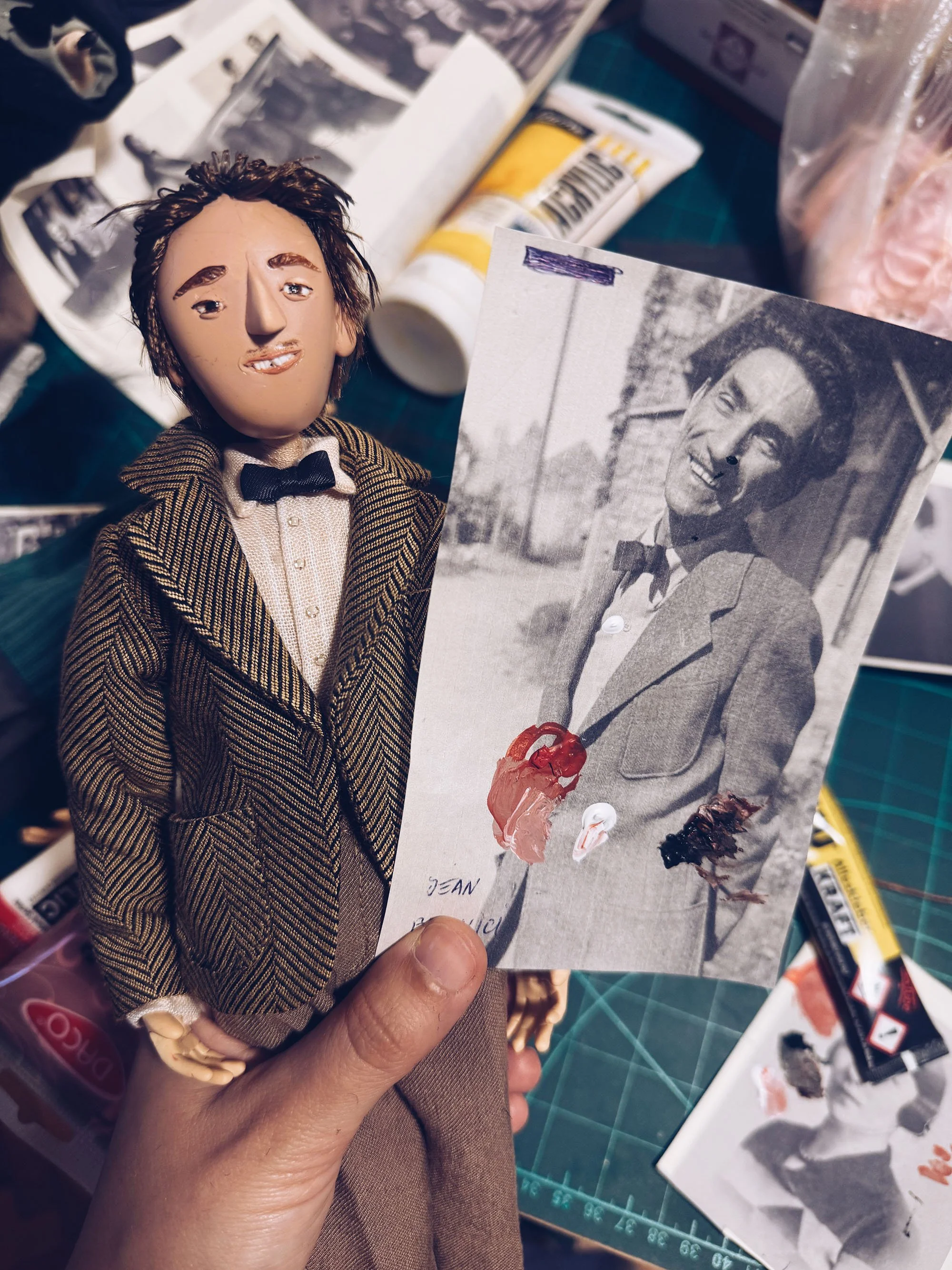
A sneak peek at a character largely inspired by Jean Badovici. (Badovici was a fascinating Romanian-born architect and critic who lived in France. He edited the highly influential avant-garde magazine 'L'Architecture Vivante' and was instrumental in the creation of the iconic E-1027 villa alongside Eileen Gray!)
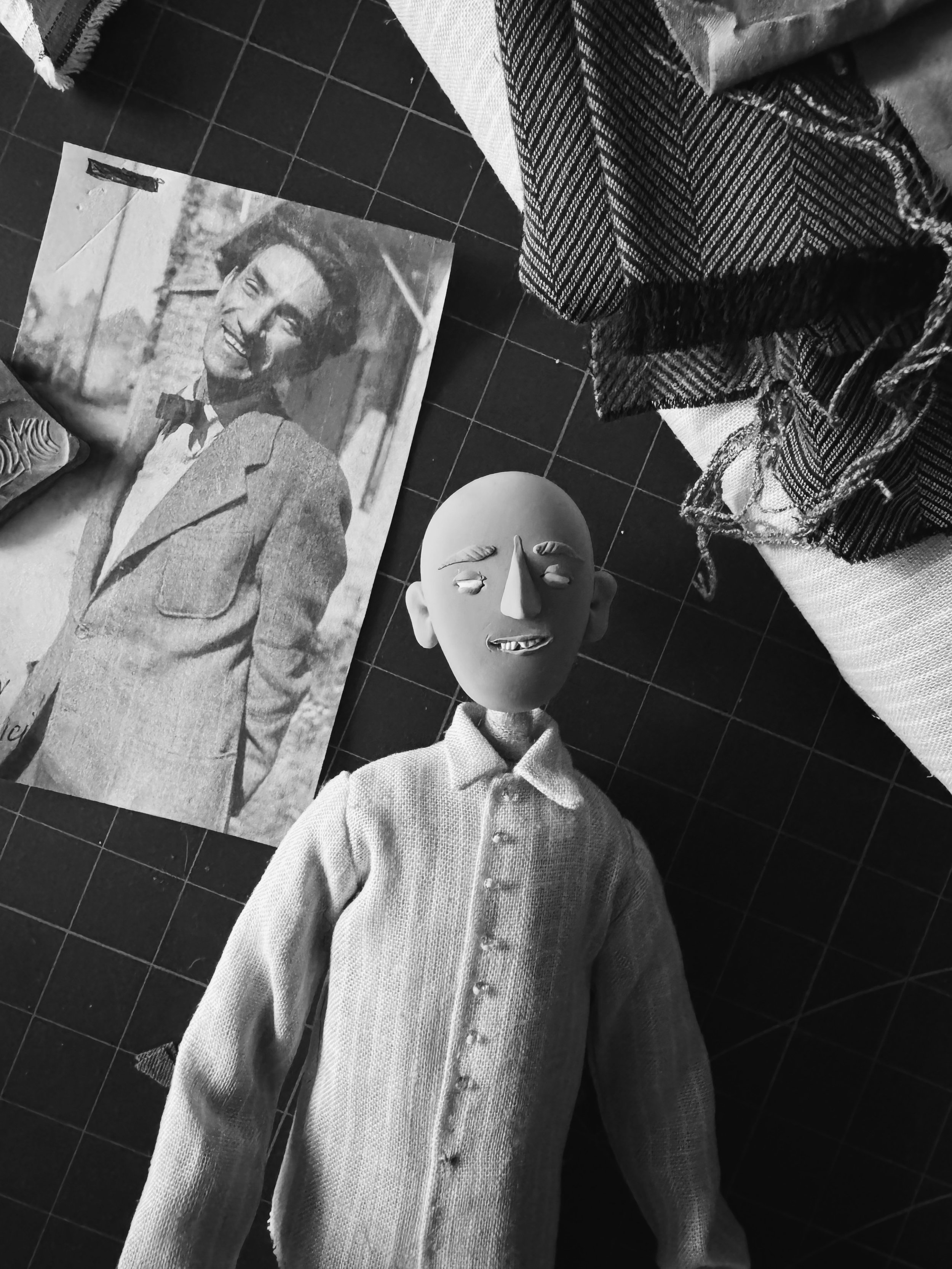
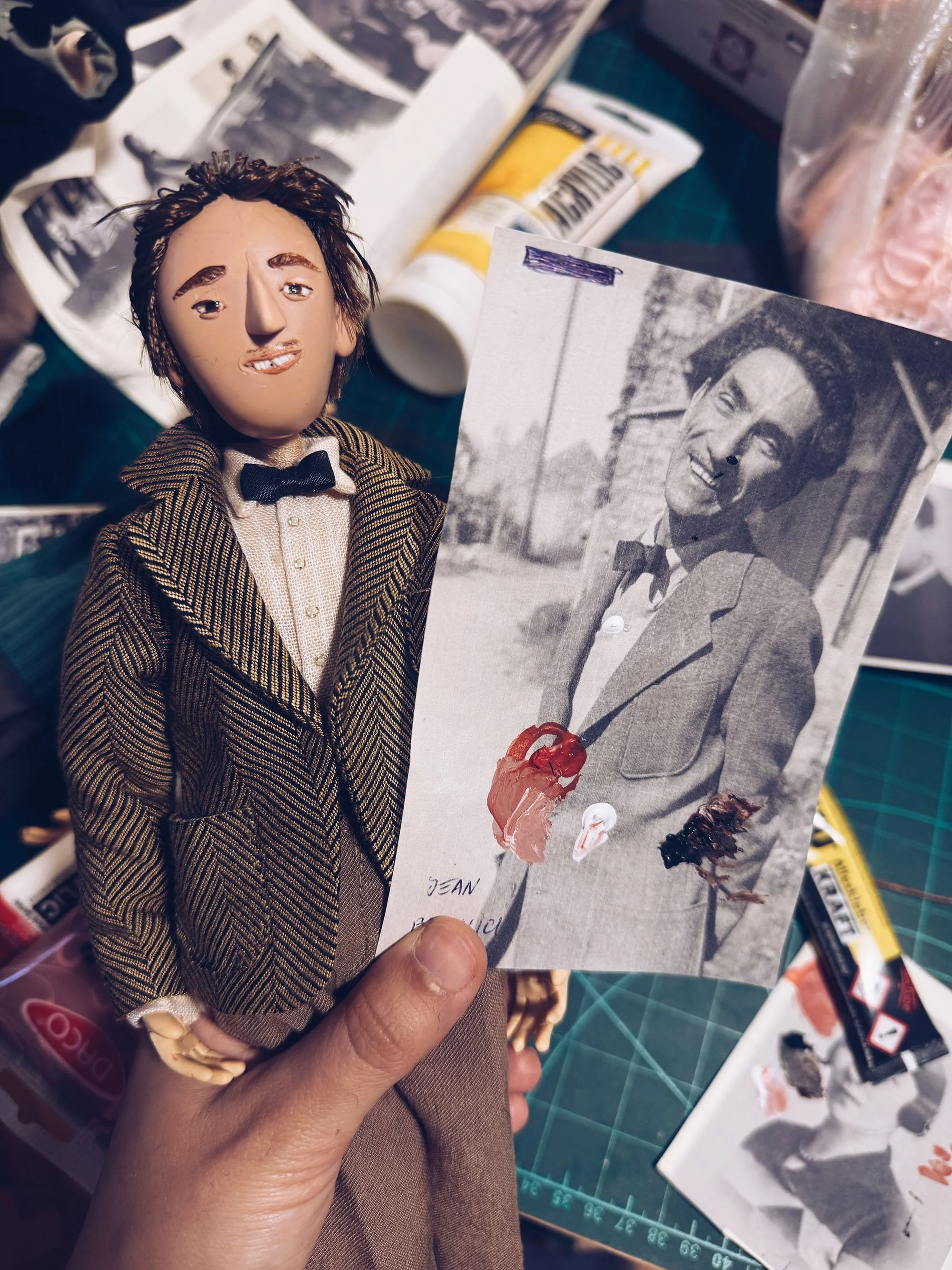
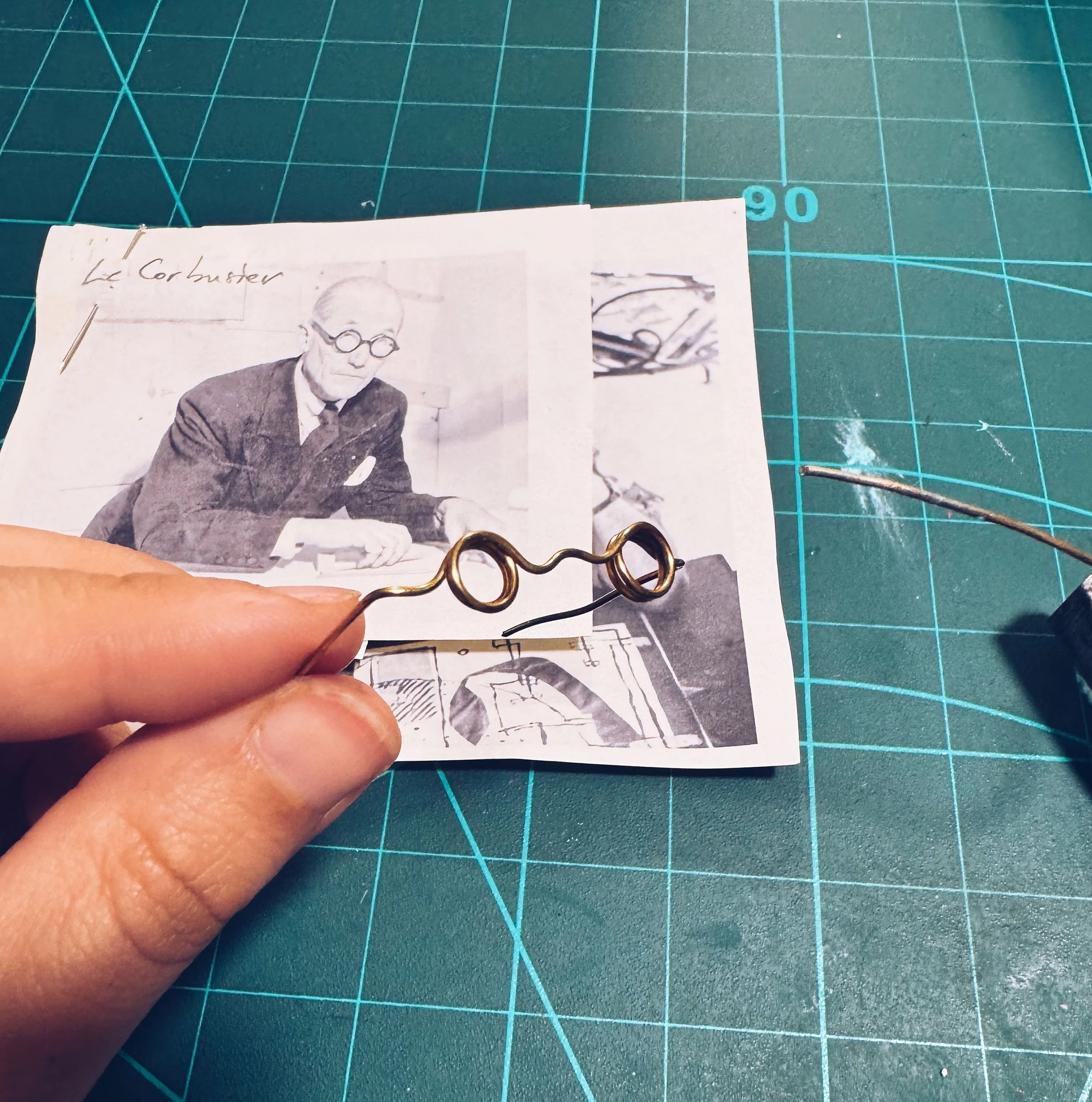
A work-in-progress shot. Anyone care to guess who might have worn those iconic, perfectly round glasses?
Help Us Build Our Itinerary! 🗺️
We are currently finalizing the list of modernist gems we will photograph in Romania and France over the coming months.
Do you have a favorite modernist building in your city? Or perhaps a hidden gem with a fascinating story? Reply directly to this email or send us a message on Instagram. We would love to see this era through your eyes!
Thanks for reading and see you in two weeks,
Stay curious and keep playing,
Maria & the Micul Haos Team
Hello, modernism!
How do we understand modernism today?
What do simple lines, the discovery of the basis of visual language, or social utopias mean today? And how can we explore them through play?
I am beyond excited to share the dream project we are embarking on this year! I’ve hinted about it before, but it is finally official!
The Resilience of the Forgotten Fairy Tale: A Journey into Modernism Through Play
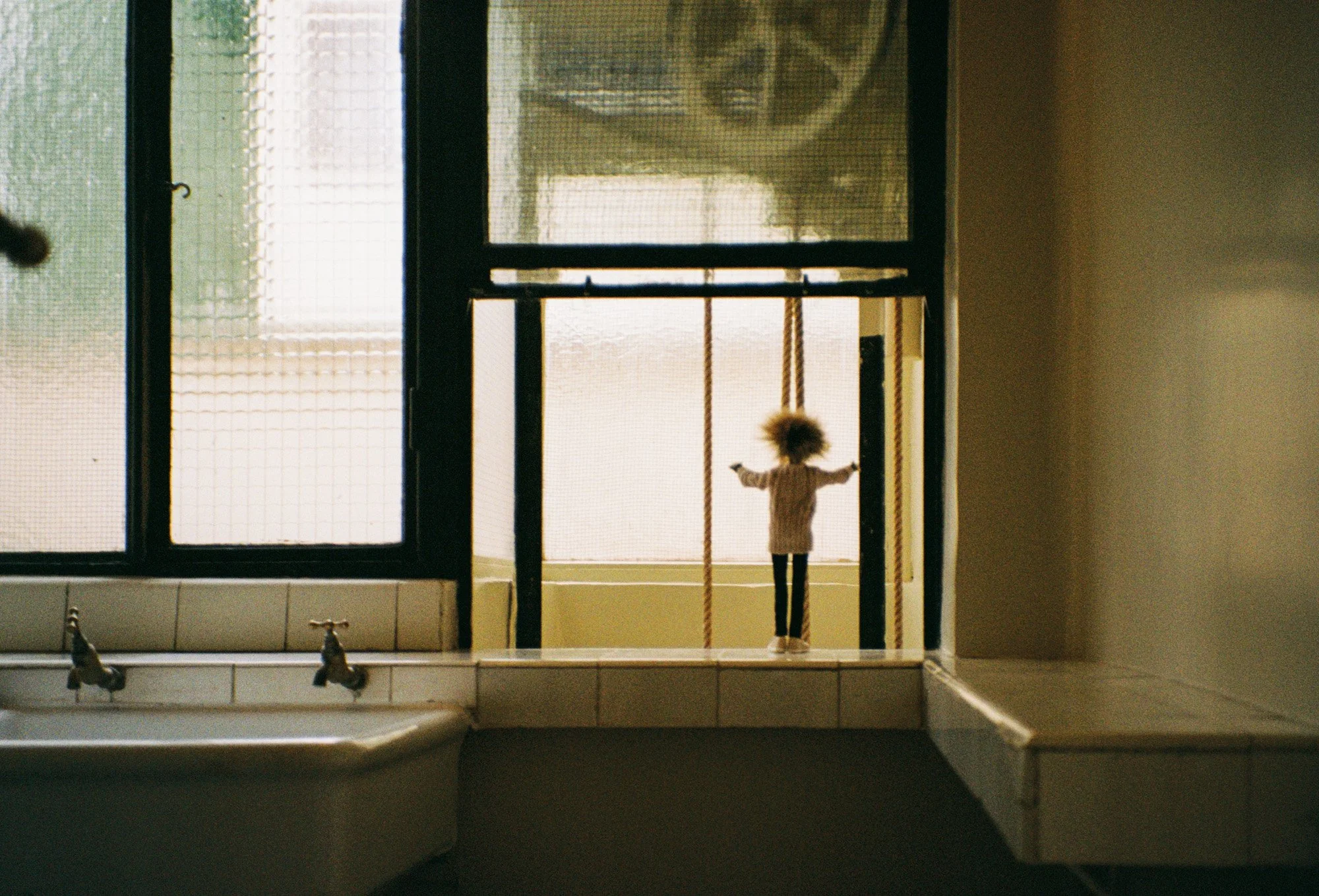
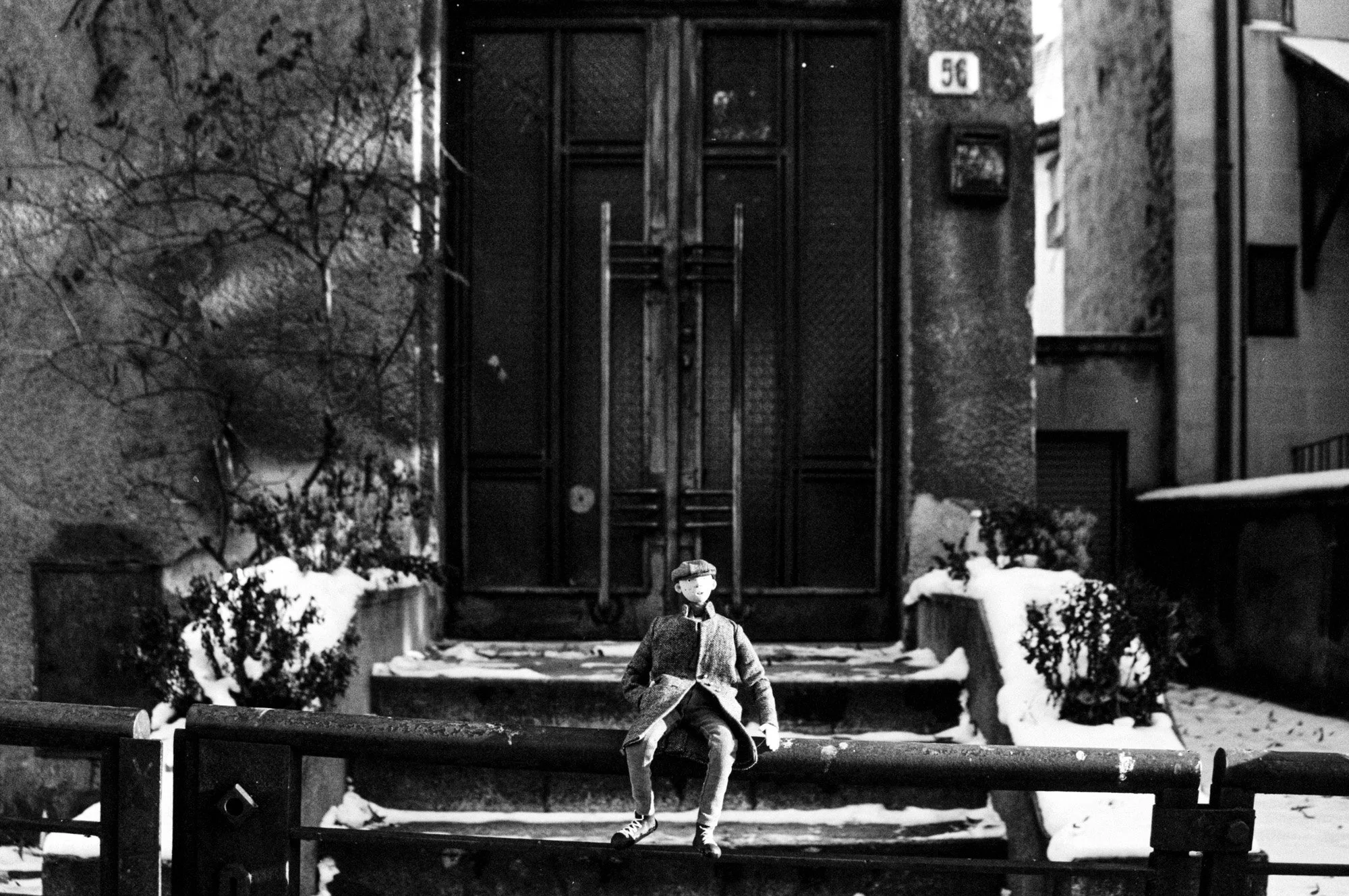
George’s film photograph of our character at Maison La Roche, Paris
Last year, in September and October, we embarked on a self-funded pilot journey through France. Our goal was to understand brutalism and modernism at the scale of our characters. We wandered, we observed, and we played. That seed of an idea has now grown into something much bigger: our new project, "Reziliența Basmului Uitat: Modernismul” (The Resilience of the Forgotten Fairy Tale: Modernismul): 15 characters, maaany photographs, an album with photographs and artist games, an exhibition and a workshop!
How do we understand modernism today?
What do simple lines, the discovery of the basis of visual language, or social utopias mean today? And how can we explore them through play?
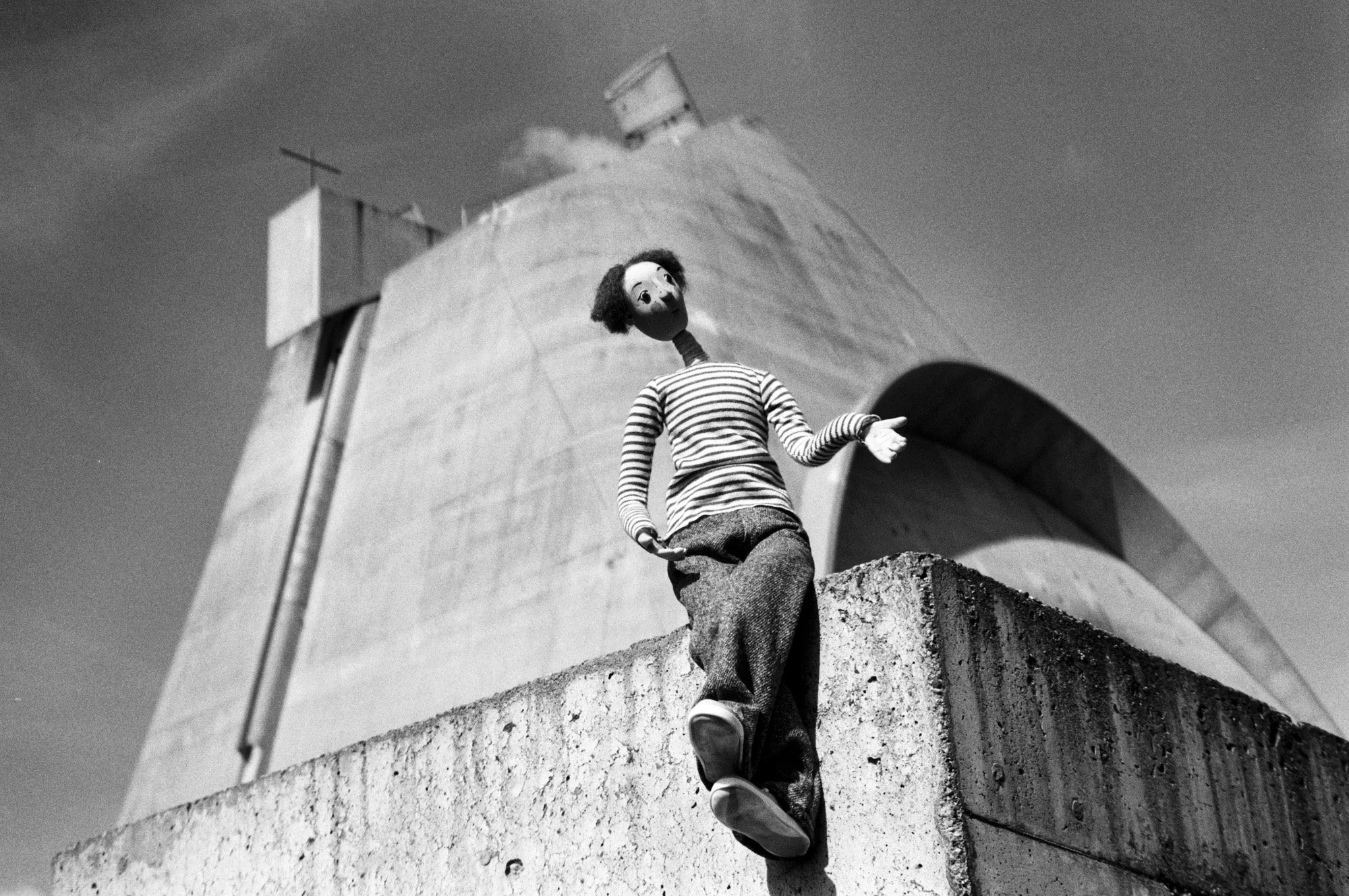
Last September at Le Corbusier’s Firminy-Vert ansamble
We create mediator characters so that we can take a critical look at the modernist heritage of Romania and France. Through play, we aim to engage young (and young at heart!) audiences in a critical and poetic understanding of the space around us.
For this journey, organized by the Laborator Artistic Association, we are creating 15 mediator characters. We will base them on research into figures who played a role in modernist architecture in Romania and France. They are playful objects meant for a poetical exploration of the built environment, space, and scale. We want these characters help us take a critical look at the modernist heritage of Romania and France.
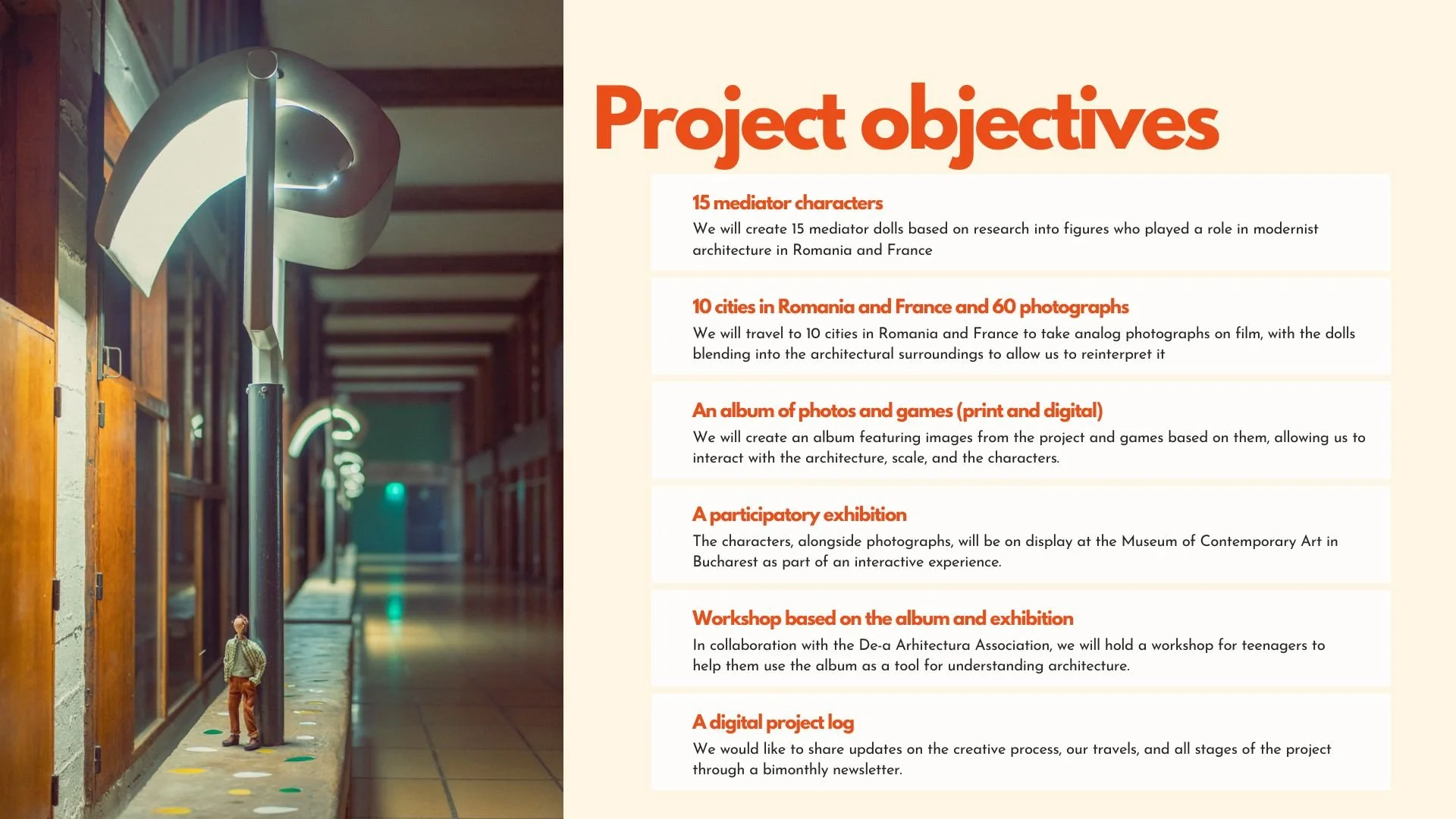
Photo on the halls at Unité d'Habitation Marseille
We couldn't do this alone, and we are thrilled to have incredible partners helping us bridge these connections. Institutul Francez (The French Institute of Romania) is supporting our mission to foster a deep cultural dialogue between Romania and France, helping us explore and highlight our shared modernist heritage across borders. Furthermore, because we believe in passing this knowledge to younger generations, we are partnering with the De-a Arhitectura Association. Together, we will host a dedicated workshop for teenagers, using our final project album as a playful and educational tool to help them understand architecture, space, and scale.
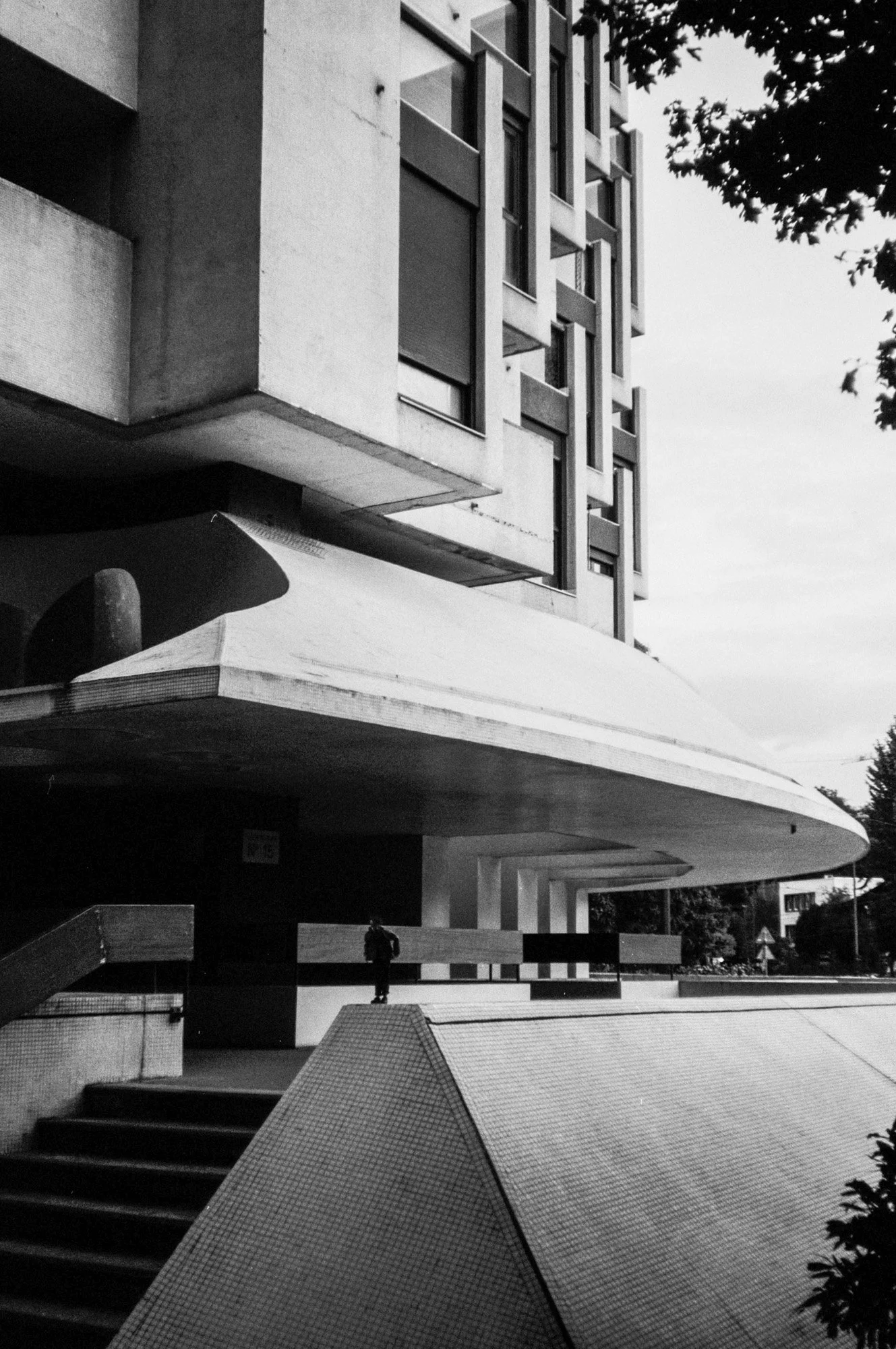
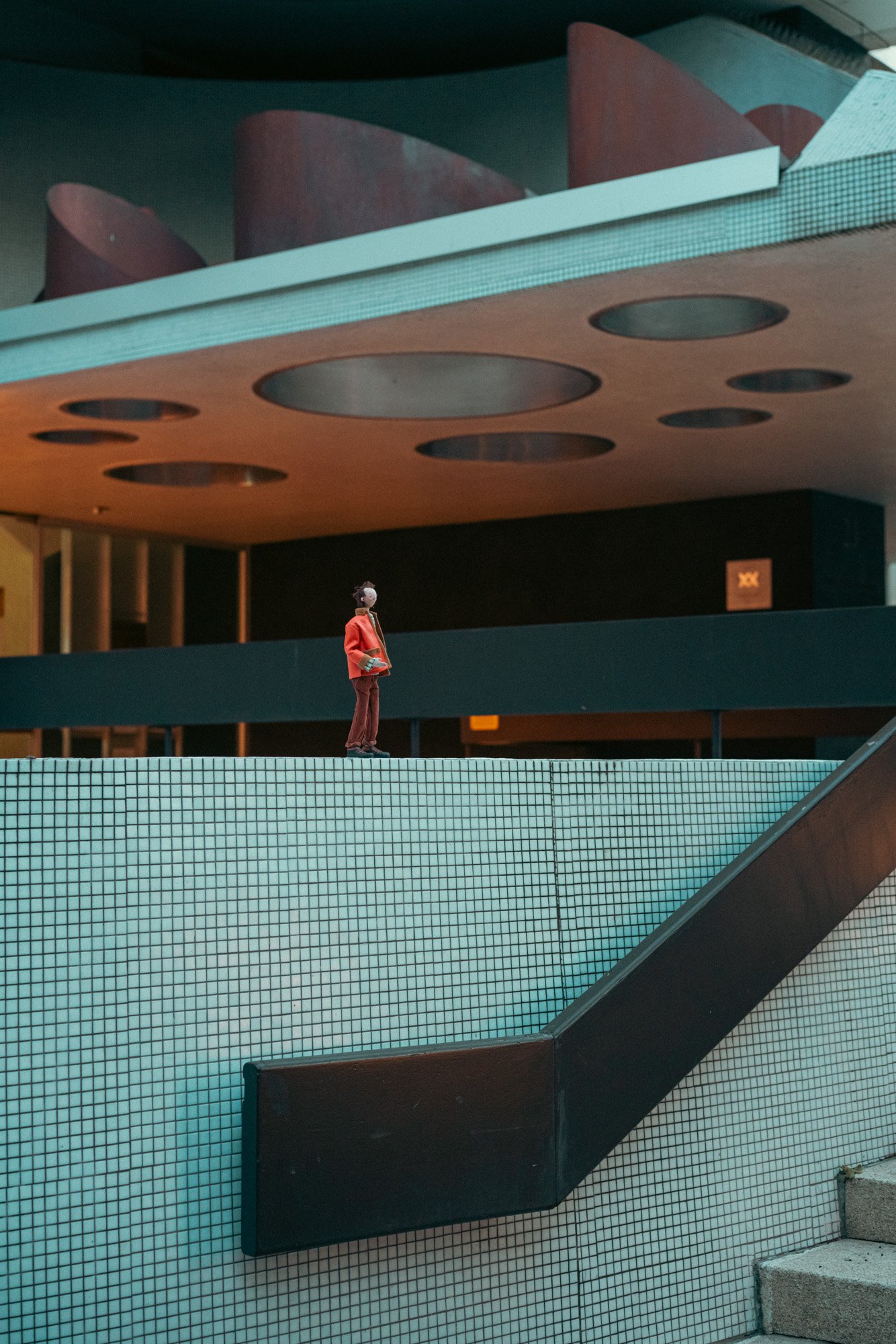
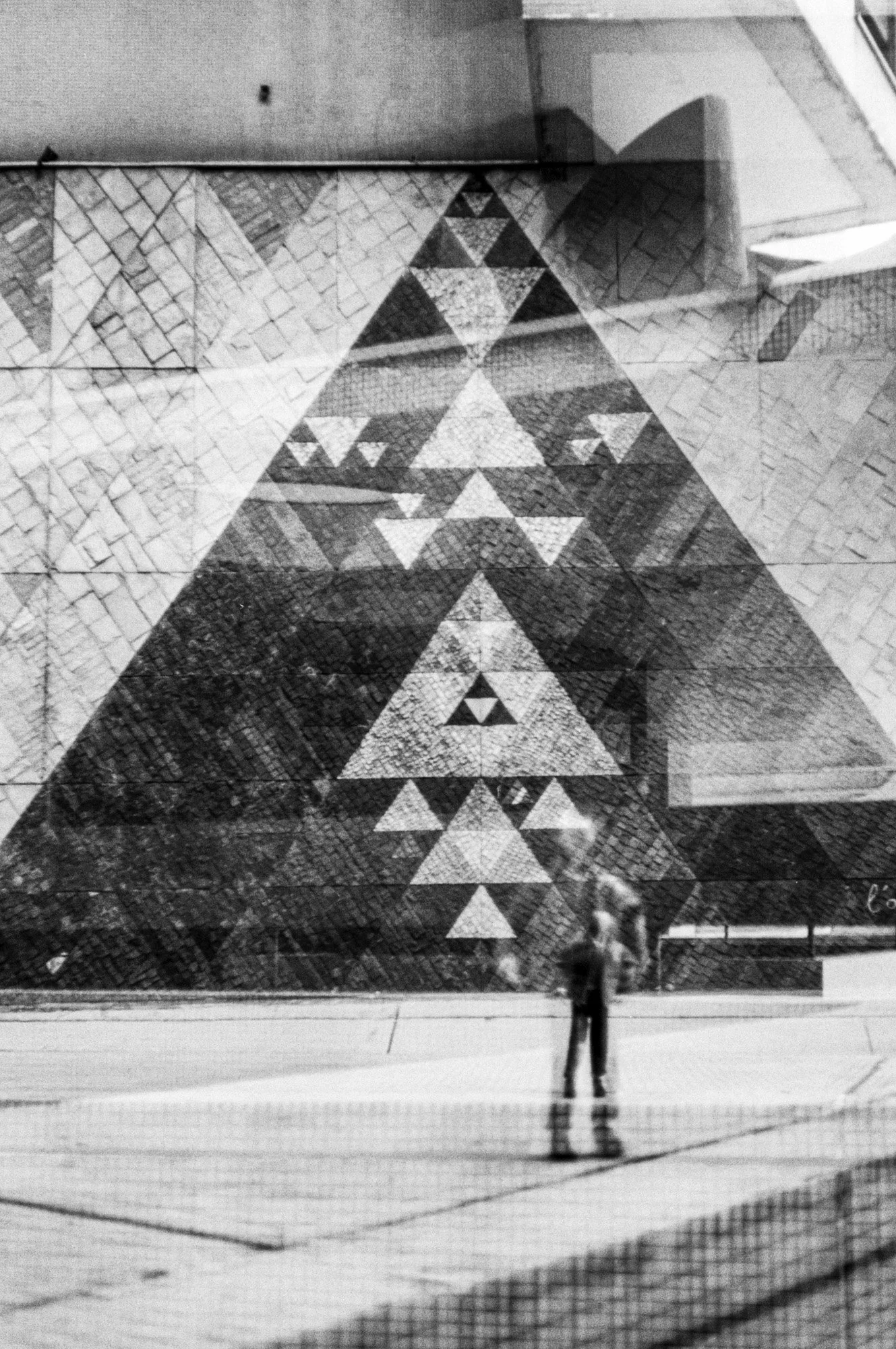
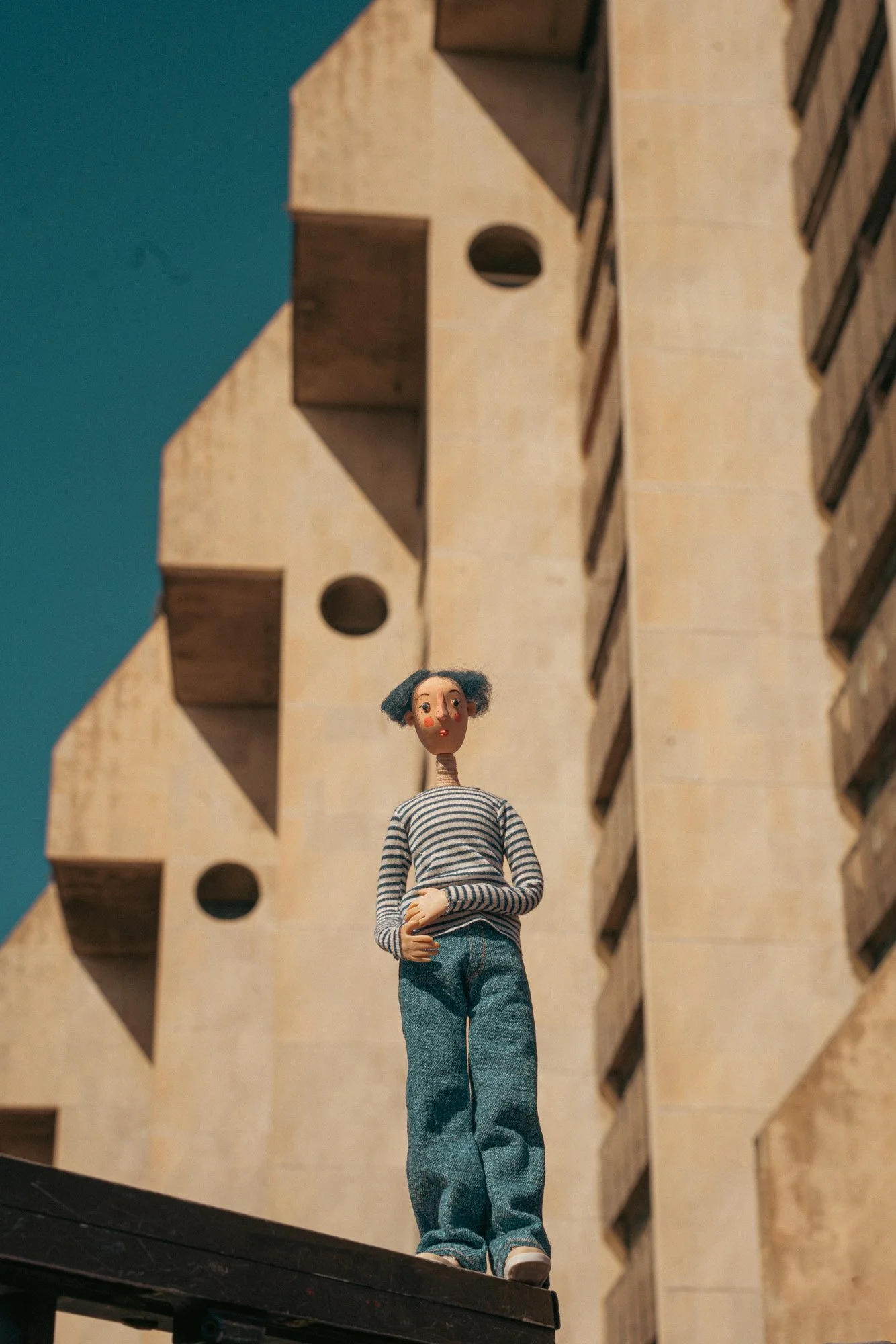
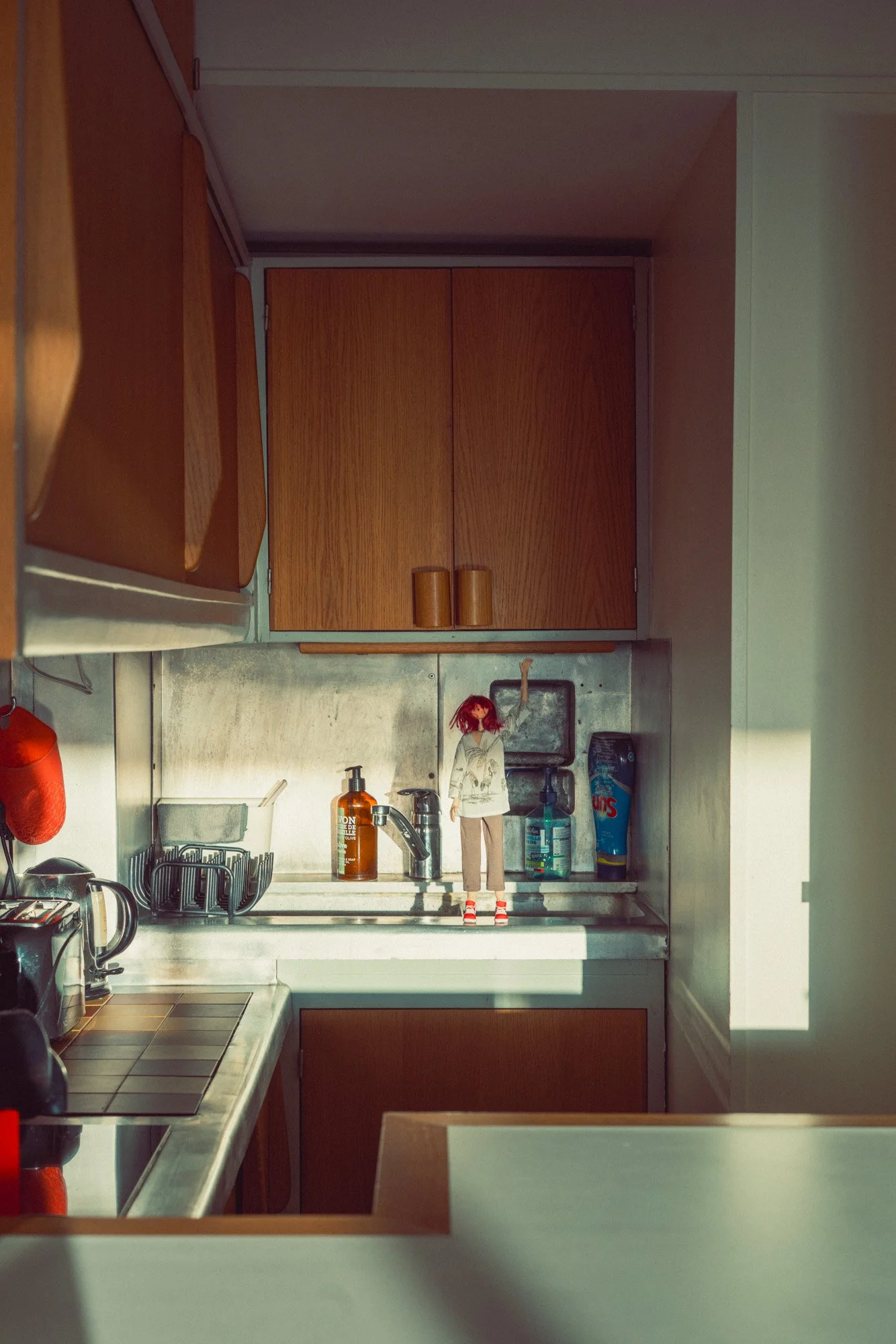
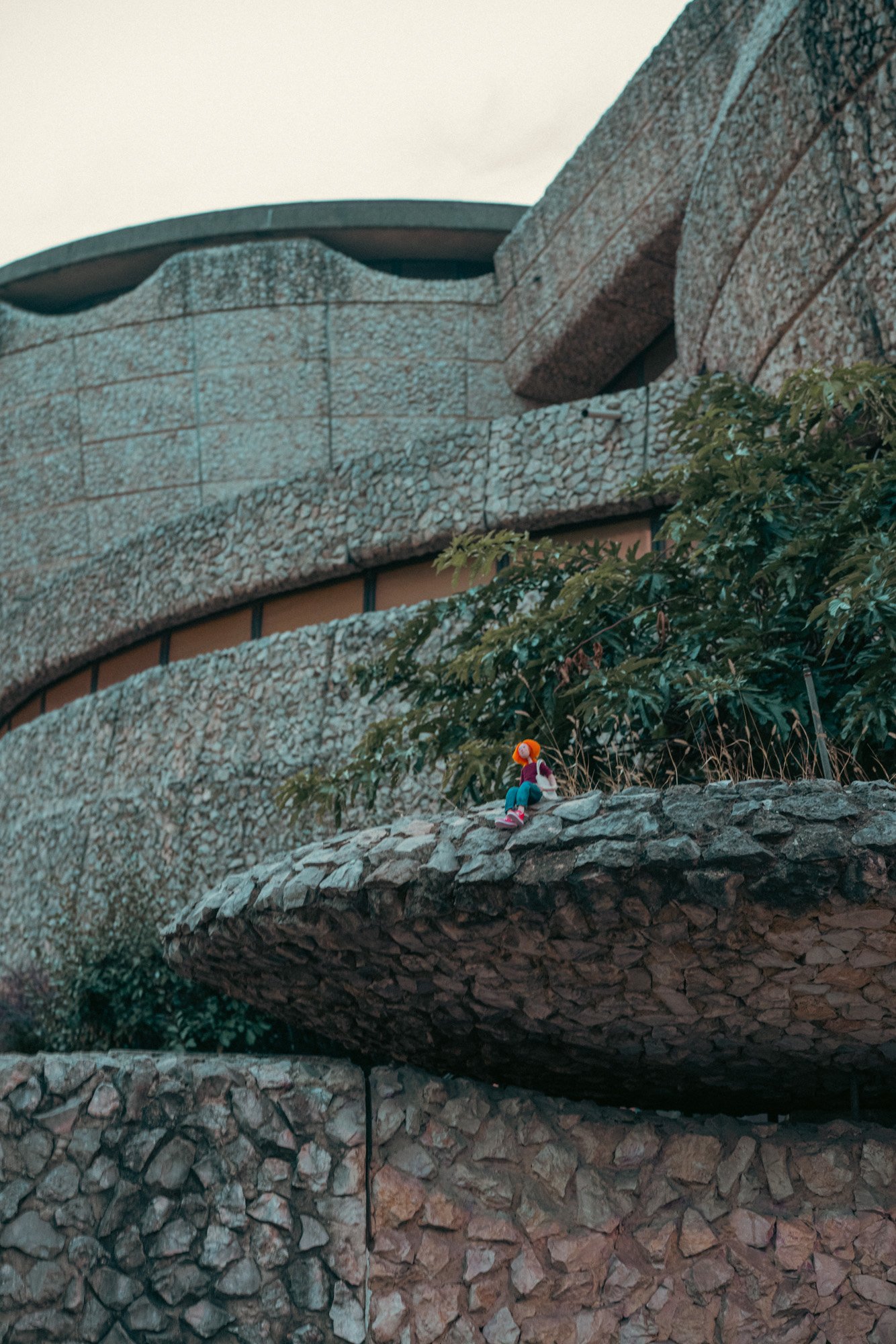
George uses analog photography to document this exploration. Together, we will travel to 10 cities in Romania and France, capturing moments on film where the dolls blend or clash into/with their architectural surroundings, allowing us to poetically reinterpret the spaces we find. This journey will eventually lead to an album and a participatory exhibition where the characters, alongside the photographs, will be on display at the MNAC - National Museum of Contemporary Art in Bucharest.
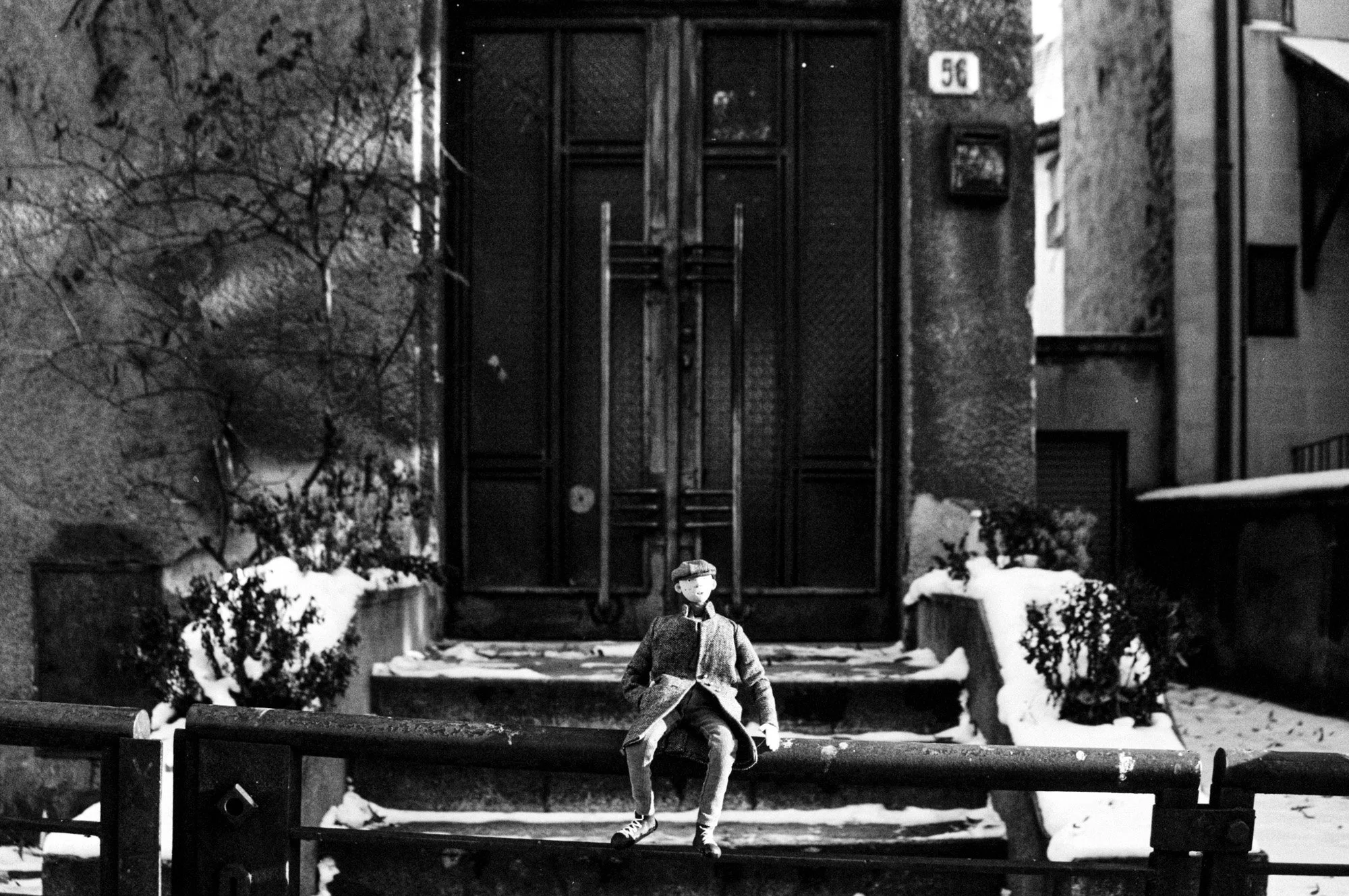
These past months we already started research. Here’s an image in front of Ion Miclescu Villa in Bucharest.
It Takes a Village
Exploring such a theme requires a multidisciplinary approach. I love to work alongside a phenomenal team to bring this vision to life:
Maria Mandea (me!) as the Play Designer, crafting characters and games.
George Marian Preduț, our Photographer, using patient, analog photography to capture the soul of our surroundings and the characters.
Dana Pârvulescu, our Manager, who gracefully keeps our artistic chaos organized and moving forward.
Alexandra Moț, our Curator, who will shape how this story is eventually experienced by the public.
Ruxandra Antal, our Architect, grounding our playful explorations in profound spatial and architectural reality.
I invite you to follow our creative process right here on the blog, and as always, you can explore our universe at www.miculhaos.com to bring a piece of our world into yours. Let’s reconnect with the spaces we inhabit and, most importantly, with each other.
The cultural project "The Resilience of the Forgotten Fairy Tale: Modernism" is co-funded by the National Cultural Fund Administration.
The project does not necessarily reflect the views of the National Cultural Fund Administration. The National Cultural Fund Administration is not responsible for the content of the project or for how the project’s results may be used. These are entirely the responsibility of the grant recipient.
Rezumat în limba română:
Sunt extrem de entuziasmată să vă anunț cel mai nou proiect al nostru: „Reziliența basmului uitat: modernismul”, organizat de Asociația Laborator Artistic. Prin intermediul jocului, ne propunem să facem arhitectura mai accesibilă. Vom crea 15 păpuși-mediator pornind de la documentarea unor personalități din arhitectura modernistă din România şi Franţa, vom călători în 10 orașe din România și Frnța în căutarea patrimoniului modernist, vom realiza fotografii pe peliculă, un album, un workshop și o expoziție participativă. Această călătorie este posibilă datorită unei echipe multidisciplinare minunate: Maria Mandea (Designer), George Marian Preduț (Fotograf), Dana Pârvulescu (Manager), Alexandra Moț (Curatoare) și Ruxandra Antal (Arhitectă).
Ne bucurăm să avem alături de noi parteneri de încredere: Institutul Francez, care susține dialogul cultural româno-francez, asociația De-a Arhitectura, alături de care vom organiza un workshop pentru adolescenți și MNAC (Muzeul Național de Artă Contemporană), unde proiectul va putea fi experimentat printr-o expoziție participativă.
Proiectul cultural Reziliența Basmului Uitat: Modernismul este co-finanțat de Administrația Fondului Cultural Național.
Proiectul nu reprezintă în mod necesar poziţia Administrației Fondului Cultural Național. AFCN nu este responsabilă de conținutul proiectului sau de modul în care rezultatele proiectului pot fi folosite. Acestea sunt în întregime responsabilitatea beneficiarului finanțării.
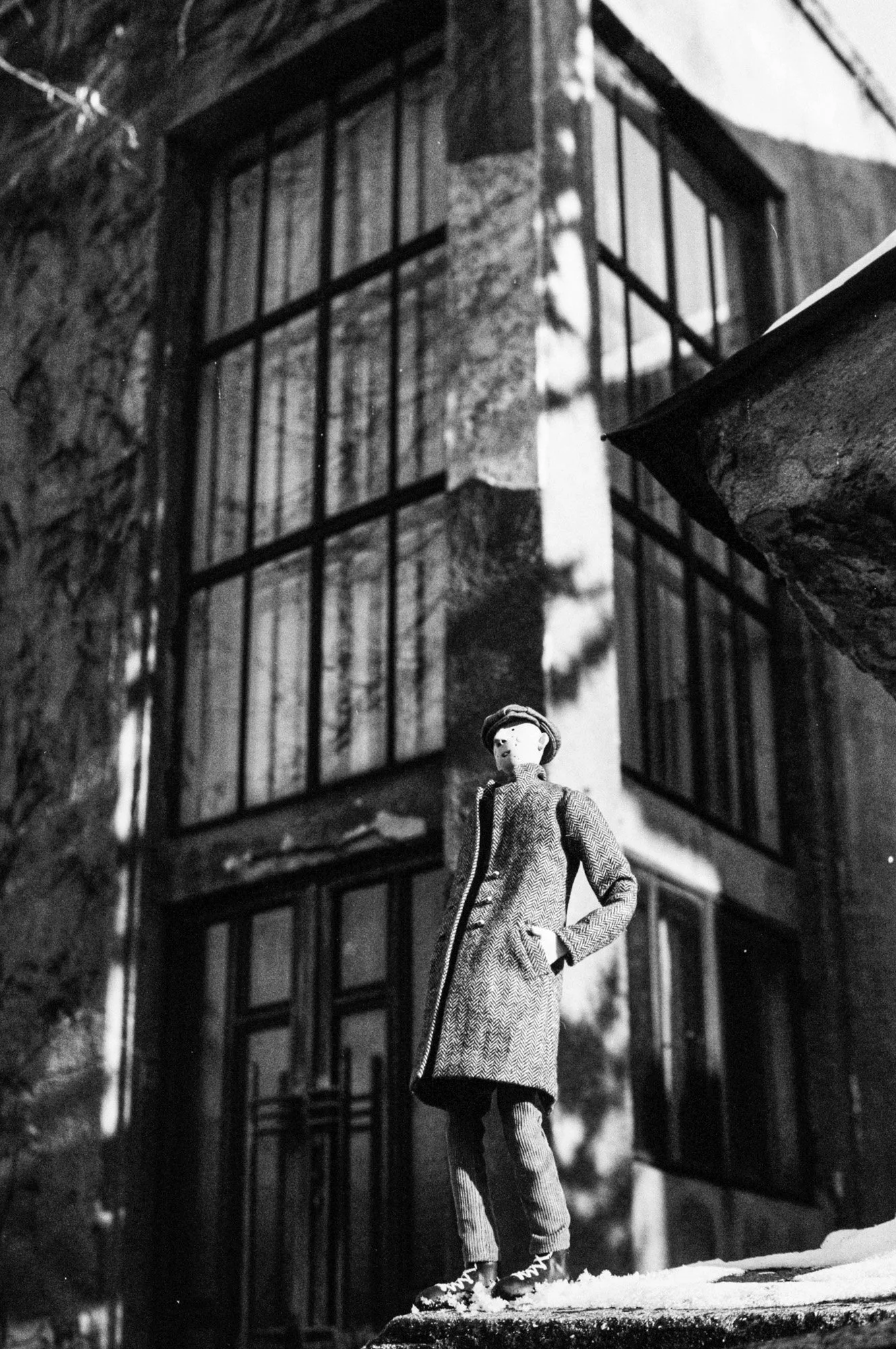
Another detail of Miclescu Villa
Start! On Necessary Pauses
After a few months of intentional silence and a bag full of unexpected drawings, I’m back. Discover why I stepped away from the digital noise, how a box of oil pastels changed my perspective, and the first details of our new ambitious project: The Resilience of the Forgotten Fairytale.
Sometimes, the biggest step forward begins with a prolonged silence. If you’ve noticed my absence from social media over the last few months, please know it wasn’t an abandonment of Micul Haos, but rather a retreat into the creative studio and my own thoughts.
Today, I’m coming back to tell you that we are here and that we’ve been working intensely on something I can’t wait to fully reveal.
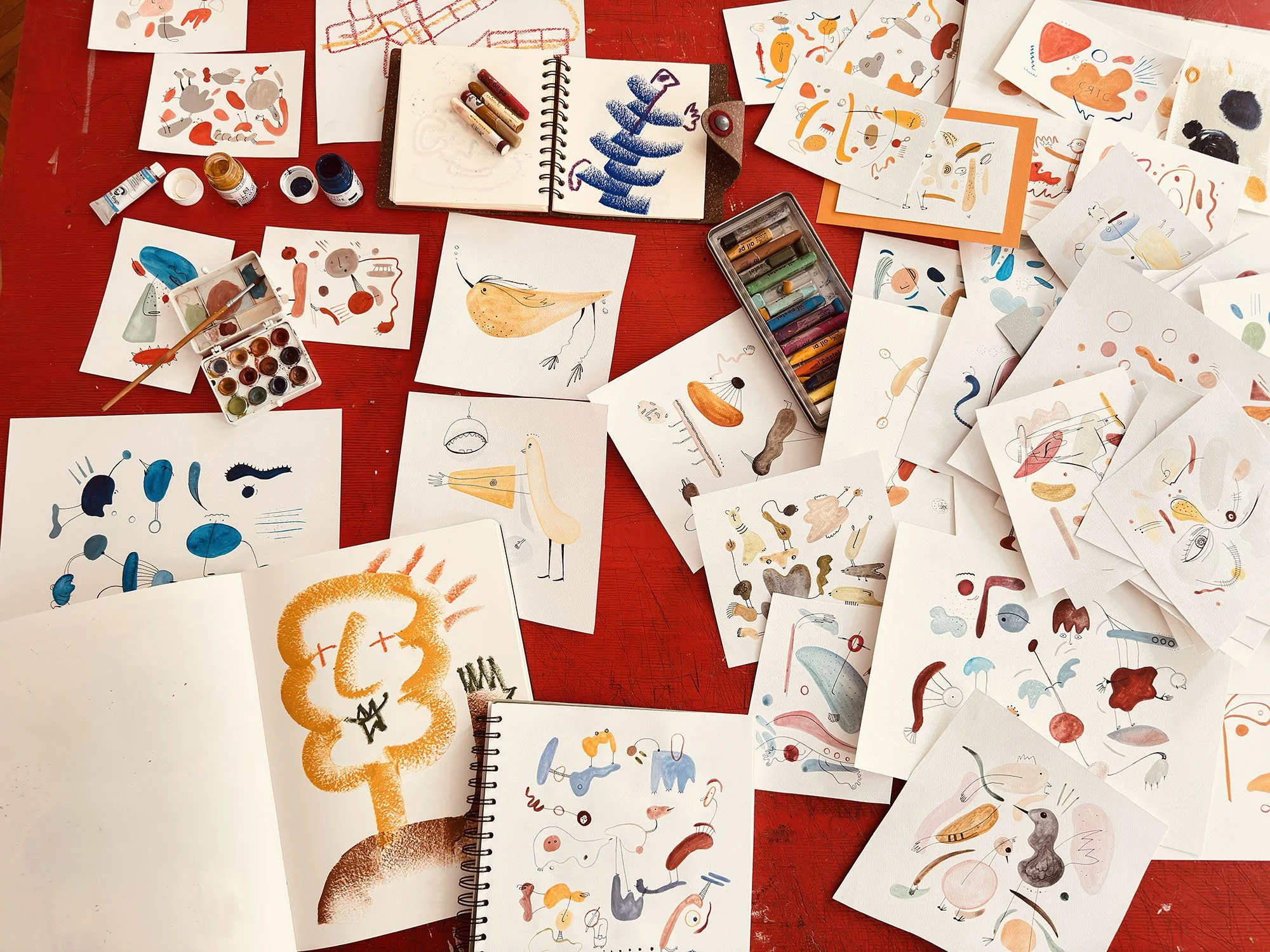
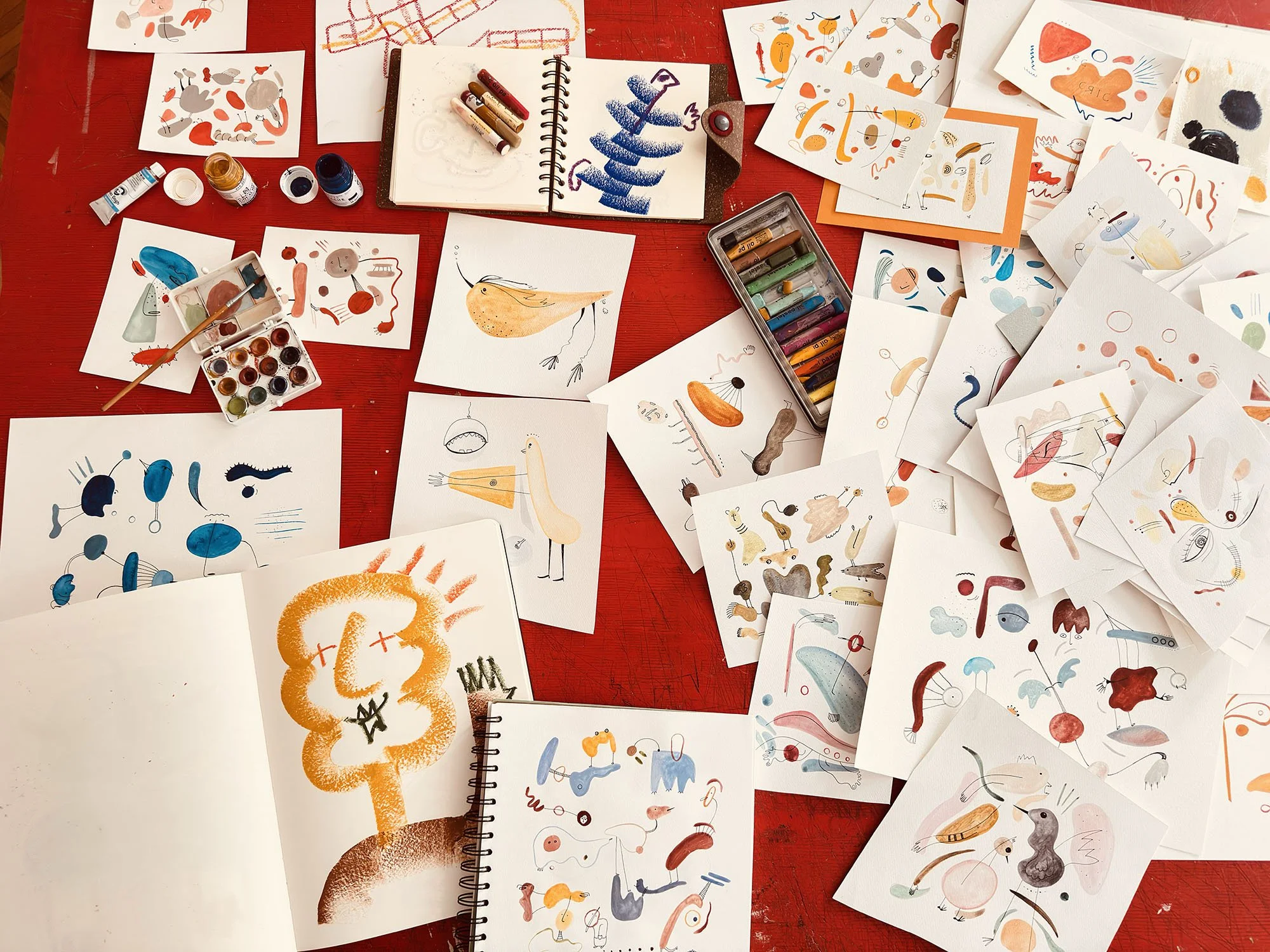
My working space for a few months now
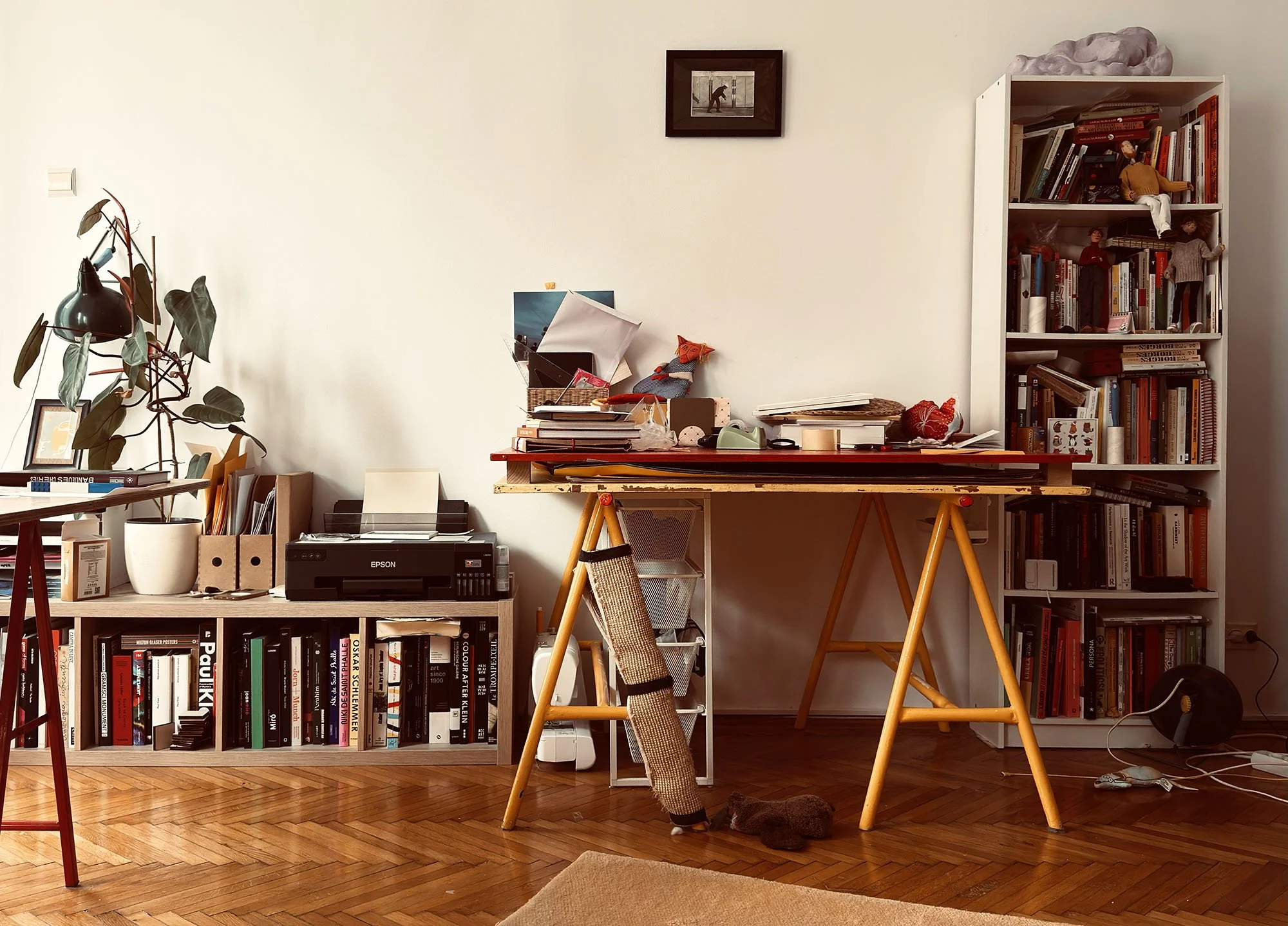
I’ve been working at home, still trying to find a way to have a studio again.
The Art of Stepping Back
In February and March, I decided to take a conscious break from the digital noise. Social media can be a fantastic tool for community, but I felt how being constantly "on" was becoming exhausting, consuming my energy and, frankly, becoming a bit boring.
My phone was showing me I was spending quite a few hours online, mostly scrolling on interesting stuff actually, people making art, their process and practice. But none of that was sticking. I would forget them immediately and and also felt frustrated that I wasn’t making stuff myself.
I decided to take a break. For two weeks at first, but it turned into more than five. I thought it would be hard and that I would face serious FOMO or think about it constantly. But it was actually none of that. On the first day, I found some watercolors and started drawing. Then some oil pastels (a medium I’d actually never used before).
I started drawing. A lot.
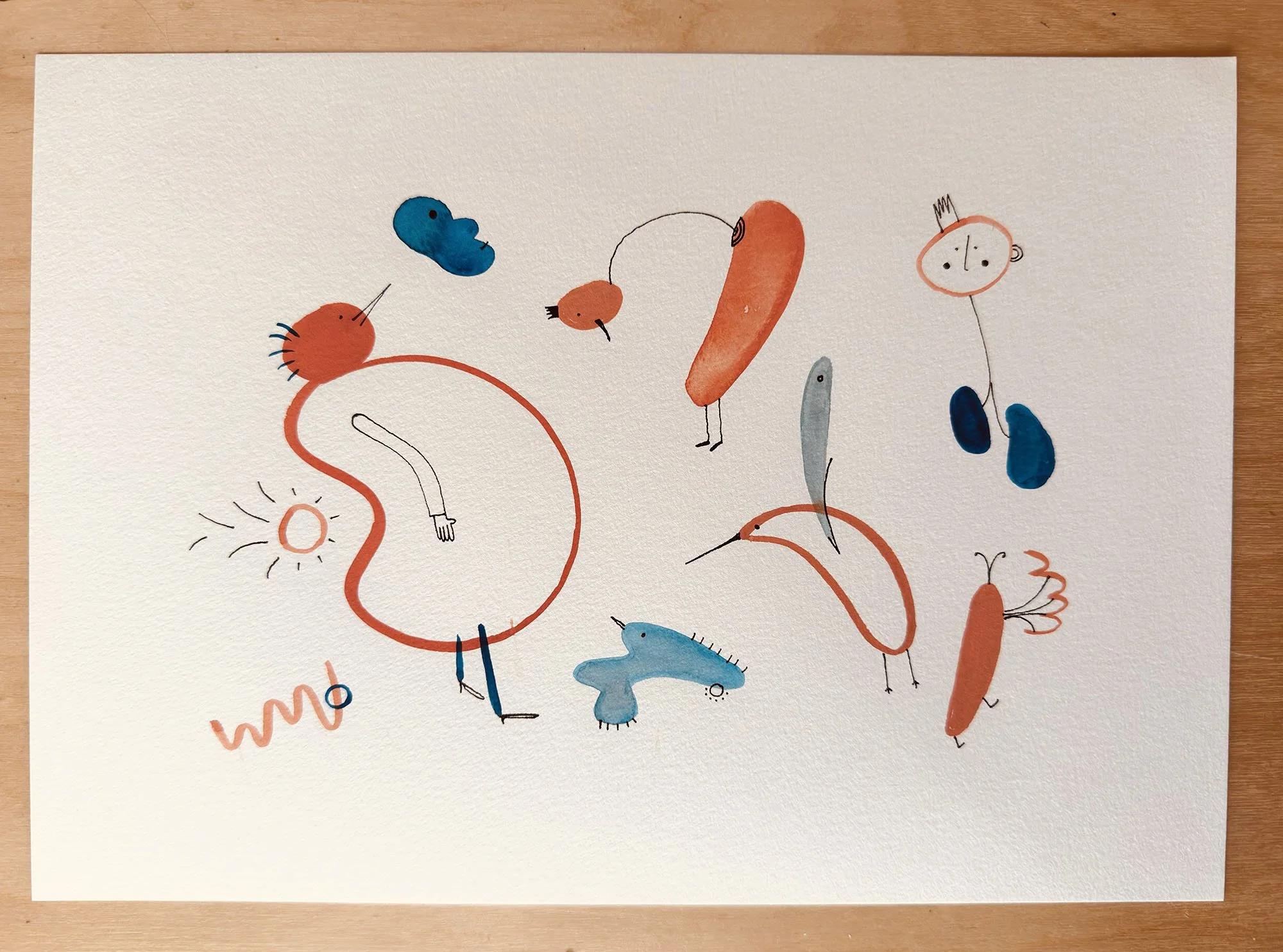
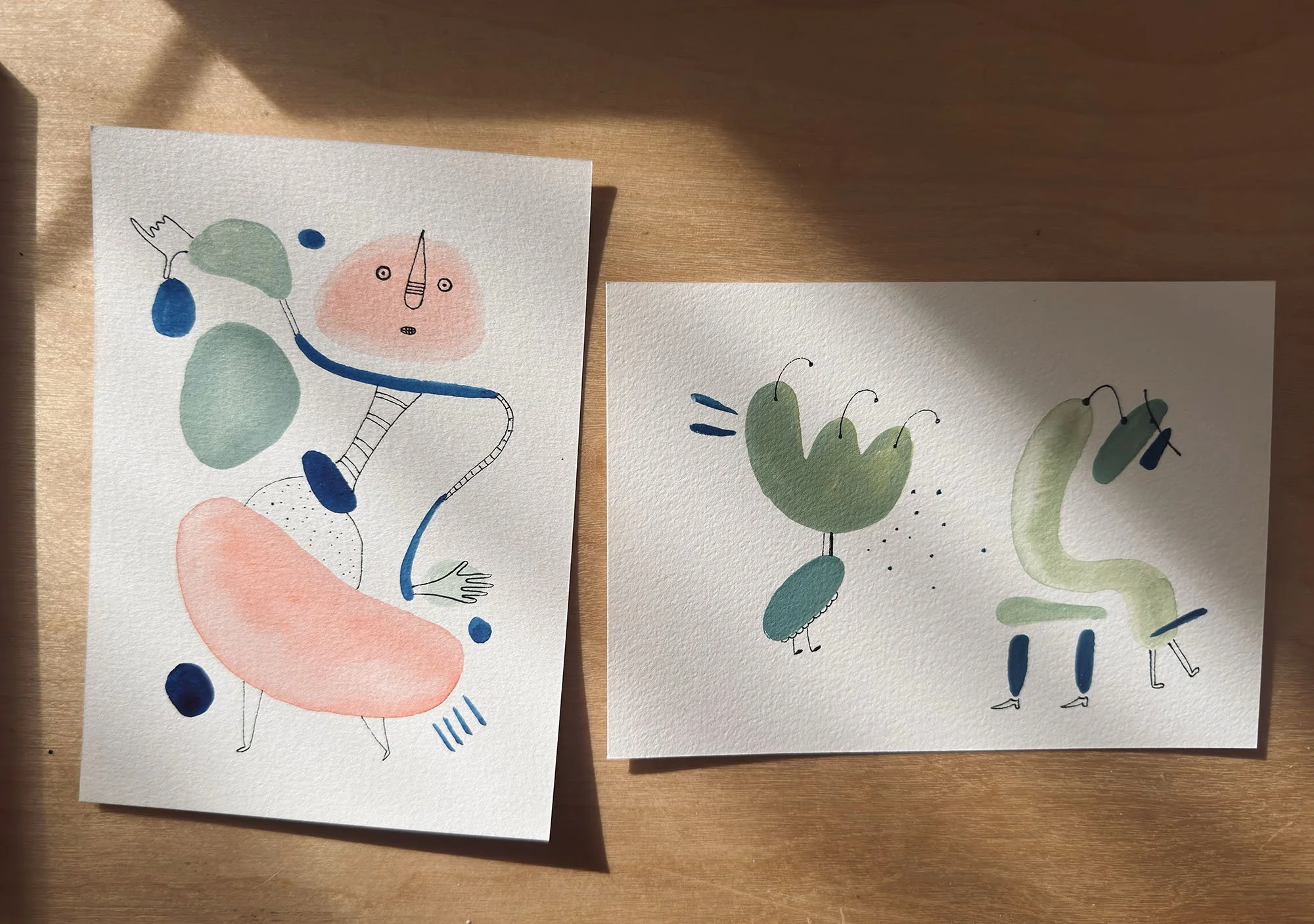
I began a game of automatic shapes, letting the pigment dictate the form. I was looking for the character hidden inside the smudge.
I found myself returning to Roger Caillois:
“Play is an occasion of pure waste: waste of time, energy, ingenuity, skill, and often of money. In spite of this, or because of it, play constitutes an essential element of human social and spiritual development.”
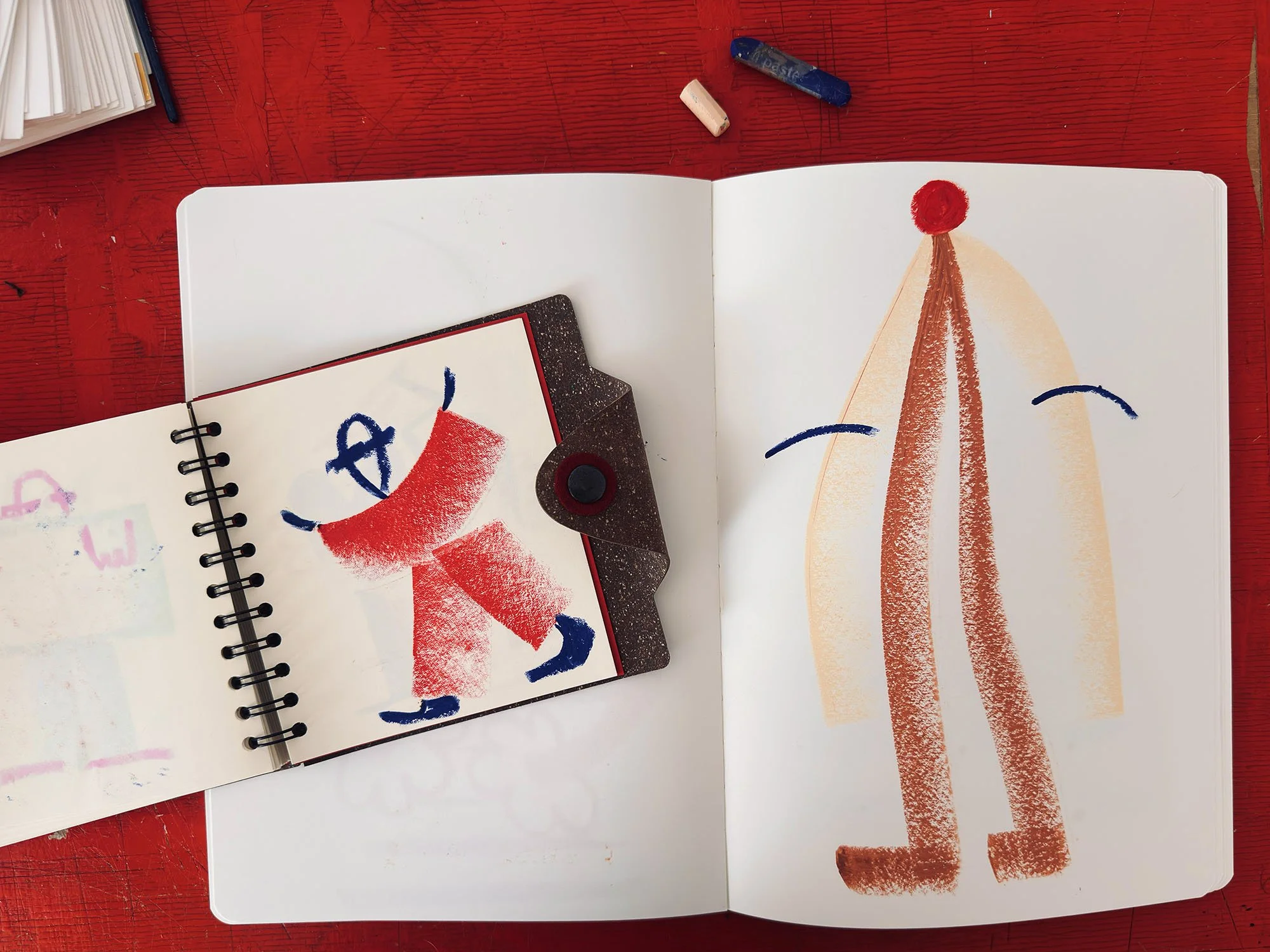
Or using the shape of pastels to work with coloured lines on paper.
I surprised myself. There was a lot of joy in creating something not to be shared online, but just for the sake of it. Ok, maybe I already knew that, just forgotten it…
I did share them, but offline, giving them as presents to friends and family. I filled entire sketchbooks and gathered a bag full of drawings on loose sheets. These images don't have a direct link to our new projects, but they helped me process, observe, and stay connected to the playful spirit of Micul Haos. There is a dignity in pure waste. A record of a hand moving across a page is a radical act of freedom. I filled sketchbooks and I gave drawings away like letters.
A Note on Perspective:
I realized that constant documentation turns us into spectators of our own lives. We begin to see through a pre-filtered lens, thinking in thers of “how does this look?" instead of "what does this feel like?"
By pausing, I stopped being a spectator of my own life and became a participant. I use this a lot to create my games. I applied on myself the very philosophy I preach in my art: active participation. I became my own experiment.
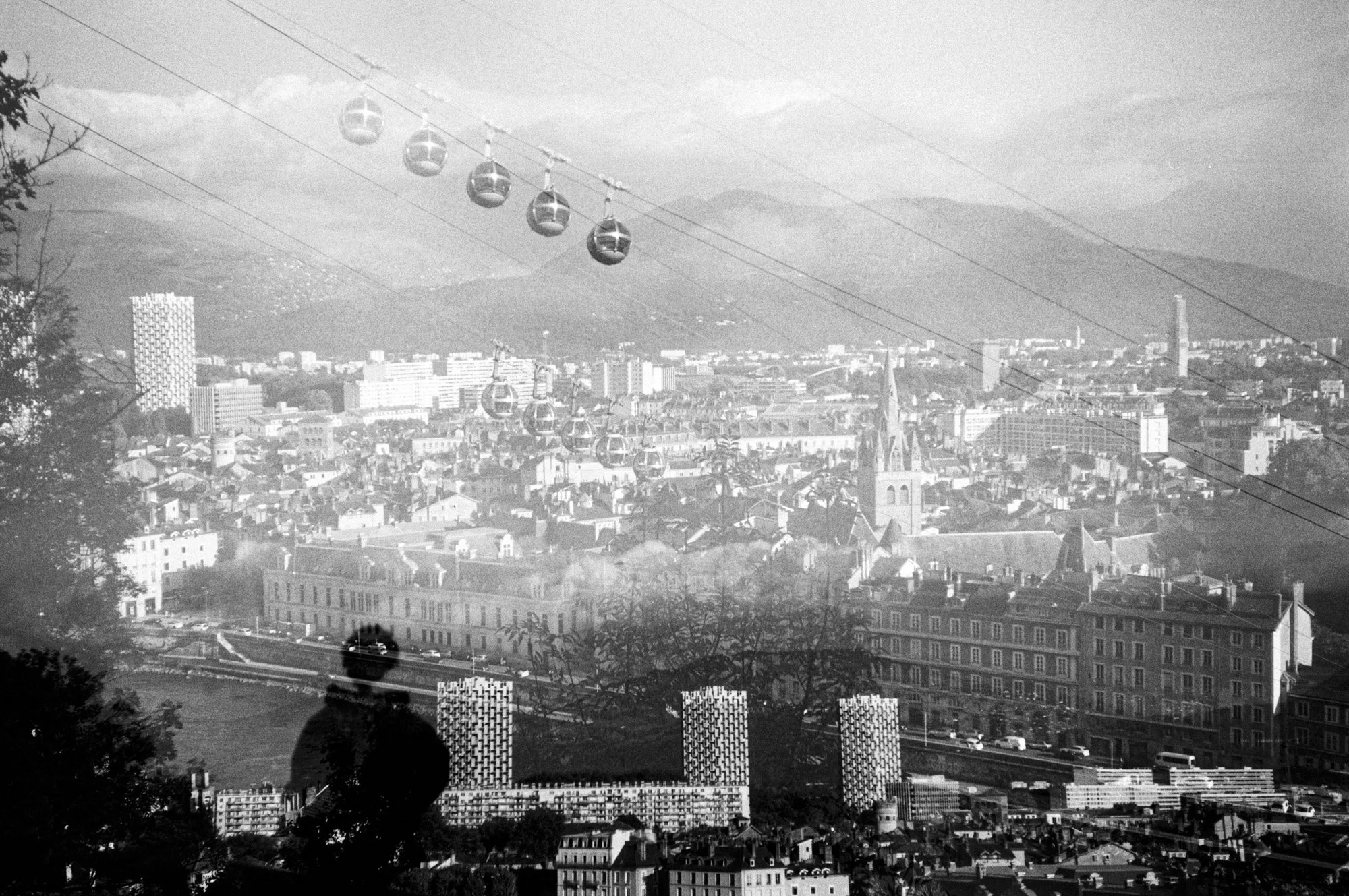
Last October in Grenoble, Foto: George, on film
A New Chapter: The Resilience of the Forgotten Fairytale
While I was invisible online, we were actually laying the groundwork for an ambitious project: Rezilianța Basmului Uitat: Modernismul / The Resilience of the Forgotten Fairytale: Modernism.
This is an initiative where we aim to take a critical and poetic look at the modernist heritage of Romania and France. How are we doing this? By using our characters as mediators and interpreters of space. It is based on the pilot we developed last year, France Brut. This time, we’re focusing on modernist architecture, in Romania and France, exploring and documenting it through play, stories finding the subjective and the poetic in this heritage that still influences us today.
We are fortunate enough to have amazing partnering institutions on this project: The French Institute in Bucharest, the National Museum of Contemporary Art (MNAC) in Bucharest, De-a Arhitectura Association, and Zeppelin Magazine, along with the essential financial support of AFCN (Administrația Fondului Cultural Național). Yey!
I will expand on the full concept in a future post, but for now, the most important message is this: we are back, and we are building new worlds.
Changing How We Communicate
This break confirmed one thing: I want to communicate more deeply, not more often. Therefore, I’ve decided that this blog and a future newsletter will become our primary home. I’ll still share some stuff on social media, but if you want the whole story, please join our list below:
We will launch a bi-monthly digital journal. It will document the creation process, the train journeys through Europe, and the stages of the project as the puppets come to life. I invite you to stay with us on this journey toward rediscovering the space that surrounds us through the lens of curiosity and play.
And do share this with someone who might be interested! :D
With love,
Maria & The Micul Haos Team
The cultural project "The Resilience of the Forgotten Fairy Tale: Modernism" is co-funded by the National Cultural Fund Administration. The project does not necessarily reflect the views of the National Cultural Fund Administration. The AFCN is not responsible for the content of the project or for how the project’s results may be used. These are entirely the responsibility of the grant recipient.
Proiectul cultural „Reziliența Basmului Uitat: Modernismul” este co-finanțat de Administrația Fondului Cultural Național. Proiectul nu reprezintă în mod necesar poziţia Administrației Fondului Cultural Național. AFCN nu este responsabilă de conținutul proiectului sau de modul în care rezultatele proiectului pot fi folosite. Acestea sunt în întregime responsabilitatea beneficiarului finanțării.