
Enter slowly
The next few weeks will be busy, so this letter is shorter than usual. Before the rush, two things: a map, and a house by the sea.
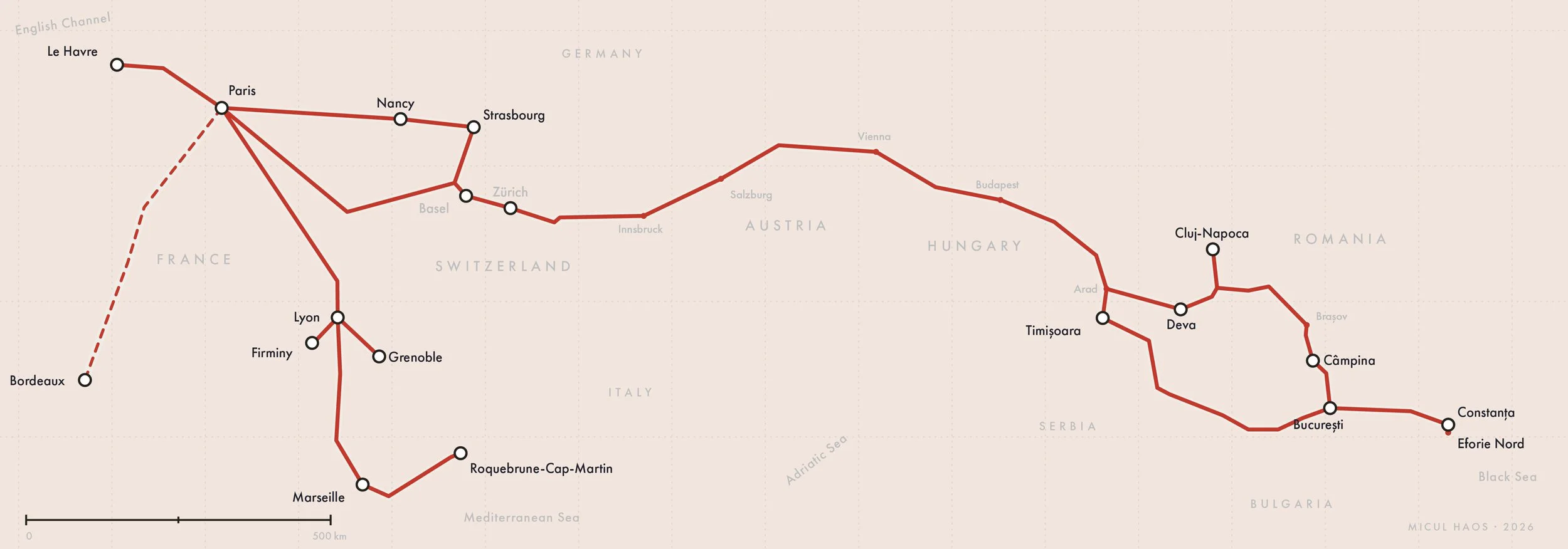
The map
This is where the project took us. With Interrail, more than 11,000 km, more than 50 trains and nearly five days on board, through five countries. Then about 2,000 km more on Romanian trains, between Bucharest, Câmpina, Constanța, Eforie Nord, Cluj, Deva and Timișoara. On the map the distances look huge, and yet it all belongs to the same world. In the 1930s, the luxury trains between Paris and Bucharest took between 53 and 64 hours. Many Romanian architects of the time studied in Paris, and many of them would have made this journey by train too.
E-1027
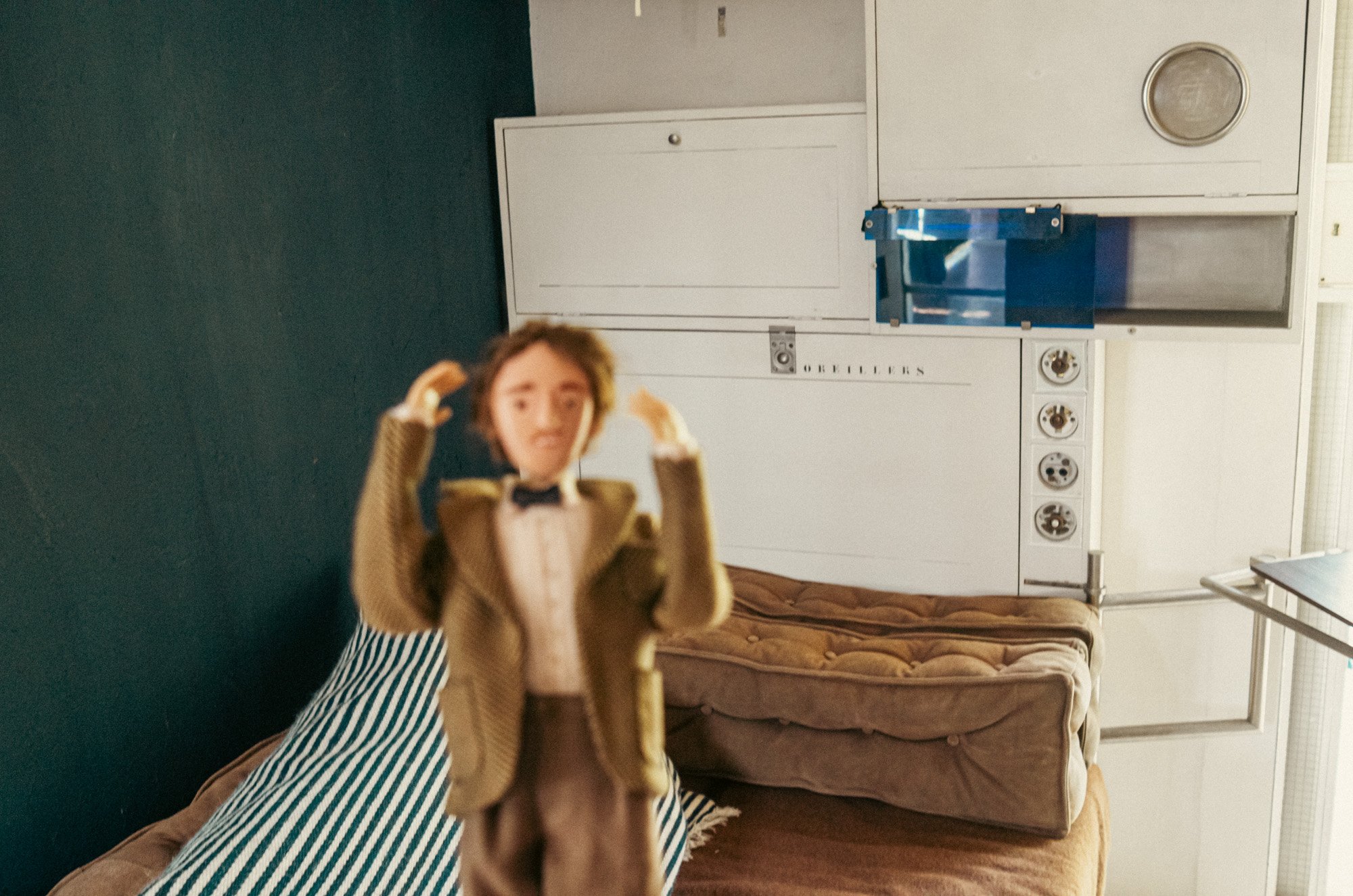
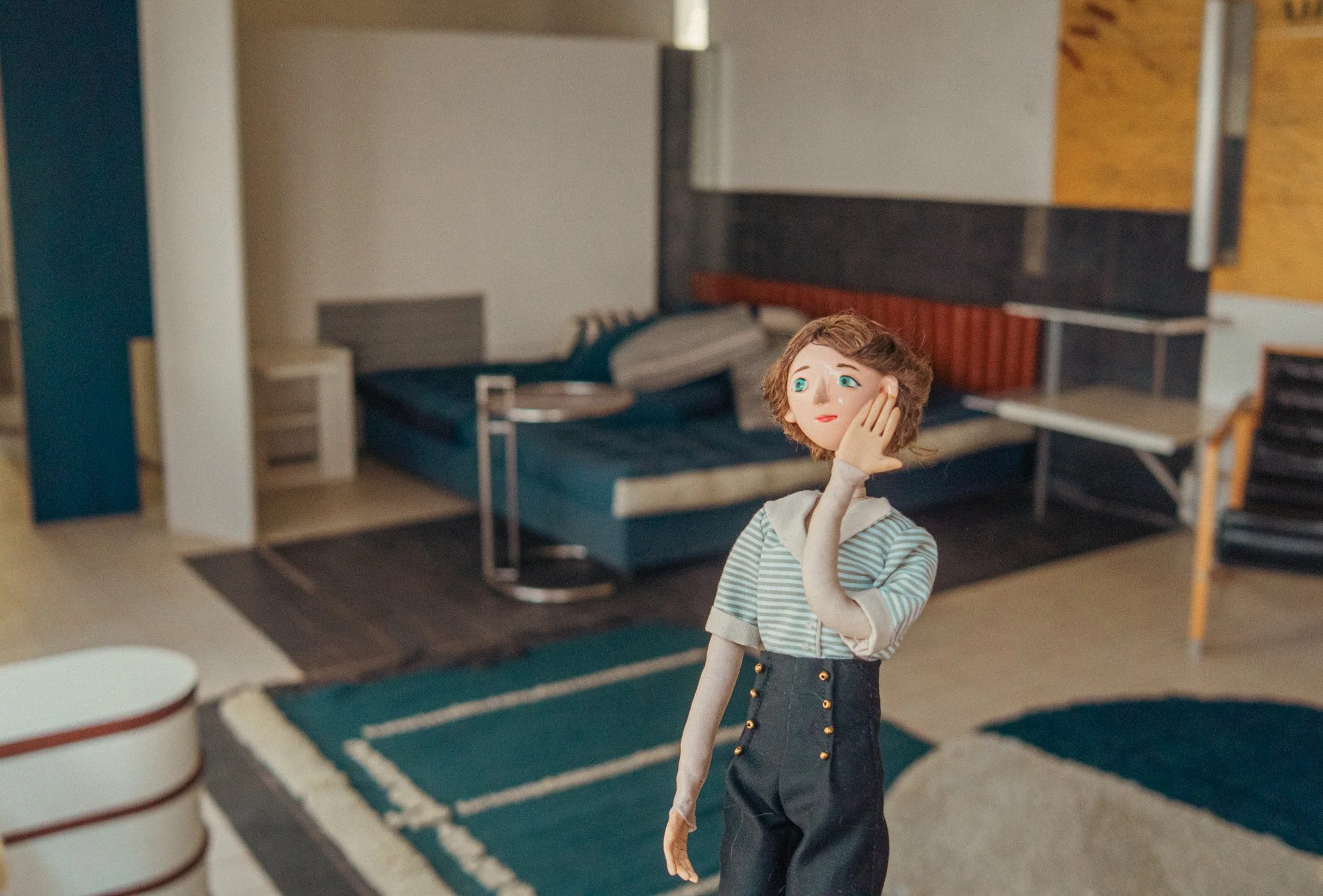
From the station in Roquebrune-Cap-Martin, a path along the sea leads to E-1027. The name is a code: E for Eileen, 10 for J, the tenth letter of the alphabet, 2 for B and 7 for G. Eileen Gray and Jean Badovici, intertwined. She was an amazing Irish designer. He was a Romanian-born architect who had studied in Paris and the editor of L'Architecture Vivante. The house was finished in 1929.
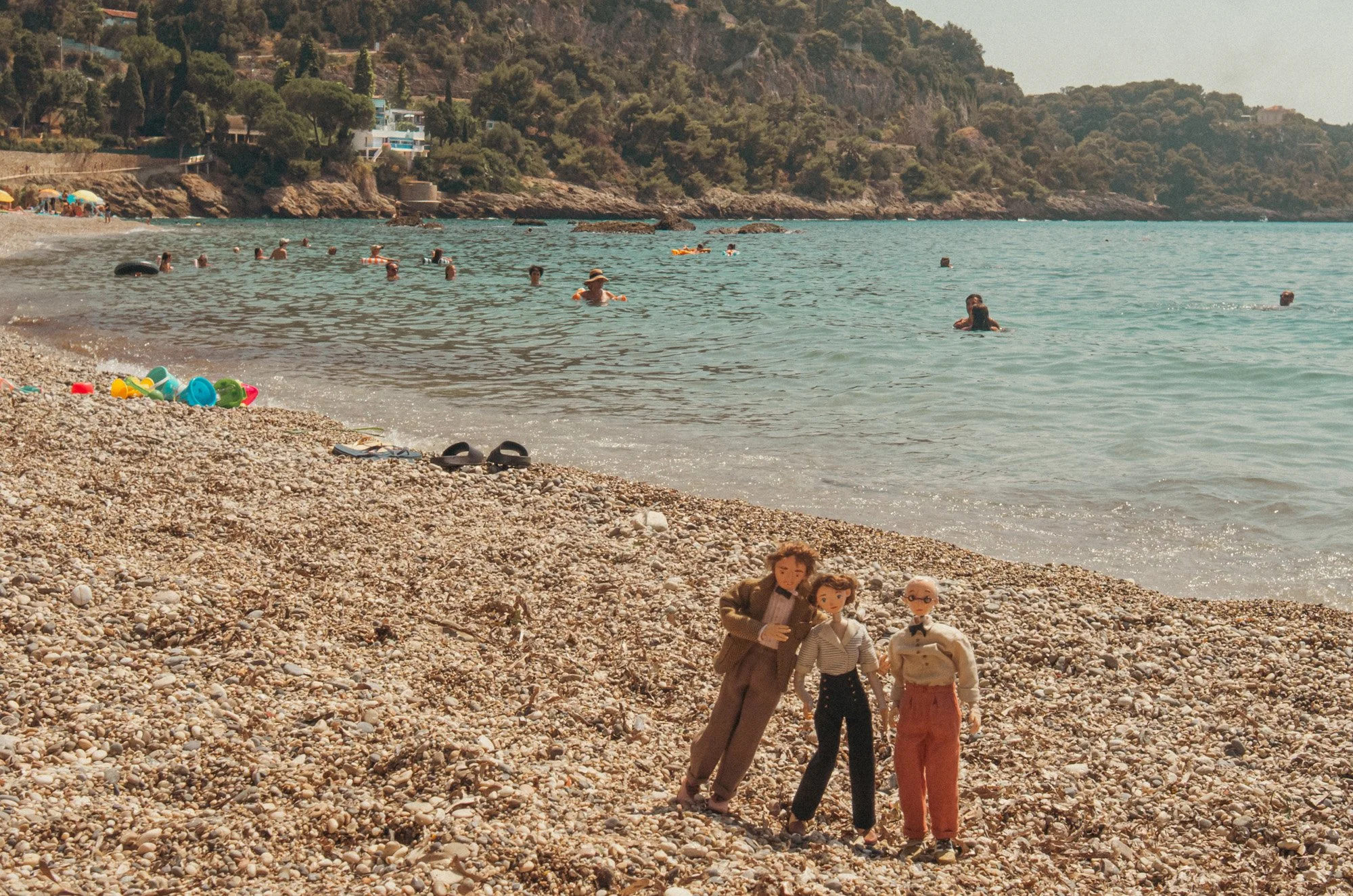
Three characters inspired by Gray, Badovici and Le Corbusier standing on the beach, with E-1027 in the background.
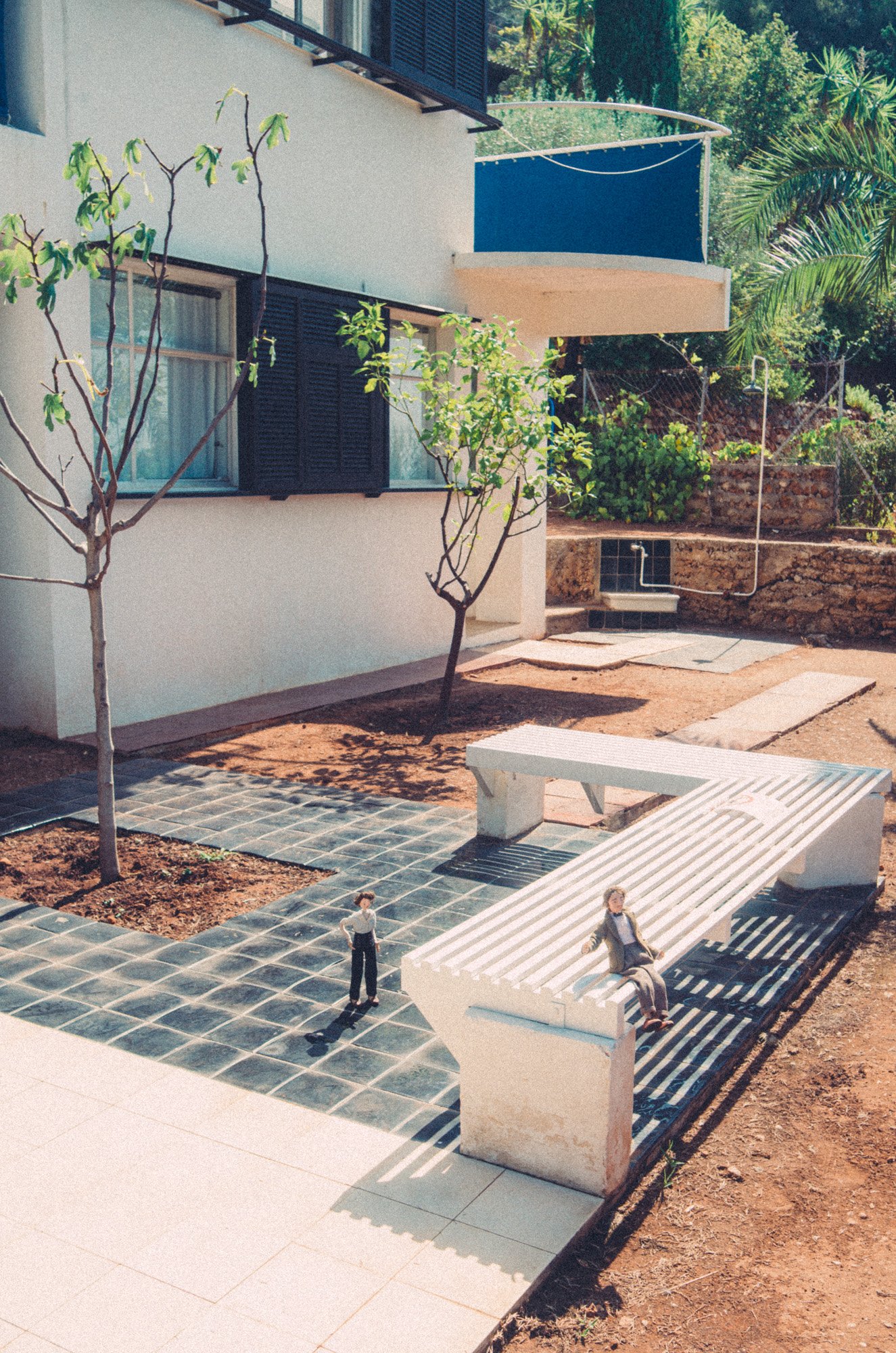
The guided tour lasted almost two hours and felt like twenty minutes. The people in our group, the guide included, looked at our characters with sympathy, and we took our photos quickly, without holding anyone up.
I understand why they chose that spot. You step out of the house and the sea is right there. Inside, everything is made for comfort: clever furniture, room for friends, for music, for the sea breeze. And the walls talk. At the entrance, painted on the wall: “Entrez lentement”, enter slowly. Playful, ironic, almost Dada. A modernism of experiment, of “what if we invented a new world?”
Next door, Le Corbusier’s cabanon and camping units surprised us by how small they are. Austere, even if colourful: the bare minimum, and the rest is the sea.
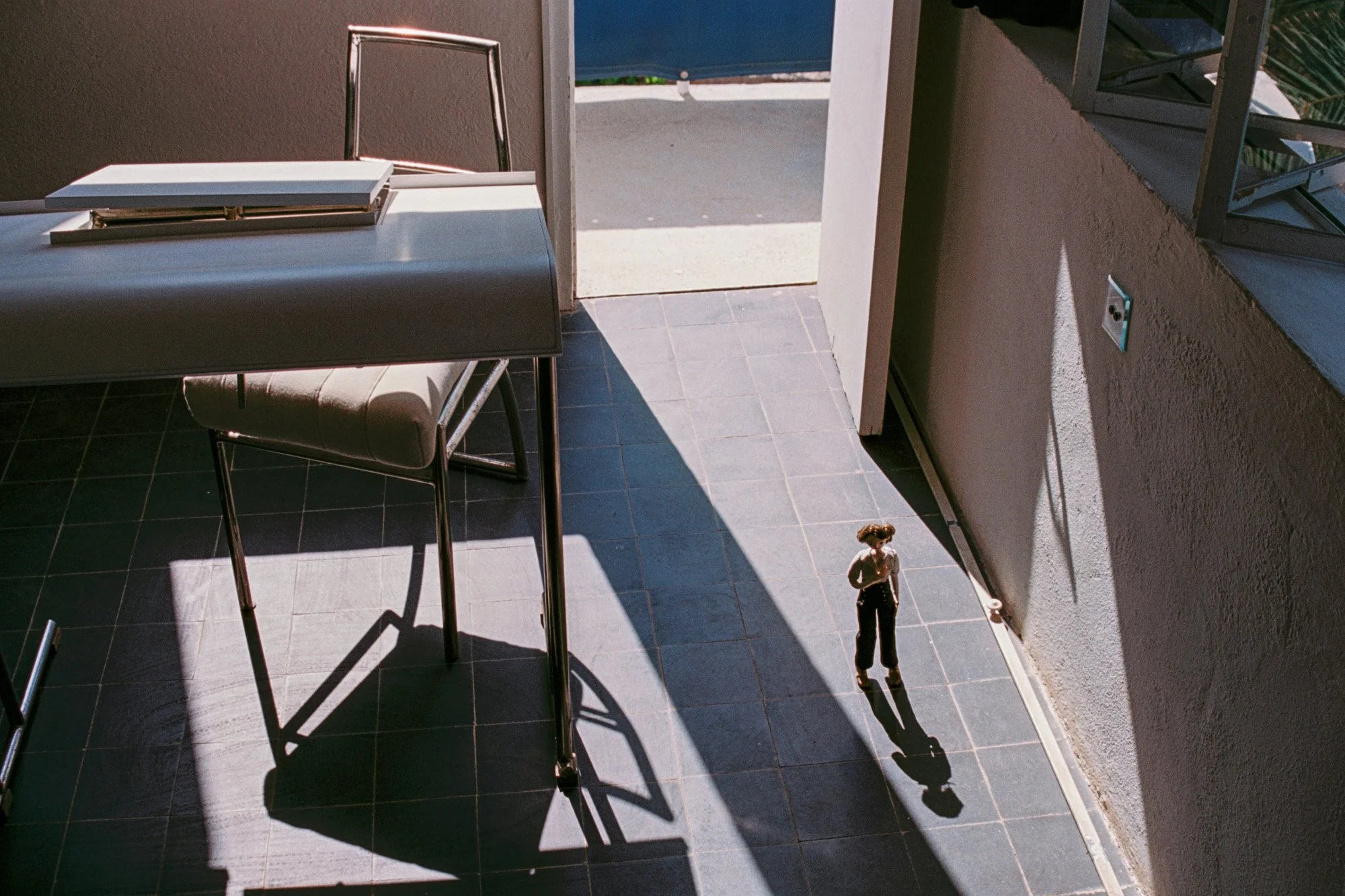
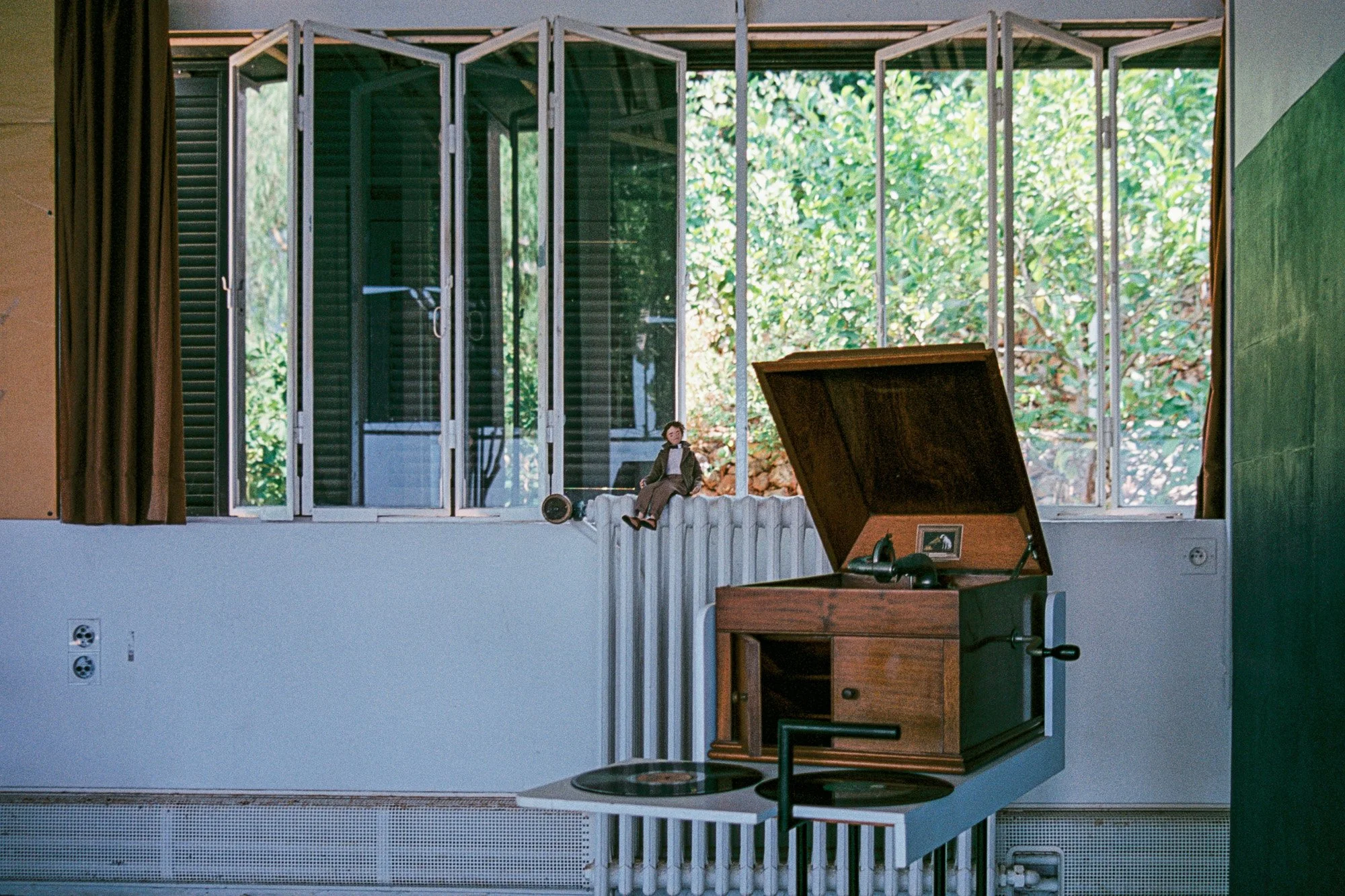
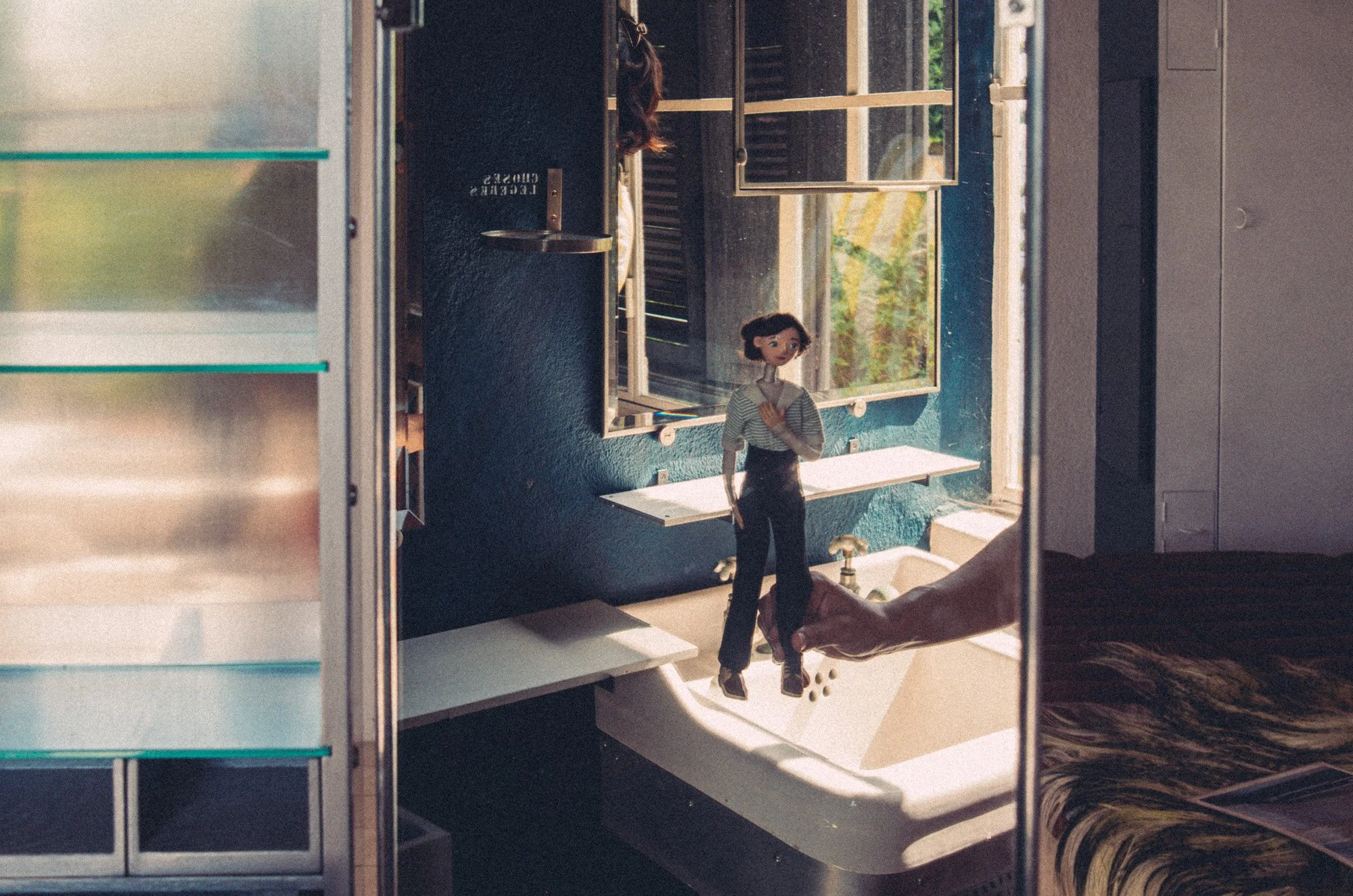
Le Corbusier admired E-1027 so much that in 1938 and 1939 he painted murals on its walls. The story is usually told as a quarrel; our guides insisted that the two actually got on, and that it was, after all, Badovici’s house. I’d rather keep Eileen Gray in the foreground. She got on with her work and made remarkable things while the light fell on others. A mediator character, in a way, who influenced far more than she was credited for.

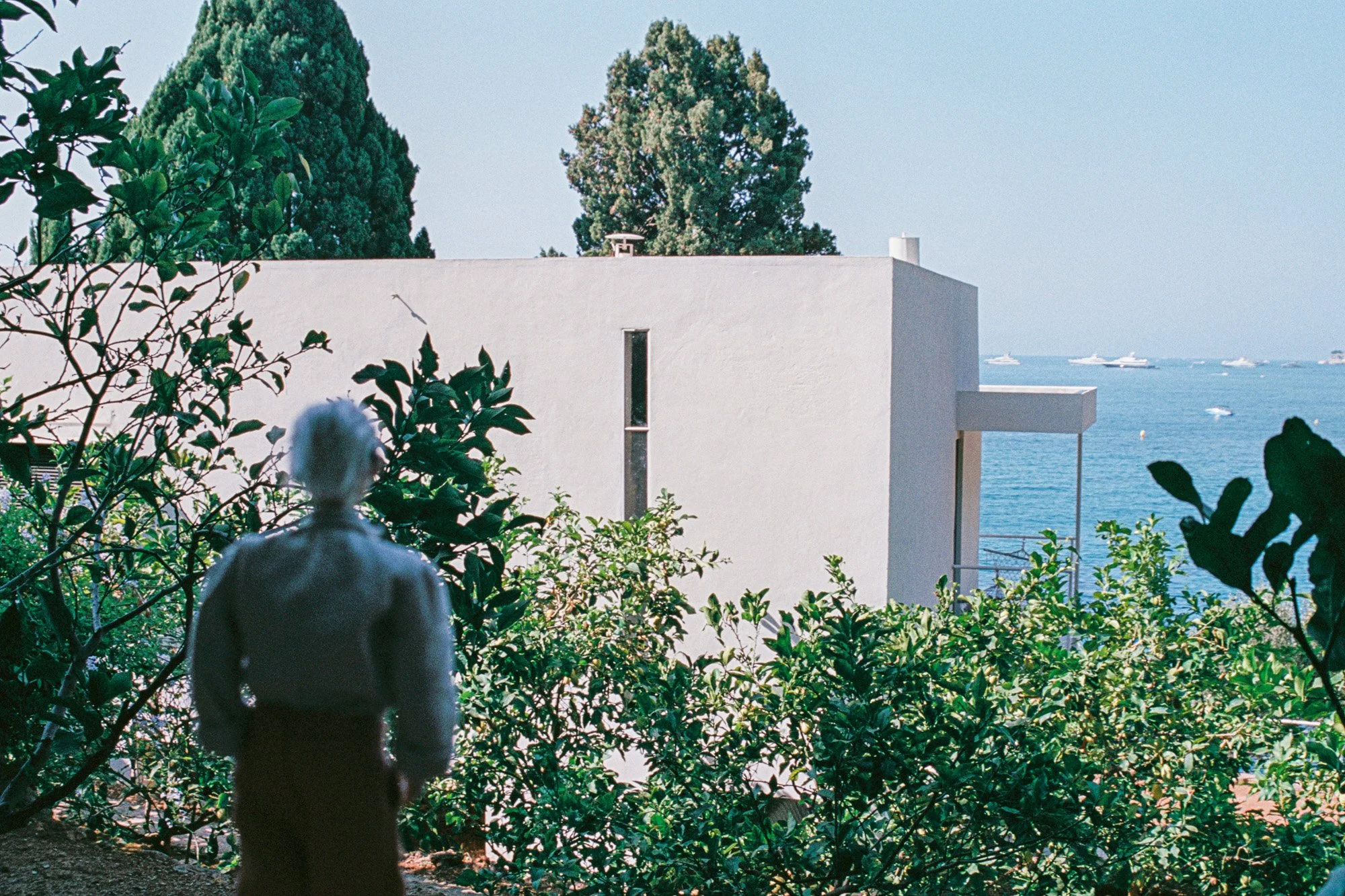
Our guide told us that when Badovici died, in 1956, the house went to the Romanian state, which didn’t want it. When it came up for auction, Le Corbusier persuaded his friend Marie-Louise Schelbert, a Swiss woman, to buy it. Later its furniture was sold at auction, a murder took place in the living room, and through the 1980s and 1990s it was left to fall apart. By the end of the nineties, E-1027 was close to ruin.
If you live in Bucharest, this sounds familiar. Many of the modernist buildings here look today the way E-1027 looked back then: peeling facades, broken windows, and nobody quite taking care of them.
E-1027 is proof that this doesn’t have to be the end. In 1999 the Conservatoire du littoral bought the house. It took years of work, but today it is restored and furnished again, and you can walk in, slowly, and look out at the sea. A house that almost disappeared is full of visitors once more.
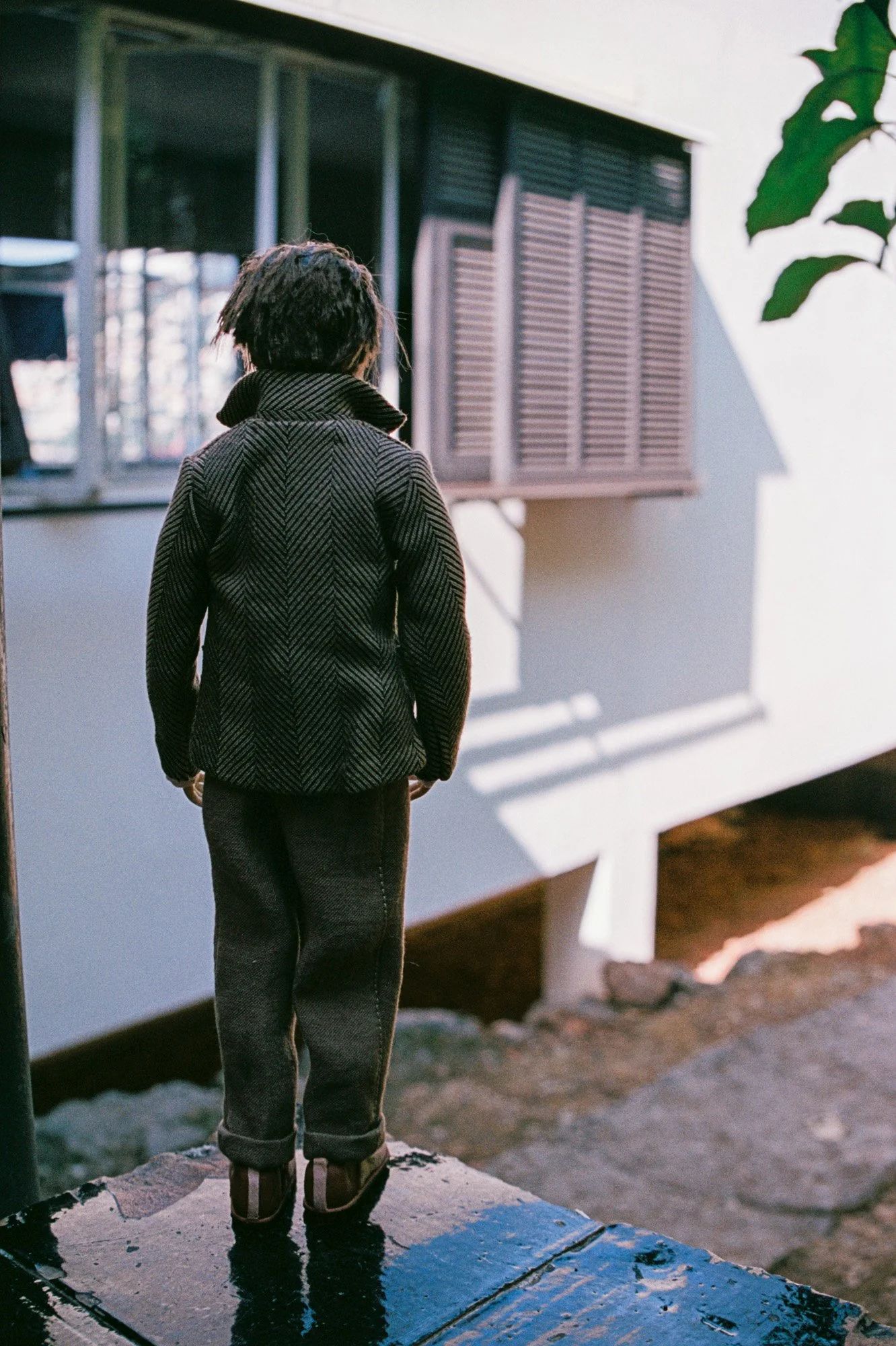
Saving it took people who cared. Robert Rebutato, whose family ran L’Étoile de Mer, the restaurant next door where Le Corbusier was a regular, met him at twelve. He became an architect and later worked for years to preserve the site. Twelve is about the age when another’s special way of seeing can change you. Someone who learns to notice a building at twelve might be the one who saves one at forty. That’s why we made our book for teenagers, and why the workshops are for them too.
What comes next
November will be full: the exhibition at MNAC Bucharest, the book launch at the French Institute, and workshops with De-a Arhitectura at the weekends. We can’t wait to invite you all, and you’ll be the first to get the dates, very soon.
If you know teenagers, roughly between 13 and 19, who would enjoy the workshops, ask them to write to us at hello@miculhaos.com.
See you soon,
Maria & the team

The cultural project “The Resilience of the Forgotten Fairy Tale: Modernism” is co-funded by the National Cultural Fund Administration. The project does not necessarily reflect the views of the National Cultural Fund Administration. The National Cultural Fund Administration is not responsible for the content of the project or for how the project’s results may be used. These are entirely the responsibility of the grant recipient.