
From 1,000 photographs to 97: our book is at the printer
Hello, Micul Haos community!
Finallyyy! Our book has gone to the printer.
In the last letter we promised to tell you how we chose the photographs. So here it is: how more than a thousand images became 97, and how those 97 became a book.
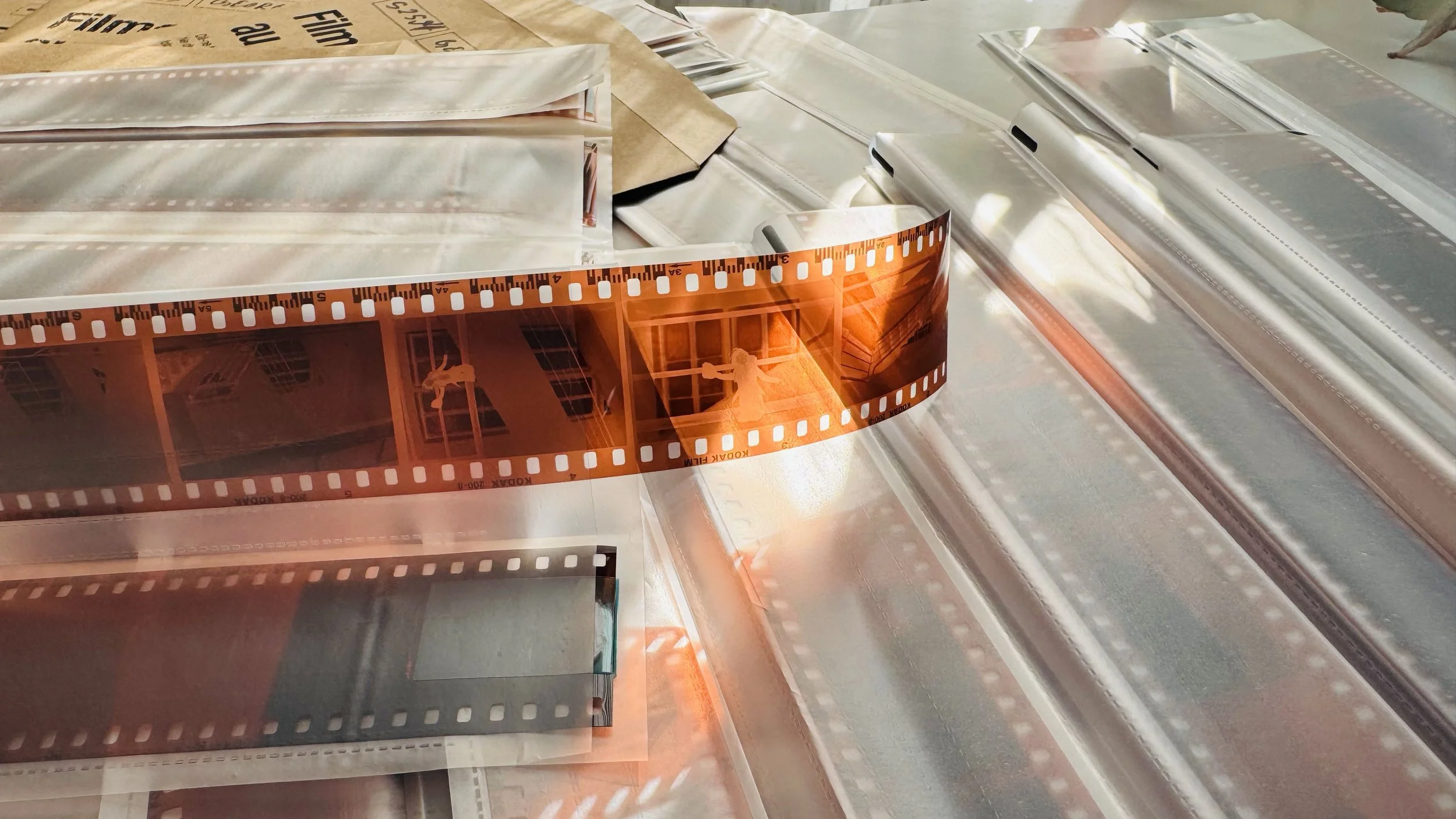
Some of our 28 rolls of film.
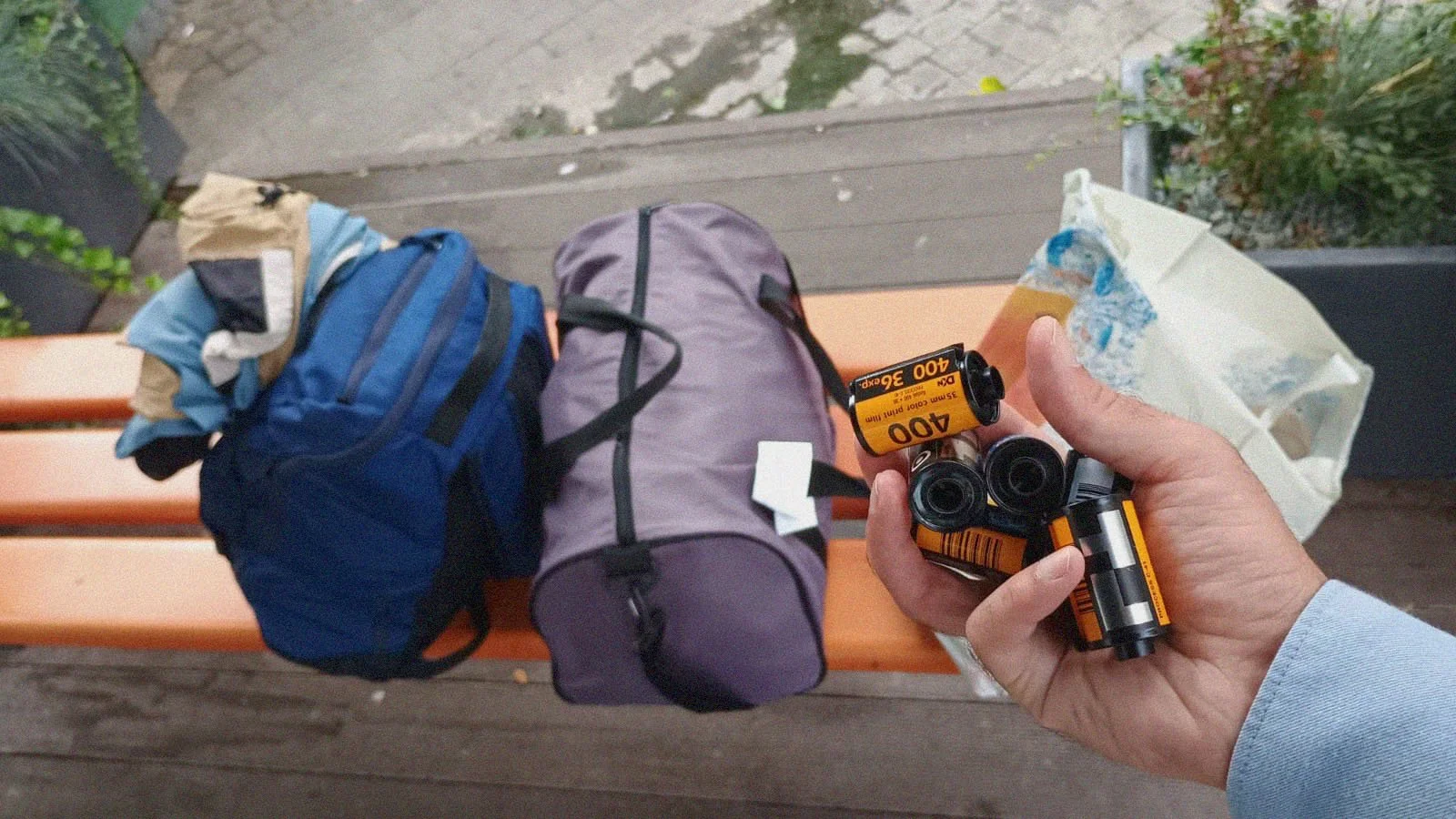
Luggage full
Click in Grenoble, see it in Bucharest
We came home with more than 1,000 photographs: 28 rolls of 35 mm film, and even more digital images. For every shot on film, we also took a digital double, just in case. We usually developed the films about a month later, so on the spot we never knew what we really had.
Most of the films were developed by our partners at Isopatrusute. After all the developing and scanning, we were thrilled: every one of the 28 rolls had come out. With film, that’s never a given.
The photographs came out beautifully in their large format. We can’t wait to see them in the exhibition, where we’ll print them big.
Three distances
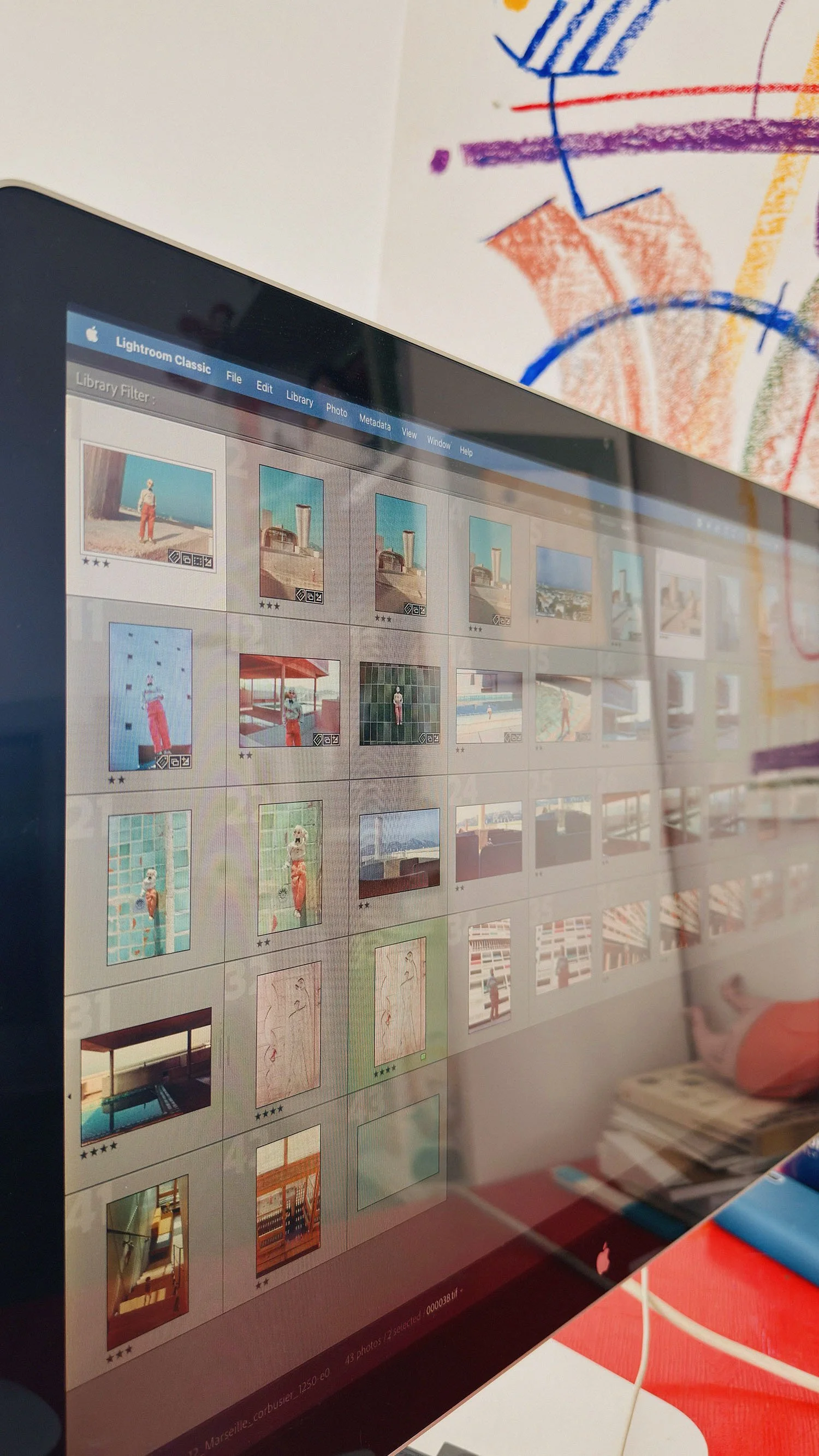
The long way from 1,000 to 97.
For each place, George tried to make at least three kinds of photographs. In one, the character is a tiny detail in the big composition of the building. In another, the character is the most important thing in the frame. And one sits somewhere in between.
Each one asks for something different. When the character is small, everything depends on where you place it. When it’s big, everything depends on its body: how it stands, leans, reaches. In between, the two have to talk to each other really well.
Light and colour mattered too. Some places we photographed at different times of day. To others we went back on a sunnier day.
From 1,000 to 227 to 97
Honestly, a lot of the selection happened on location, in our heads, while we were shooting. We wanted as many of the places we visited as possible, and every one of our 16 characters. Back home, we sat down together to decide. Alexandra Moț, the project's curator, joined us for the first rounds, and it helped a lot to have her eye on the photographs.
We got down to a shortlist of 227, then to 97. That last cut hurt. I would have kept many more from 7 rue Méchain in Paris, where Adrienne Gorska designed the interior of her sister Tamara de Lempicka’s studio. And more from Marcel Locar’s building in Bucharest, where several of our characters ended up together. Now we’re choosing photographs for the exhibition, and that selection will be even smaller.
An order that isn’t a story
The order in the book may look random. It isn’t, quite. Each photograph sits close to the spirit of the text or game around it. Not to illustrate it, but to think in the same direction.
The images flow from one into the next without adding up to a single story. Each one gets to tell its own.
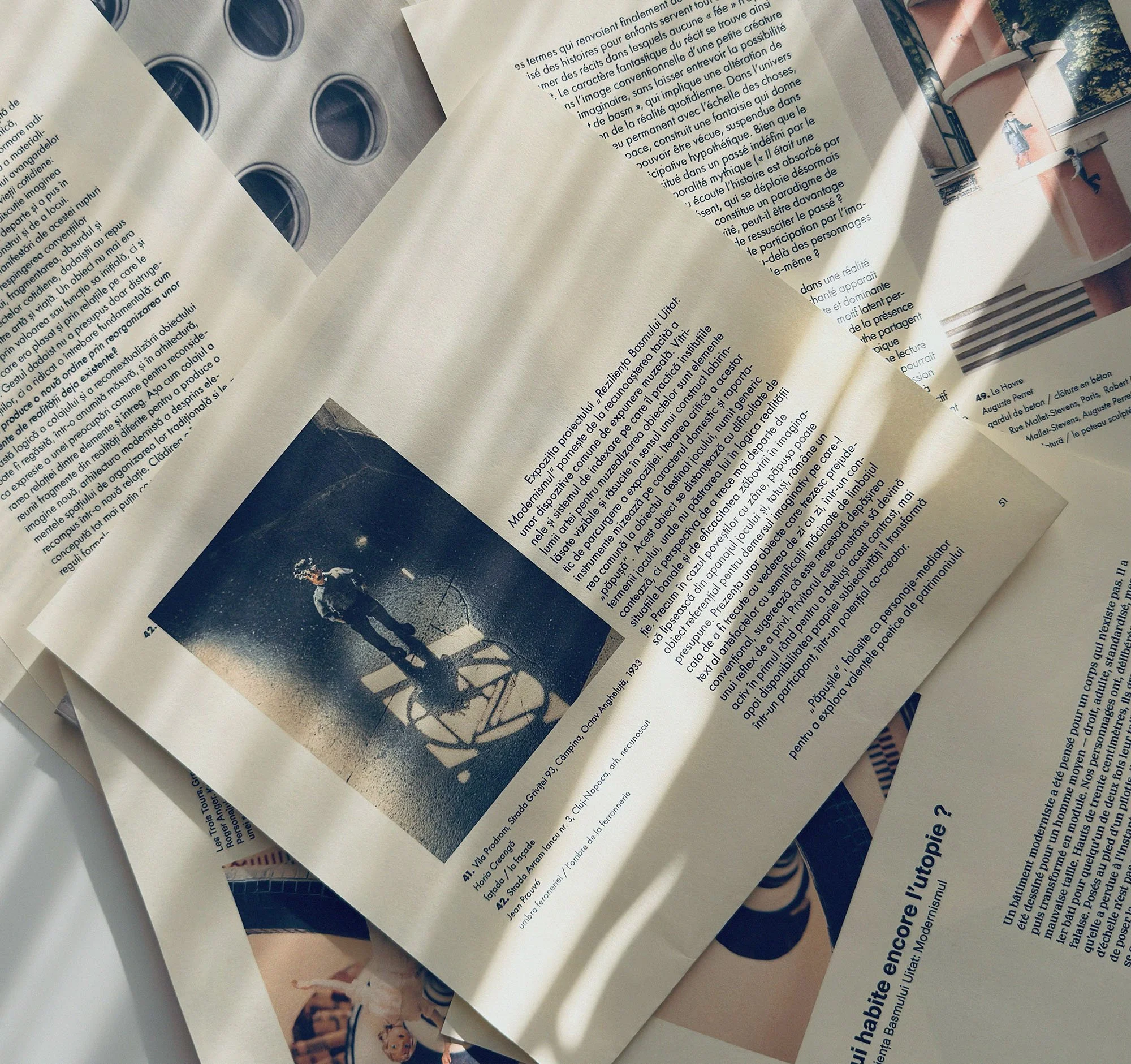
Test prints.
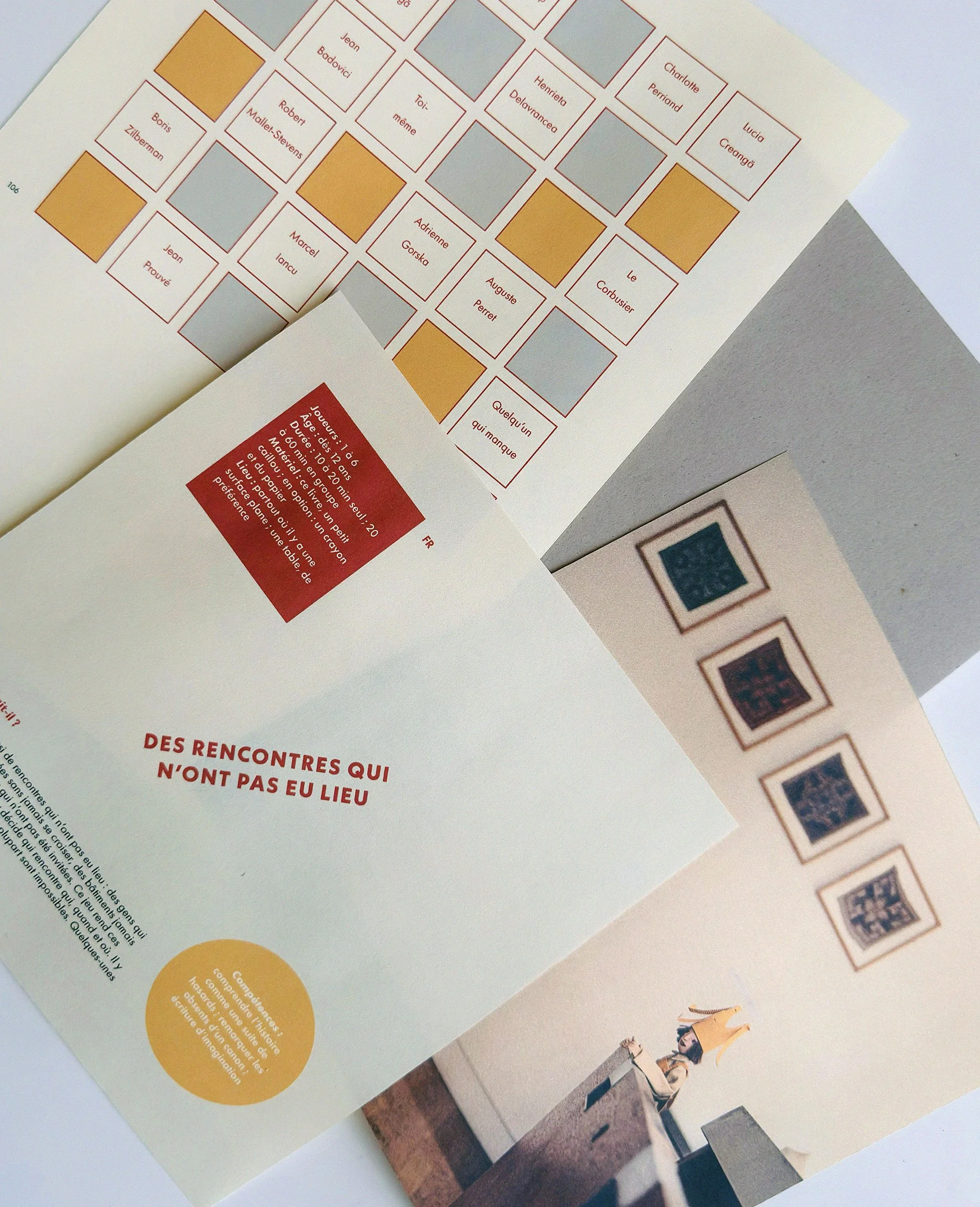
Test print for one of the games
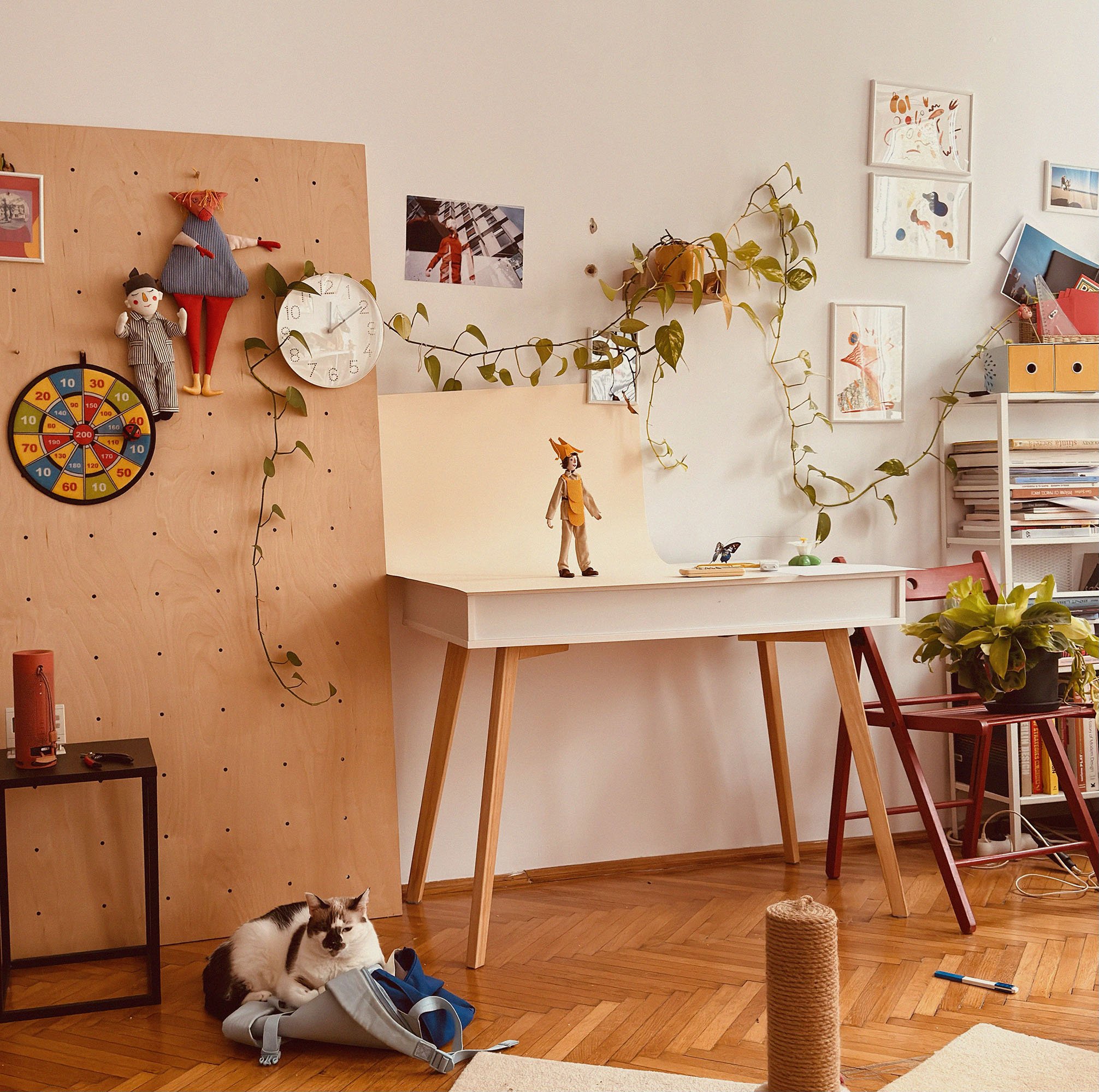
Photographing the characters on neutral background this time.
A book like a brick
The book is 200 × 200 mm, with 120 pages and a grey board cover. I wanted it to look like a concrete brick: a modular element, as if you could build something with it.
It’s bilingual, in Romanian and French (translated by Karin Ungureanu), and holds three texts. Ruxandra Antal writes about modernism as an open structure, from the avant-garde to the way we live. Alexandra Moț offers an orientation guide to a fairy tale about modernism, a key to the exhibition. And I wrote about play as a method. The texts ground the book and the photographs: they place us in context.
After each text comes a game:
Five Points. Stand in front of a building from 1920–1960 and look for Le Corbusier’s five points of a new architecture. Is each one present, absent or lost?
The Witness. Cut out or draw a 20–30 cm character, take it on missions around the city and photograph it from its own height.
Meetings That Never Happened. Toss a pebble on the page to bring together two figures of modernism, a moment and a place. Then imagine the meeting history never gave them.
A small detail for type lovers: the typefaces are Futura and Kabel, both designed in 1927. That’s the same year Le Corbusier and Pierre Jeanneret wrote down their five points.
Why I designed it myself
We wanted to work with a graphic designer. But the project started a bit late and everything shifted, so I took on that role too. In the end it helped: I could keep choosing photographs while the book was taking shape, and adjust the games to the pages. Finishing everything first and then handing it to someone else would have taken much, much longer.
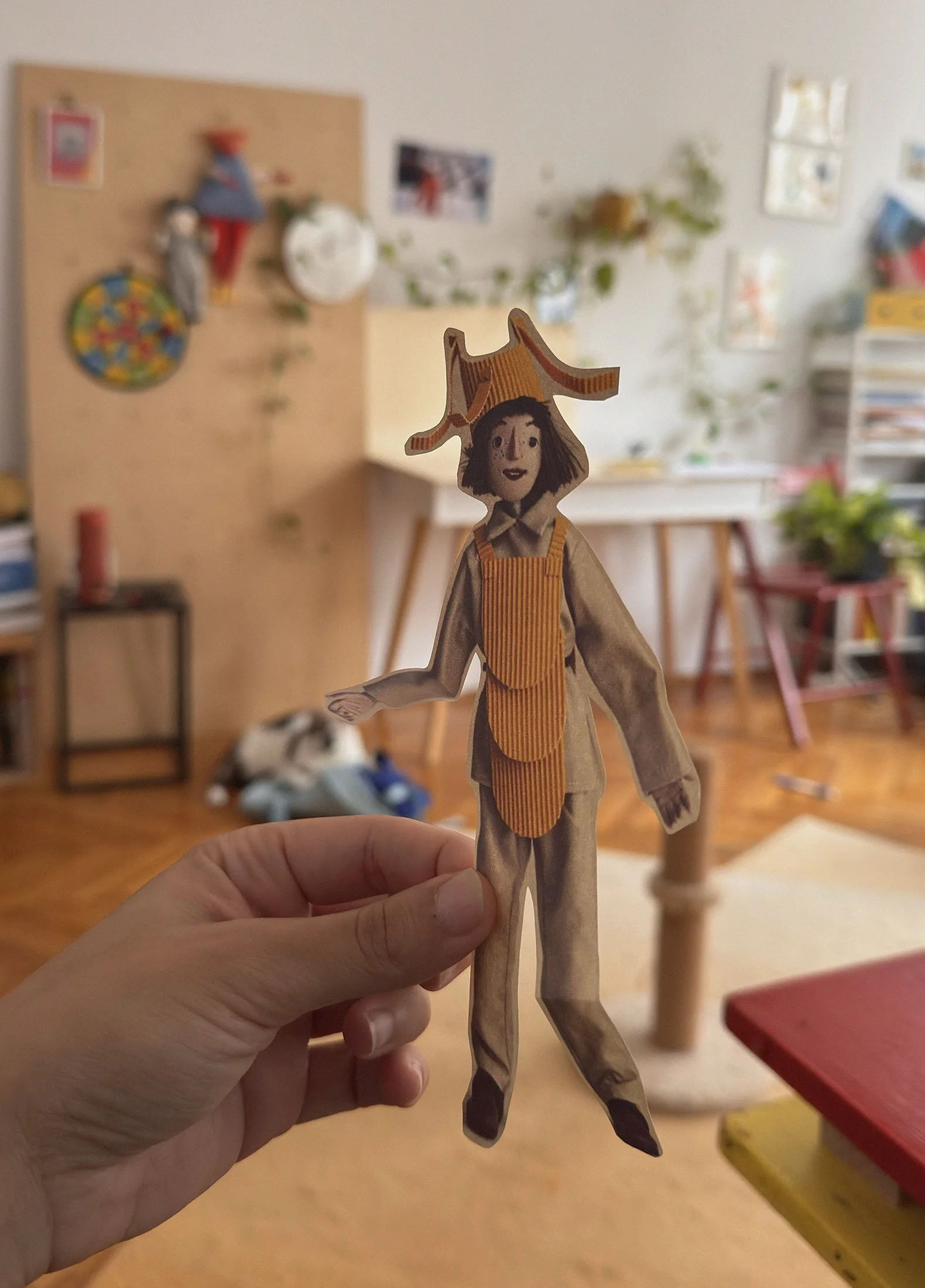
One of our characters, cut out of a test page.
Don’t just hold it. Use it.
The book is mainly for teenagers who want to figure out what’s going on with the architecture around them. (And for anyone curious, at any age.)
I don’t want people to just hold it. I want them to use it. Play the games. Read it in jumps. Look at the photographs, then go and find the buildings. Build your own character and take it outside. Or build something with the books themselves.
Want to try now? Here are three missions from The Witness. Find:
A step built for someone six times taller.
A window that frames something the architect never planned.
The place where the building touches the ground.
Place your character there and photograph it from its eye level, not yours. If you share it, use #miculhaos. We’d love to see where it went.
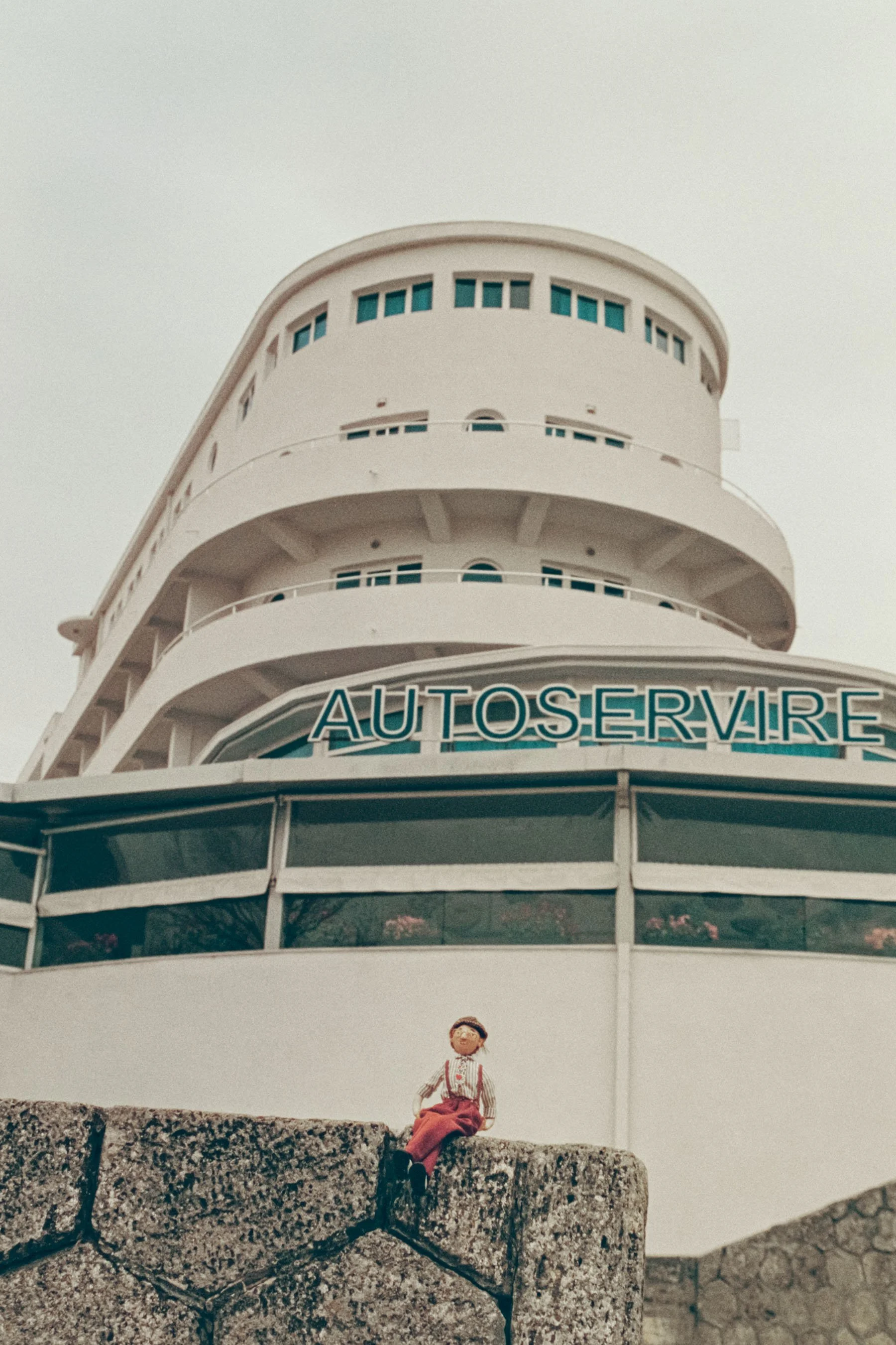
Some photos that didn’t make the cut
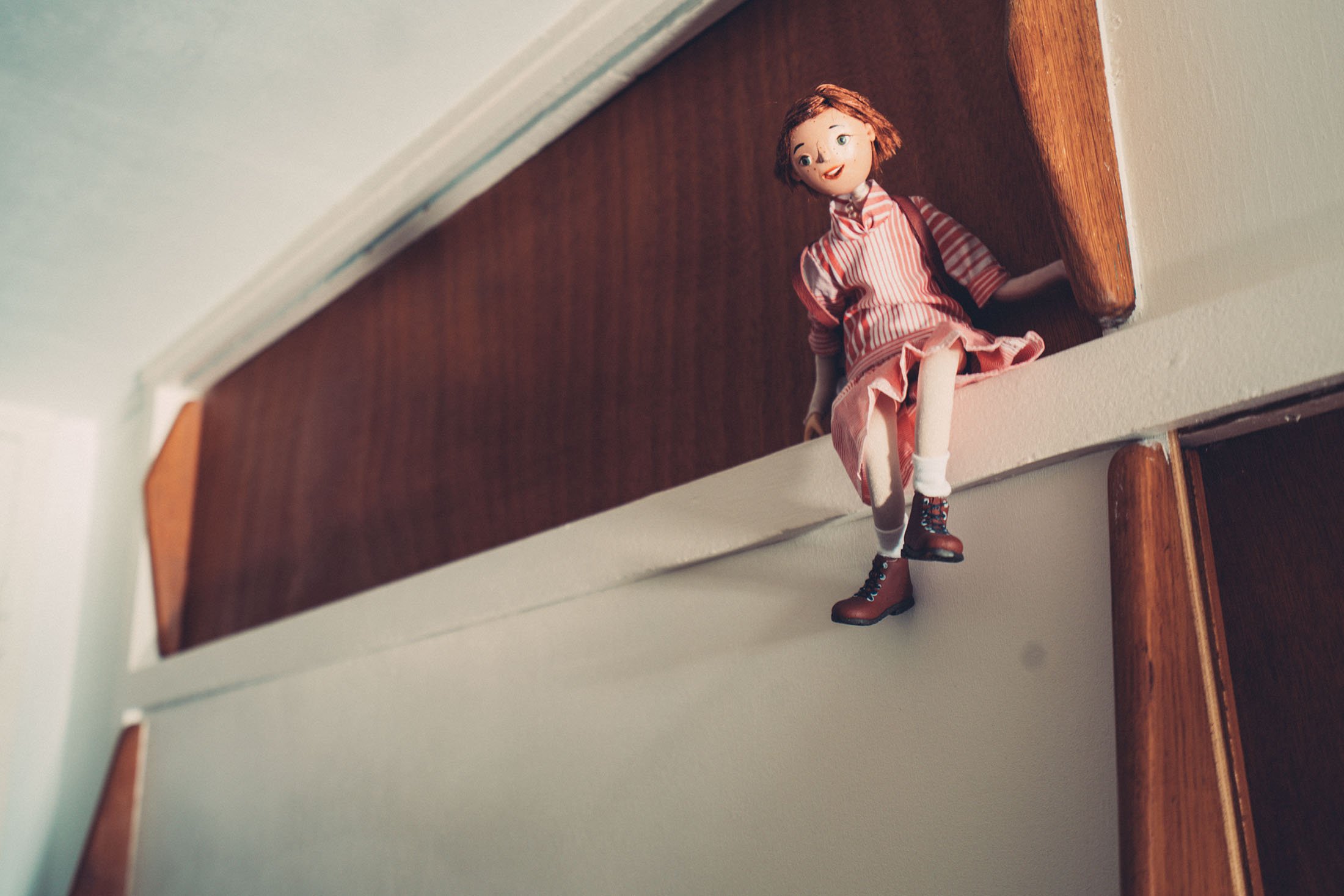
You’re the first to know
We’ve printed 100 copies. Each one is numbered, free and not for sale. And the covers will get a final touch from us, by hand, so every copy will be one of a kind. (That’s all the spoiler you get.)
Save the date: we’re launching the book on 13 November at the French Institute in Bucharest. We haven’t announced it anywhere else yet. Time and details are coming in the next letter.
The exhibition at MNAC Bucharest opens in early November, followed by workshops for teenagers with De-a Arhitectura. We’ll send you the dates as soon as they’re set.
With only 100 copies, we can’t promise one to everyone. But if you’d like one, reply to this email and tell us. Your replies also help us see whether a second edition would make sense.
Thanks for reading, and for following us all the way to the printer,
Keep playing,
Maria & the team
The cultural project “The Resilience of the Forgotten Fairy Tale: Modernism” is co-funded by the National Cultural Fund Administration. The project does not necessarily reflect the views of the National Cultural Fund Administration. The National Cultural Fund Administration is not responsible for the content of the project or for how the project’s results may be used. These are entirely the responsibility of the grant recipient.